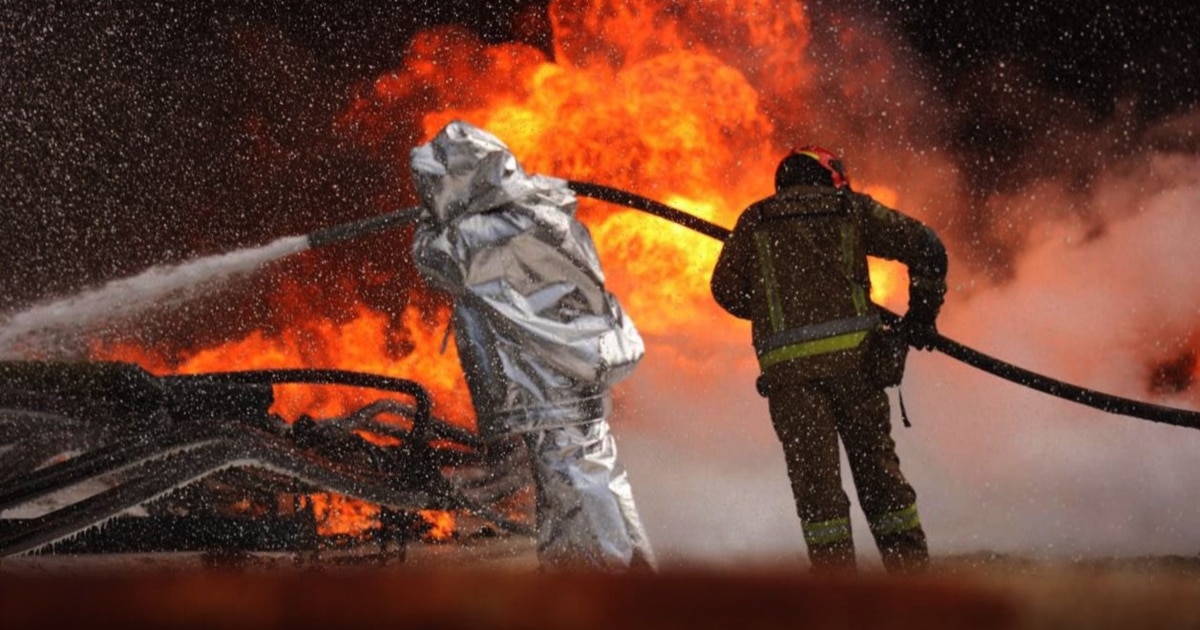
Head of Dnipropetrovsk OVA reports one killed and five wounded after Russian strike on Kryvyi Rih district
Oleksandr Hanzha, head of the Dnipropetrovsk regional military administration, said a Russian strike on the Sofiivska community in Kryvorizkyi district on July 3 killed one person and wounded five. The attack ignited a fire and damaged a gas station and vehicles; local authorities say several victims suffered burns and three are in serious condition.
By Vanessa Bergmann
1,153 views
A Russian strike on the Sofiivska community in the Kryvorizkyi district of Dnipropetrovsk region killed one person and wounded five others, Dnipropetrovsk regional military administration head Олександр Ганжа reported on July 3. Local officials said the assault caused a fire and damaged a petrol station and several cars in the community.
According to Hanzha’s statement, three of the wounded are in serious condition: “Троє постраждалих «важкі» – чоловіки 59 і 38 років та 50-річна жінка.” A 63-year-old man remains hospitalized in a condition described as moderate; all hospitalized victims reportedly sustained burns. Another injured person, a 36-year-old woman, will undergo recovery at home, officials said.
The strike on the Sofiivska community is one in a series of attacks that Ukrainian authorities say target populated areas and civilian infrastructure across multiple regions. Ukrainian officials and international organizations have repeatedly documented assaults on residential neighborhoods, energy and water systems, health-care facilities and other elements of civilian life. The Dnipropetrovsk administration’s account underscores the continuing toll on noncombatants and essential services.
Russian forces employ a range of weapons in these operations, according to Ukrainian reporting, including strike unmanned aerial vehicles (attack drones), rockets, precision-guided aerial bombs (КАБами) and multiple-launch rocket systems (РСЗВ). The use of such munitions against populated areas has led Kyiv and many international rights observers to classify some attacks as potential war crimes because they cause civilian deaths and damage civilian infrastructure.
Beyond the immediate impact of individual strikes, human rights lawyers and genocide researchers cited by Ukrainian outlets argue that a pattern of assaults aimed at depriving civilians of life-sustaining services may amount to elements of genocide. Their analysis lists actions they say demonstrate such a pattern: declarations by Russian officials denying the existence of Ukrainians as a distinct people (for example, statements that Ukrainians ‘‘не існує’’ or that the nation is ‘‘штучно створена’’), public calls to destroy those who reject that view (phrases such as ‘‘треба знищити’’ appear in official rhetoric), deliberate attacks on systems of power, heating, water, communications and health care, and measures on occupied territories including persecution of pro-Ukrainian residents, assaults on cultural and educational institutions, deportations of children, and looting or destruction of cultural heritage.
International law, including the 1948 Genocide Convention, defines genocide in terms that include killing members of a national group or inflicting conditions of life intended to bring about a group's physical destruction. The convention and related human-rights instruments oblige states and the international community to prevent and punish such acts; Ukrainian authorities and many rights groups say the pattern of attacks warrants legal scrutiny and accountability.
The Russian government denies that its military operations deliberately target civilian infrastructure. Moscow has repeatedly rejected accusations that its forces intentionally strike hospitals, schools, energy and water systems or otherwise aim to destroy civilian life in Ukraine. Nevertheless, local and international monitors continue to document strikes with civilian casualties and to call for investigations.
The July 3 strike in Sofiivska adds to a continuing stream of incidents that human-rights organizations and Ukrainian officials say demonstrate both immediate humanitarian consequences for residents and broader legal implications. The combination of civilian deaths, injuries, and damage to critical infrastructure deepens concerns about civilian protection and the need for independent investigations to establish responsibility and ensure accountability under international law.