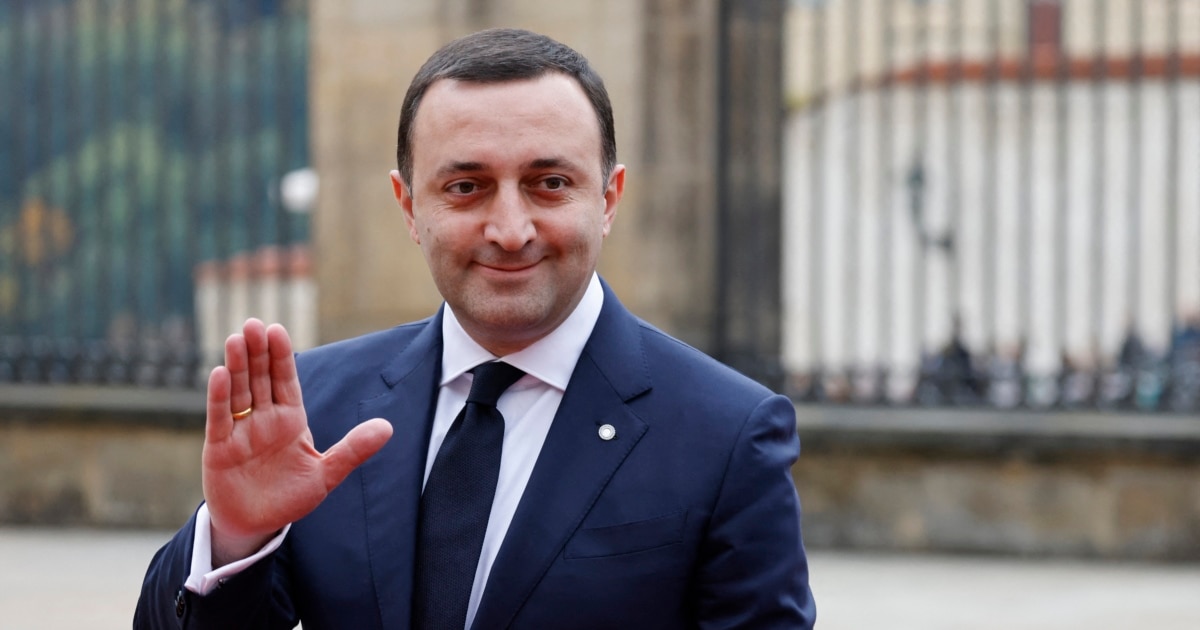
Georgian Prosecutor's Office Declines to Open Probe into Former PM Garibashvili’s Claims of Psychological and Moral Coercion
The Prosecutor's Office of Georgia said it will not launch a criminal investigation after former Prime Minister Irakli Garibashvili told a courtroom he had been subjected to "psychological and moral torture" intended to force him to confess to crimes he says he did not commit. Garibashvili's lawyer says the office is avoiding the truth; rights advocates and observers say the refusal raises fresh concerns about accountability, transparency and the treatment of political prisoners.
By Christopher Manley
913 views
Georgia’s Prosecutor’s Office has declined to open a criminal investigation into allegations by jailed former Prime Minister Irakli Garibashvili that he was subjected to "psychological and moral torture" while in detention. In a statement to Radio Tavisupleba, the office said there were no signs of a criminal offense and therefore no investigation has been initiated.
Garibashvili, who is serving a five-year prison term after signing a plea agreement in January admitting to laundering a particularly large amount of illicit income, told a court during a hearing that he had been subjected to pressure and coercion intended to make him confess to crimes he says he did not commit. The hearing was briefly open to the media before Judge Tamar Mchedlishvili — acting on a request from the prosecution — ordered the session closed so that only the parties to the case could remain.
The closure of the session and the prosecutor’s refusal to investigate has drawn sharp criticism from Garibashvili’s defense lawyer, Soso Baratashvili. Baratashvili told Radio Tavisupleba that the prosecutor’s office "is not trying to establish the truth." He said his client has evidence supporting the claim of coercion and that he will discuss future legal steps with Garibashvili after meeting him in custody.
Garibashvili’s courtroom statement — which the court largely sealed from the public record at that sitting — accused unnamed actors of exerting pressure that caused him "psychic and moral pain" and that the pressure was intended to secure his admission of guilt. His lawyer said the claim at that time focused on offers to secure false confessions and on the political manipulations that preceded the current criminal case.
The allegations come against a backdrop of recent, high-profile corruption proceedings involving the former premier. On January 12 Garibashvili signed a plea agreement under which he accepted responsibility for the legalization of particularly large amounts of illicit income and received a five-year prison sentence. For that offense, prosecutors had previously said he faced between nine and 12 years behind bars.
On August 24 prosecutors filed a new corruption charge that, if proven, carries a potential sentence of between 11 and 15 years. The investigation alleges that, according to testimony by Juansher Burchuladze — the former defense minister who himself reached a cooperation agreement with prosecutors — Garibashvili received cash payments totalling 750,000 Georgian lari in several instalments from businessman Zurab Tukvadze. Burchuladze has a plea agreement under which he was sentenced to five years in prison, of which he will serve three years in custody and receive two years suspended, and was fined one million lari.
Garibashvili has also publicly alleged that the pressure on him included "immoral blackmail and coercion," and that there were repeated hints that his 75-year-old father, Tariel Garibashvili, could be arrested. Those disclosures followed a letter Garibashvili published on August 17 in which he openly broke with his former political team and with Bidzina Ivanishvili, accusing unnamed actors of offering him the chance to accept a fabricated corruption charge to limit a perceived 1% political risk associated with any political comeback. On August 18 he named Mamuka Mdinaradze as the sender of the letter; Mdinaradze's press office called the claim "complete absurdity." Mdinaradze unexpectedly resigned from political office on August 27.
Rights advocates say the prosecutor’s decision not to investigate, together with the closure of court proceedings to the public and media, raises serious concerns about transparency and the protection of detainees’ rights. Critics argue that when an imprisoned politician alleges coercion or threats to relatives, authorities should at minimum open inquiries to establish whether abuses occurred. The Prosecutor’s Office has justified its inaction by pointing to an alleged absence of criminal signs, while Garibashvili’s defense insists there is evidence that merits investigation.
The cloud of competing allegations — a high-profile corruption prosecution, claims of coercion and pressure, and closed court proceedings — underscores deeper tensions in Georgia over rule of law, political influence in prosecutorial decisions, and the treatment of high-profile defendants. Observers say the episode will likely intensify scrutiny of the justice system and its handling of politically charged cases, particularly where claims of mistreatment in custody intersect with ongoing criminal investigations.