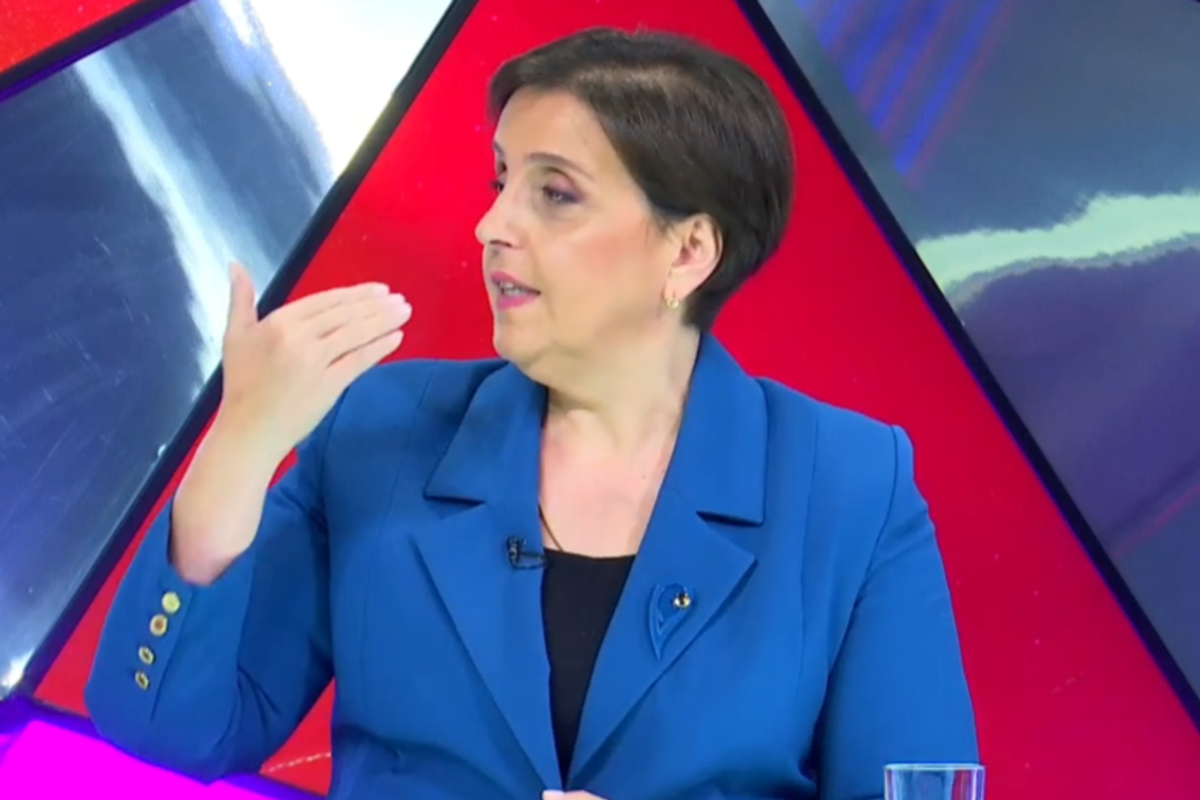
Georgian journalist Eliso Kiladze sentenced to 10 years amid fraud probe she says aims to silence her
A Tbilisi court has handed Qronika+ founder Eliso Kiladze a 10-year prison sentence after finding her guilty of fraud and money laundering in a closed trial tied to alleged scam call centres. Kiladze, detained since February, denies the charges and says the prosecution is a politically motivated effort to destroy her reputation and shutter her outlet.
By Christopher Manley
1,126 views
The Tbilisi City Court on Tuesday sentenced journalist and media founder Eliso Kiladze to 10 years in prison after finding her guilty of fraud and money laundering in a long-running probe into alleged fraudulent call centre operations. Judge Jvebe Nachkebia delivered the verdict and also ordered the confiscation of two of Kiladze’s cars and $30,000. Kiladze has been held in pre-trial detention since her arrest in February; she is the first of ten defendants in the case to be sentenced following nine months of court proceedings that were closed to the media.
Prosecutors have accused Kiladze and others of participating in a criminal enterprise that used call centres to defraud victims and launder proceeds. The Prosecutor General’s Office alleges that between 2020 and 2023 the group obtained cryptocurrency valued at approximately $9.5 million and then laundered those funds. According to the office’s account, those involved had delineated roles: Kiladze was accused of helping to present the group’s illicit activities as legitimate and of publicly exposing rival call centres to coerce or blackmail them into submission.
The broader list of individuals named in the case includes Georgia’s disgraced former Prosecutor General Otar Partskhaladze, whom the Prosecutor General’s Office has identified as an alleged patron of the network. Partskhaladze currently resides in Russia and has previously faced separate allegations, including being linked to the organisation of a high-profile murder in Tbilisi. Several other defendants are either wanted by authorities or have been charged in absentia: Mikheil Chokheli, businessperson Giorgi Mikadze, and Irakli Sekhniashvili are reportedly sought by prosecutors.
Four other named defendants—businessperson Givi Jibladze, Tornike Janelidze, Ben Anori, and Giorgi Kamladze—were not placed in pre-trial detention after prosecutors cited their “active cooperation” with the investigation. The Prosecutor General’s Office has distilled its case down to distinct accusations of operational, protective and financial roles within the alleged network, while saying court proceedings have been necessary to pursue accountability.
Kiladze has consistently rejected the charges. In her closing statement to the court she called the proceedings a “special operation” targeting her personally as a journalist, designed to inflict “reputational death” and to close down her online outlet Qronika+. She warned that a guilty verdict would mark the state’s response to her reporting and signal her status as a political prisoner. Kiladze also named Mamuka Mdinaradze, head of the State Security Service in 2025–2026 and a former leading figure in the ruling Georgian Dream party, accusing him of orchestrating the case for political reasons; Mdinaradze’s press office has previously dismissed such claims as baseless.
The trial and sentencing take place against a backdrop of intense scrutiny of fraudulent call centres operating in Georgia in recent years. Investigations by international outlets have repeatedly drawn attention to alleged call centre scams linked to powerful figures. In 2023 the BBC aired an investigation alleging links between Georgia-based networks and former Defence Minister Davit Kezerashvili; Kezerashvili denied the claims and the film was removed from BBC platforms by late 2024 after an out-of-court agreement. In 2025 the Organized Crime and Corruption Reporting Project (OCCRP) exposed a downtown Tbilisi call centre alleged to have defrauded victims across Europe and Canada of roughly $35 million between 2022 and 2025. Following OCCRP reporting, prosecutors reported seizing assets of some individuals named by journalists, though public information about subsequent charges or detentions remained limited.
Observers and rights advocates have warned that the closed nature of Kiladze’s trial, the severity of the sentence, and the targeting of a prominent journalist risk chilling independent media and civic activism in Georgia. Critics say the case underscores broader concerns about rule-of-law standards and political influence over law enforcement processes. Supporters of the prosecution argue that the state is pursuing organized criminality linked to large-scale fraud and that legal action is warranted. With several defendants still at large and others cooperating with investigators, the case appears likely to continue unfolding, with significant implications for accountability, media freedom, and public confidence in Georgia’s judicial institutions.