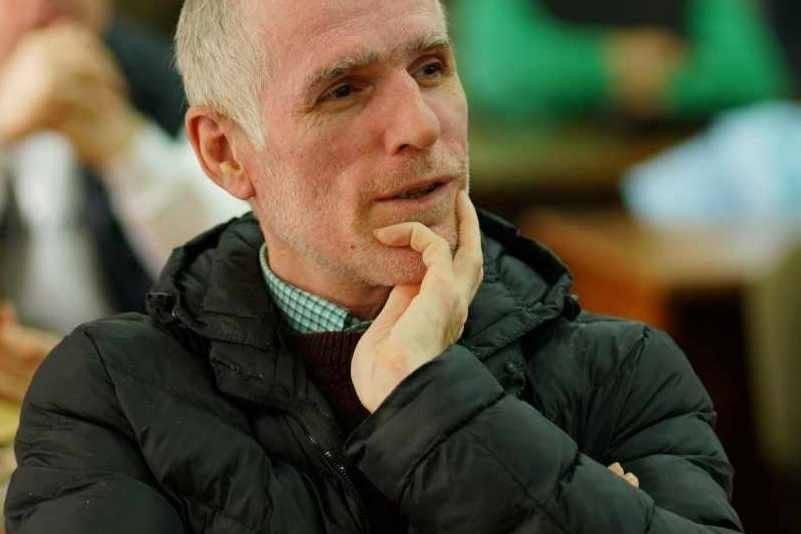
Georgian court overturns teacher's dismissal, finds firing tied to circulation of alleged intimate footage
A Georgian teacher dismissed amid rumours about private intimate footage has had his firing annulled by a local court, which ruled the dismissal unlawful and linked it to the circulation of the footage. The ruling orders reimbursement of lost wages and compensation, and clears the teacher of alleged misconduct toward students.
By Mikheil Gvadzabia
1,126 views
A court in the Black Sea town of Poti has ruled that the dismissal of teacher Igor Kekelia was unlawful and ‘‘directly linked to the circulation of intimate video footage’, according to his lawyer. The Poti City Court, in a 19 June ruling by Judge Ekaterine Maghradze, annulled all disciplinary orders issued by Poti School No. 15 against Kekelia and ordered the reimbursement of lost monthly wages and additional compensation, noting that his position had already been filled by another teacher.
Kekelia, 45, who had taught history, civic education and a subject called Me and Society at the school since 2019, was summoned to the police in early December 2025 after authorities received an anonymous report alleging circulation of private intimate footage involving him. The case rapidly became a subject of local discussion in Poti, a town of fewer than 40,000 residents. Although investigators and Kekelia say they never saw the footage — and that the prosecutors did not possess it — the accusation prompted intense scrutiny, online rumours and pressure from parents at his school.
His lawyer, Tornike Migineishvili, said the court found that the school’s actions were motivated by the viral rumours about the footage rather than credible evidence of wrongdoing in the classroom. The court also determined that Kekelia had not subjected students to psychological pressure or abuse, allegations that school management had used as grounds for his dismissal. Migineishvili described a protracted legal battle and said there had been ‘‘repeated attempts to pressure both the teacher and myself’’.
According to Kekelia and his legal team, the disciplinary process at the school was marred by procedural violations. The disciplinary committee did not disclose the full contents of complaints to Kekelia nor give him a proper opportunity to defend himself, they said. After initial actions by a disciplinary board in late December were upheld by the school’s board of trustees, Kekelia challenged the decision in court. During the ensuing months, numerous school staff, parents and other witnesses were questioned as part of the proceedings.
Kekelia and Migineishvili say the episode began to affect his day-to-day life and work after social media speculation spread several, mutually incompatible versions about the footage — including claims about the identity and age of the other person shown, and even suggestions about his sexual orientation. ‘‘Igor Kekelia categorically denies the allegations, [saying] he has never had any relationship with a minor — or, in fact, with any younger person in his life’’, Migineishvili told OC Media. The defence also provided investigators with screenshots of social media posts alleging illegal conduct and asked that those commentators be interviewed; several later told investigators they had been repeating rumours rather than describing direct knowledge.
Kekelia says he was also physically attacked one evening while walking home from a shop; one person struck him and ran off. He said a parked truck obscured nearby surveillance cameras, complicating inquiries into the incident. Multiple investigations remain open in Poti, including probes into the alleged circulation of the footage, the earlier assault, and threats made against him on social media. In the latest case, police have detained one person.
The teacher described the personal toll of the scandal: ‘‘I didn’t sleep at all for a whole month. I was extremely stressed […] I was constantly thinking about it, including when I was going into classes [before the dismissal]’’. He and his lawyer say the court’s ruling is an important vindication but noted limitations to his access to the criminal case file. Kekelia has not been granted victim status in the criminal investigation — a designation that would allow him to review the materials — because the authorities say the footage has not been found and is not in their possession.
School principal Nana Sabulua did not respond to requests for comment for this article; deputy principal Tea Khorava declined to answer. Sabulua previously told local media in January that Kekelia had been found to have ‘‘many school violations’’ and that the dismissal process had been conducted ‘‘very properly’’. The court ruling raises questions about how educational institutions handle allegations that originate in social media and how procedural safeguards are applied in disciplinary actions that can amount to de facto dismissal, especially when the underlying evidence remains unverified.
The case underscores broader human rights concerns about reputational harm, privacy violations relating to intimate images, and the due process rights of employees subject to disciplinary measures. For Kekelia, the court’s decision restores formal recognition that his firing was unlawful and ties the disciplinary actions to broader patterns of rumor-driven pressure. He urged others to speak out: ‘‘I think that people should not hide this — they should speak out, no matter how personal it is, and fight for their own truth’’.