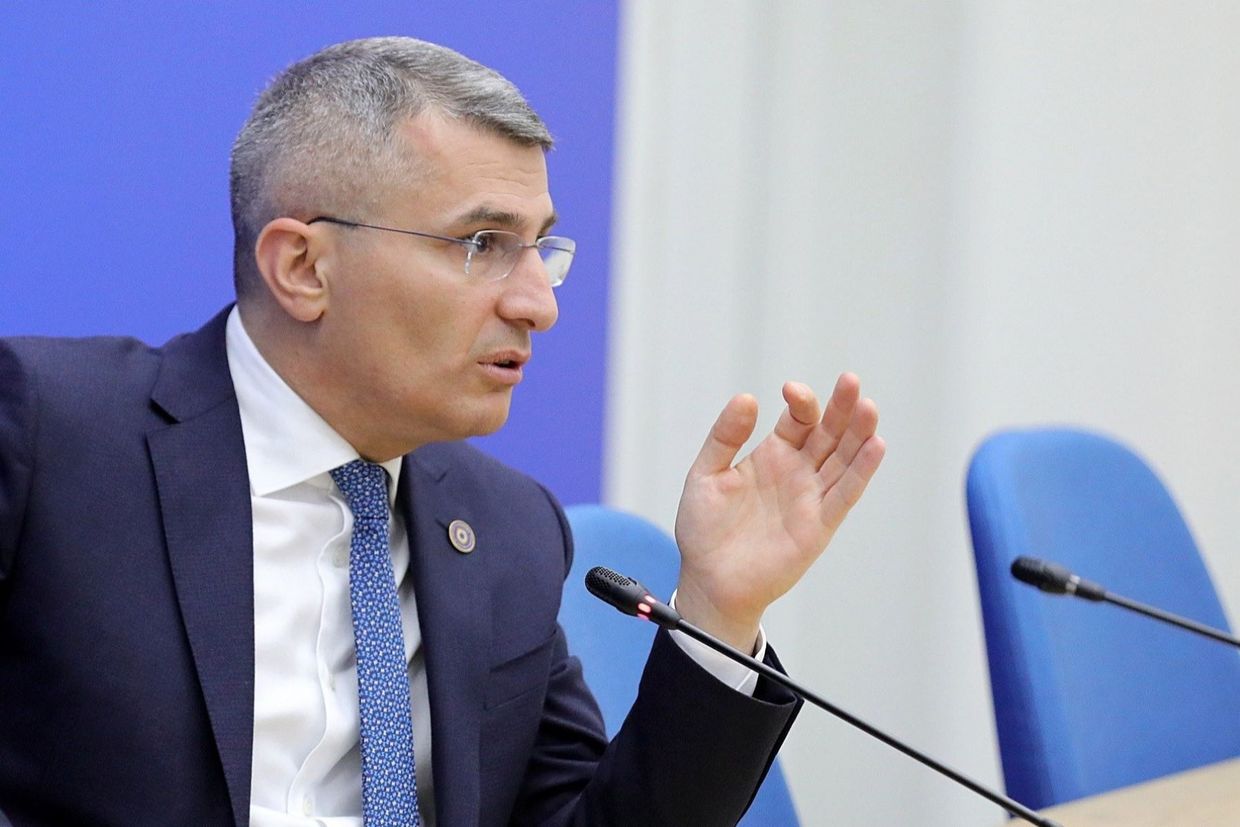
Georgia minister refuses to address claims former PM was pressured to admit false corruption charge, says government 'ready for accusations'
Imprisoned ex-prime minister Irakli Gharibashvili has published letters he says show he was offered a plea deal in exchange for a false admission of corruption. Regional Development Minister Mamuka Mdinaradze, whom Gharibashvili later accused of writing the letter, declined to discuss the allegations, saying it would be inappropriate to 'attack' someone in prison and asserting that government figures had opposed corruption so strongly they were prepared to face accusations.
By Alexander Walter
874 views
Imprisoned former prime minister Irakli Gharibashvili has accused senior figures in Georgia’s ruling circle of pressuring him to confess to a corruption crime he says he did not commit — an allegation that Regional Development Minister Mamuka Mdinaradze has declined to engage with publicly.
This week Gharibashvili published a post saying he had received a letter allegedly penned "on the instructions of" Georgian Dream founder Bidzina Ivanishvili. The following day he specified that the letter was written by Mdinaradze, and said the document offered him a plea deal and a shorter sentence if he admitted to a corruption offence he denies. Gharibashvili framed the offer as part of the government’s campaign launched in 2025 against graft, which he said was aimed at putting him in prison and "destroying him politically".
Mdinaradze, a senior member of the ruling party who currently serves as Regional Development Minister and briefly headed the Law Enforcement Coordination State Ministry in July, told reporters he would refrain from speculating about Gharibashvili’s motives. He said it would be inappropriate to "attack" someone who is in prison. Mdinaradze also asserted that he and "other government representatives" had opposed corruption so uncompromisingly that they were "ready to face accusations." The minister did not directly deny authorship of the letter in the public remarks cited.
Gharibashvili was sentenced in January 2026 to five years’ imprisonment and fined ₾1 million (around $380,000) after being convicted on money-laundering charges involving "particularly large sums." He has continued to post from prison, releasing alleged correspondence and statements that he says document coercion. In one post he wrote that he had told Mdinaradze he did not intend to return to politics and had offered his own proposal to remove any perceived risk; he said he was told there remained a "1% risk" he might return to politics and therefore it was necessary "to bring charges of corruption against me and admit it."
Gharibashvili’s lawyer described Mdinaradze as an "executor" and said the former prime minister would continue to share letters from prison. The lawyer’s comment underscores an insistence by Gharibashvili and his legal team that the disclosures are part of a broader pattern rather than isolated grievances.
Prime Minister Irakli Kobakhidze was asked about the alleged letter at a press briefing but said he did not know what it referred to and declined to comment, noting in part that Gharibashvili had previously held the office of prime minister. The Prosecutor General’s Office and state authorities have not issued a detailed public response to the specific accusation that officials offered a plea in exchange for a false confession.
The investigation and prosecution of Gharibashvili have unfolded against a wider backdrop of probes into officials who served during his tenure. In September, former Defence Minister Juansher Burchuladze was arrested on corruption charges; that action followed the detentions of two former deputy ministers. In late December, prosecutors announced the detention of Grigol Liluashvili, the former head of the State Security Service (SSG), on bribery charges. Georgian Dream party members have insisted these arrests are part of a genuine fight against corruption, even when they involve current or former allies.
Opposition politicians and civil society groups, however, have questioned the government’s motives, arguing that some prosecutions may reflect power struggles within the ruling elite rather than an impartial anti-corruption drive. The allegations now made public by Gharibashvili — if substantiated — would raise serious concerns about coercion, due process, and the treatment of high-profile detainees. They also risk deepening polarization and fueling doubts about the impartiality of prosecutions of senior figures.
For now, Mdinaradze’s decision not to engage with the allegations, along with Kobakhidze’s reluctance to comment, leaves the claims unaddressed in the public record. Gharibashvili’s continued releases from prison and his lawyer’s vow to publish more letters mean the issue is likely to remain a focal point in debates over accountability, political retribution, and the integrity of Georgia’s anti-corruption efforts.