From Soviet séances to CIA remote viewers: The Cold War’s hidden race for paranormal weapons
Beginning in the 1920s and continuing through late-20th-century U.S. programs, both Soviet and American security services explored psychic phenomena as potential tools of warfare and intelligence. What started with secret laboratories and spiritual gurus in Moscow evolved into CIA-backed projects such as Stargate and DIA inquiries that treated remote viewing as potentially significant—even as results remained contested.
By Arthur McFarlane
1,136 views
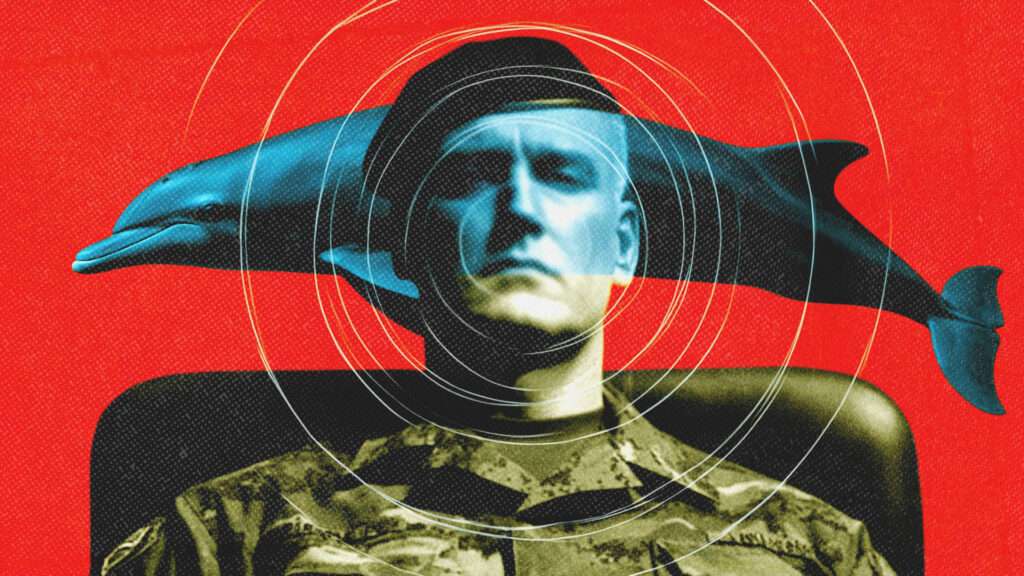
A thread of Cold War history that rarely appears in standard accounts begins in a Moscow laboratory in 1924 and winds through decades of covert research in both East and West. In the February 2019 issue of Armeiiskii Sbornik, the Russian Ministry of Defense's official magazine published an article titled "Supersoldiers for the Wars of the Future," cataloguing extraordinary claims that the Soviet and Russian militaries had experimented with psychically controlling dolphins, disrupting radio and television broadcasts, and even crashing computers. Those claims are the descendants of initiatives that began with Gleb Bokii, head of the special section of the Soviet secret police, and his spiritual collaborator Alexander Barchenko, who opened a secret laboratory at 21 Kuznetsky Bridge in Moscow to pursue hypnotism, brainwashing, and mind reading.
Bokii and Barchenko acted at the intersection of revolutionary politics and a wider Russian fascination with Eastern spirituality and occult science. That intellectual environment—fueled in part by 19th-century Russian exploration of Inner Asia and Tibet—produced a blend of hollow-earth theory, Lamaism, tantric practices and new-age experimentation. Barchenko, a failed medical student turned mystic, and Bokii, who had roots in Ukrainian student circles where romantic nationalism and underground socialism mixed with esoteric ideas, used the space opened by the Revolution to pursue experiments that had been forbidden under the tsar. Their activities, which reportedly included lavish and unusual social gatherings, expeditions planned for Tibet and claims of access to advanced ancient knowledge, are chronicled in works such as Andrei Znamenski's Red Shambhala: Magic, Prophecy, and Geopolitics in the Heart of Asia.
The Soviet investigators did not survive the age they helped reshape: neither Bokii nor Barchenko predicted their own execution during Joseph Stalin's Great Terror. Yet the legacy of their experiments rippled forward and reached American ears. In 1950, journalist and CIA officer Edward Hunter introduced the term "brainwashing" into English-language discourse, asserting that Soviet interrogation techniques had influenced Chinese practices and fueled fears about ideological and psychological manipulation. These concerns took hold in Washington and helped shape a broader appetite for any advantage in the psychological domain.
That appetite resurfaced in the 1970s in a different register. Hal Puthoff, an electrical engineer with a doctorate from Stanford, began parapsychological research at the Stanford Research Institute in 1972. Puthoff says the CIA approached him with the claim that the Soviets were pursuing similar research, and U.S. sponsorship followed. The work coalesced into what later became known as the Stargate Project, a covert U.S. program exploring "remote viewing"—the purported ability to describe or locate distant targets through psychic means. The project has since entered popular culture through Jon Ronson's book and the 2009 film The Men Who Stare at Goats.
Evaluations of Stargate and allied efforts have been mixed. High-profile anecdotes include an account, cited by former President Jimmy Carter, of a psychic allegedly providing coordinates for a downed aircraft in Africa, and claims by Puthoff on The Joe Rogan Experience that a remote viewer described the Soviet Typhoon-class submarine before it was public knowledge. At the same time, a 1983 Defense Intelligence Agency report judged data from the project as "highly variable" and "mixed with much extraneous or inaccurate information." Such findings prompted Project Grill Flame, a follow-up effort to assess whether remote viewing was real, whether it could be replicated, and whether foreign advances in "psychoenergetics" posed a national security threat. Grill Flame concluded that "remote viewing is a real phenomenon" and that it deserved attention because adversary research appeared to have government backing.
Documentation from the Soviet side remains scarce, but a few episodes suggest that parapsychology occupied some level of official interest in Moscow and later in post-Soviet Russia. In a 2015 Kommersant interview, Nikolai Patrushev, then secretary of the Russian Security Council, recounted an episode in which a KGB-trained psychic named Georgy Rogozin allegedly read the mind of former U.S. Secretary of State Madeleine Albright and concluded she sought to carve up Russia—an account unsupported by any public statement from Albright herself. Rogozin reportedly worked as an adviser to Alexander Korzhakov, head of the Presidential Security Service, and parapsychological counsel in Kremlin circles has reappeared in multiple guises over the decades. More recent Russian military writings have asserted that soldiers developed a range of extraordinary abilities—reading documents locked in safes, identifying terrorists psychically, and enduring long periods without food, water, or sleep—and that some of these techniques were employed during the Chechen conflicts of the 1990s.
Why did institutions on both sides of the Iron Curtain invest time and money in such pursuits? The article argues that the phenomenon must be seen in context: the collapse of imperial and political orders often produces spiritual ferment, and the fall of the Soviet Union provoked a late-20th-century resurgence of mysticism in Russia, described by Joseph Kellner in The Spirit of Socialism: Culture and Belief at the Soviet Collapse. In the United States, the Cold War bred paranoia about Soviet capabilities—exemplified by McCarthy-era fears of spies and later by CIA counterintelligence purges under James Jesus Angleton—that made any perceived edge alluring. Against a backdrop of proxy wars, nuclear brinkmanship and mutual miscalculation, researching unconventional means of influence and intelligence began to look less eccentric to policymakers than it might in peacetime.
The historical record on paranormal military programs remains patchy and contested. Some projects produced anecdotes and disputed claims of success; internal assessments often found results inconclusive or inconsistent. But the story of Bokii's basement laboratory, mid-century American responses, and later official references in both Washington and Moscow demonstrates that psychic research was not merely the fantasy of isolated eccentrics: it was, at various moments, an institutional preoccupation shaped by the anxieties and strategic imperatives of a bipolar world. Whether the programs yielded operational advantages or chiefly reflected the psychology of superpower rivalry, their existence underscores how far governments will sometimes go in search of perceived security in times of existential competition.