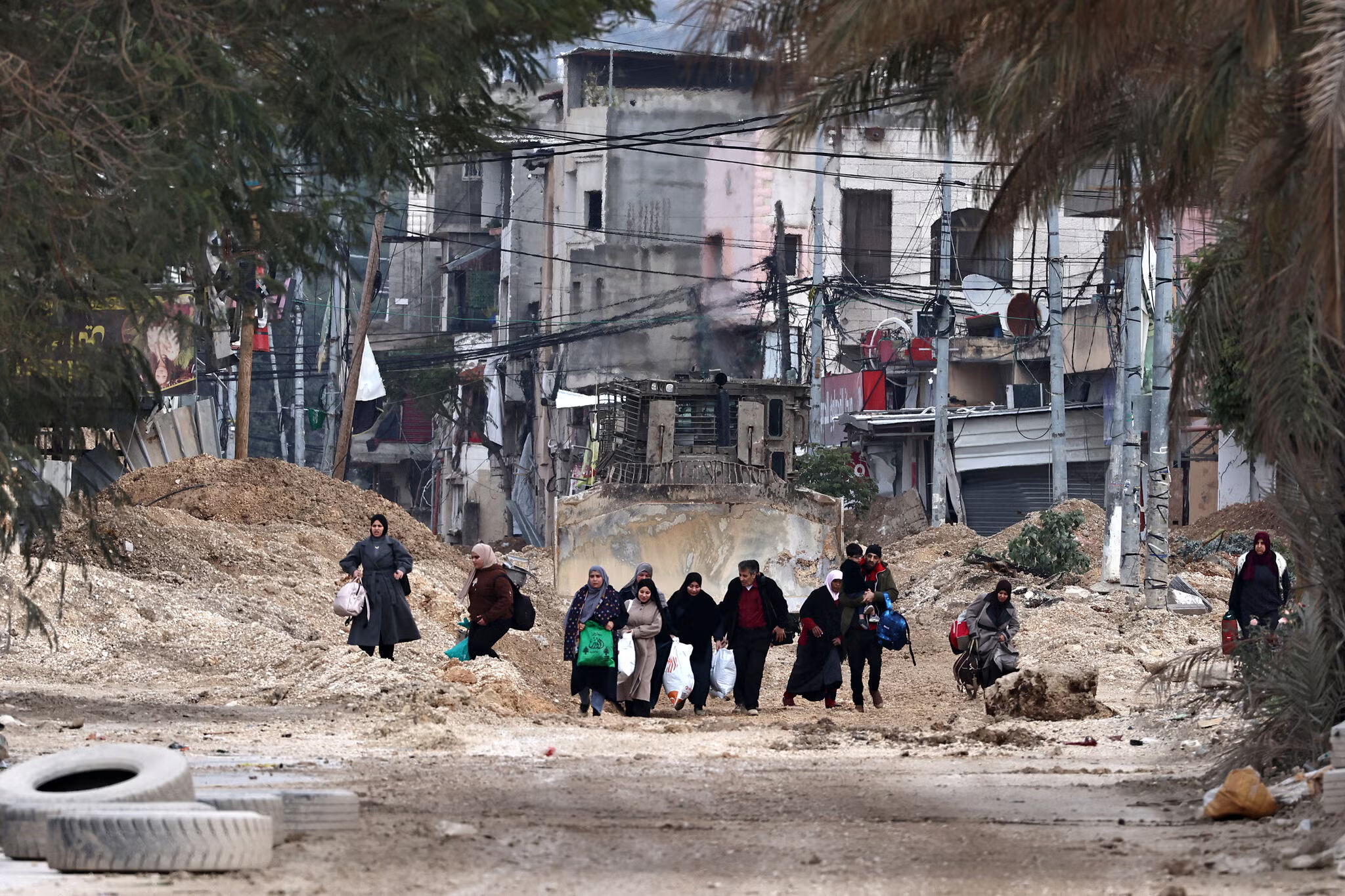
From Gaza to the West Bank: The Struggle to Survive and Rebuild Life from Zero
Palestinians in the occupied West Bank and Gaza continue to face repeated displacement, violence and the loss of access to homes, farmland, water and other basic necessities. Drawing on personal testimonies and humanitarian reports, this investigation examines how displacement is reshaping daily life and leaving families struggling to find safety, shelter and a path towards rebuilding their futures.
Restrictions on Palestinians’ access to land, their homes and essential services in the occupied West Bank long predate the events of 7 October 2023. The UN Office for the Coordination of Humanitarian Affairs documented longstanding movement restrictions affecting Palestinian communities in its June 2020 report, including obstacles to accessing healthcare, education and livelihoods. In a December 2023 report, the UN Human Rights Office stated that violence by Israeli forces and settlers in the West Bank had already reached its highest levels since UN records began in 2005 during the period from January to October 2023. Furthermore, the report documented a further deterioration after 7 October, including increased settler attacks and the displacement of Palestinian communities.
B’Tselem, formally known as the Israeli Information Center for Human Rights in the Occupied Territories, traces the history of Palestinian dispossession in its September 2026 report, The Elimination Project. The organisation traces this history to the Nakba of 1948, when hundreds of thousands of Palestinians were expelled or fled their homes, Palestinian communities were destroyed or depopulated, and most Palestinian refugees were not allowed to return. The report describes how, after Israel’s establishment, Palestinians who remained within its borders lived under military rule until 1966, facing restrictions on movement and extensive land expropriation. Following Israel’s occupation of the West Bank in 1967, similar mechanisms of military control, land appropriation and restrictions on construction, development and movement were imposed there. B’Tselem argues that these longstanding policies have intensified since late 2022, particularly after 7 October 2023.
According to the UN Office for the Coordination of Humanitarian Affairs (OCHA), more than 3,960 Palestinians were displaced across the occupied West Bank in 2026 due to demolitions, evictions, settler attacks and related access restrictions, as of the reporting period covered by its September 2026 update.
Allegra Pacheco, chief of party at the West Bank Protection Consortium, told The Liberty Bulletin that the organisation had observed an increase in both the frequency and severity of settler violence since the Gaza war began in October 2023. She described a shift from attacks on the outskirts of Palestinian communities to incidents inside courtyards and homes, where residents are told to leave.
Pacheco said displacement was driven by a combination of settler violence, movement restrictions, demolitions, military operations and barriers to infrastructure and services. She described these pressures as part of a wider pattern, saying: “It's really a package. It's a package that is designed to make life so difficult for Palestinians.”
Pacheco also highlighted sexual harassment as a significant trigger for displacement, citing a Consortium survey of displaced communities.
“We did a small, modest survey of displaced communities, and we asked them, what were the major triggers. We asked them to rank one of the major triggers that forced you out…and for sexual harassment, 85% of them said that was a major trigger,” Pacheco told The Liberty Bulletin.
In a written response to questions from The Liberty Bulletin (TLB), the Norwegian Refugee Council (NRC) shared the account of Mahmoud Tubasi Abbad, a 60-year-old resident of Jalud village in the Nablus district. Abbad was interviewed by phone on 28 October 2026 by Farah Bayadsi, NRC’s Advocacy Coordinator, using questions sent by TLB, and he described how repeated settler attacks, threats and the loss of access to his farmland forced his family from their homes.
Abbad said settlers first attempted to set fire to his home and those of his two sons in early April, pouring petrol on the houses before his sons managed to extinguish the fire. On 19 April, settlers established a tent approximately 120 metres from the family’s homes and began throwing stones, damaging property and harassing them. On 27 April, part of Abbad’s house, including the basement floor, was demolished, and a car was burned.
According to Abbad, the family remained surrounded until 16 July, when their electricity and water supplies were completely cut off. He said armed settlers threatened to kill them if they did not leave, forcing the family to flee with only a gas cylinder and the clothes they were wearing, leaving their household belongings behind.
The displacement also cut Abbad off from his livelihood. He said he had relied on farming approximately 26 dunums of land, where he grew olive trees, figs, almonds, apricots, thyme, sage and grapes. He can no longer access the land, which he said settlers have taken control of. Abbad, who said he has a disability in his leg after being shot by settlers in 2001, no longer has access to his former source of income.
He is now staying in a small family house in Jalud, while one of his sons has been displaced to Ramallah and another to Qaryut. Both sons rent accommodation for approximately 1,700 shekels per month, he said.
The family has tried to return to its homes, and Abbad said they have a court ruling confirming their right to do so. However, he said settlers continue to occupy the houses, which have been damaged, with windows and doors broken and parts burned. He said the family cannot repair the properties or return safely without protection from the army. According to Abbad, the family asked the army for help, but was told it could not control the settlers. He added that although the army had dismantled the settlers’ tent five or six times, it had repeatedly been erected again.
“Previously, there had been some attacks by settlers against Jalud, during which some vehicles in the village were damaged. The army would then put a stop to the attacks. This was before the war. After the war, there has been an unprecedented escalation in the settlers' actions and the way they carry out their attacks.”, said Abbad for The Liberty Bulletin.
The Liberty Bulletin spoke with a 22-year-old Palestinian woman who asked to remain anonymous. She said her family traces its roots to a Palestinian village in what is now southern Israel that was depopulated during the 1948 Nakba.
Shocked by the events of 7 October 2023, she and her family were forced to leave their home by 11 October, following an evacuation order.
On 31 October, she and her family, who had sought shelter at her grandfather’s house in Jabalia Refugee Camp, came under bombardment alongside many others.
“We were among those who survived. We found ourselves beneath the rubble. We came terrifyingly close to death. An F-16 missile did not explode, and this was one of the reasons we survived. It is difficult to describe what it feels like to come so close to death and then realise that you have survived, while so much around you has been destroyed. After the attack, we had nowhere to go. We stood in the street for hours, not knowing where we could find shelter. Eventually, we went to a school in Jabalia Refugee Camp, where we slept directly on the floor. We did not even have a classroom to ourselves.” she told The Liberty Bulletin.
For displaced Palestinians, securing shelter is one part of the struggle to rebuild their lives amid widespread destruction. A joint assessment by the United Nations, European Union and World Bank, published in April 2026, estimated that 371,888 housing units in Gaza had been destroyed or damaged, leaving more than 60 per cent of the population having lost their homes. The financial strain extends to everyday necessities. In its October 2026 humanitarian report, OCHA reported that prices in Gaza remained, on average, 204 per cent above pre-October 2023 levels in September, despite declines in the prices of some basic commodities. UNICEF has similarly warned that the availability of food and other essential goods in markets does not mean that vulnerable families can afford them, as limited income and weak purchasing power continue to prevent many from meeting their basic needs.
According to an October 2026 report from OCHA, nearly the entire population of Gaza was living in deteriorated tents and makeshift shelters as families prepared for another winter without adequate protection from cold, wind, rain and flooding. The report also documented sharp increases in food prices during the reporting period, with potato prices rising by 72% and the food basket increasing by an average of 20%.
“WASH-related preparations for the cold and rainy season are ongoing, with lack of essential supplies forcing partners to prioritize the most critical interventions”, it is said in the report.
For the 22-year-old Palestinian woman, displacement continues to shape daily life. As the colder months approach, she fears that if her family can no longer afford rent, they may be forced to live in a tent again.
“We now have to pay rent for accommodation, buy food at extremely high prices and try to meet the needs of the children, all without a reliable source of income. My greatest fear for the coming months is that we will no longer be able to afford our rent. We have already experienced life in a tent, and I am terrified of having to return to it. I am worried about the cold, our lack of warm clothing and our ability to afford food.”, added the anonymous source.
In Gaza, displacement has also left families struggling to secure basic necessities, including safe drinking water and adequate sanitation. According to a joint assessment cited in a July 2026 report by the UN Office for the Coordination of Humanitarian Affairs (OCHA), 63 per cent of assessed households in Gaza had access to less than six litres of drinking water per person per day, while 74 per cent collected water directly from trucks. These shortages add to the challenges faced by families trying to rebuild their lives after losing their homes and being repeatedly displaced.
The anonymous source described how repeated displacement affected her family’s access to water, making drinking, washing and maintaining basic hygiene increasingly difficult. Before leaving northern Gaza, her family relied on an electricity-powered system to pump water into their residential building. Conditions worsened when they moved to Jabalia Refugee Camp, where overcrowding and a lack of electricity left water scarce. At one point, the family went around 40 days drinking unfiltered water, while there were also periods when they had no water at all. Unable to find drinking water, they resorted to drinking cola. According to the source the shortages caused health problems, including skin problems and severe constipation, and that they once went around 10 days without showering.
Although the family now lives in a rented apartment in Gaza City, accessing water remains costly and physically demanding. They must pay for both the water and the electricity needed to pump it into the building’s storage tanks. Filtered drinking water is delivered by trucks, but the family must collect it and carry it up to their apartment on the sixth floor.
“I want people to understand that having water available somewhere does not necessarily mean that a family can access it easily or afford it. Water is essential for drinking, cooking, bathing, washing clothes, and protecting our health. When it becomes scarce or too expensive, every part of daily life is affected.”, added the 22-year-old.
Meanwhile, the UN World Food Programme (WFP) announced on 19 October 2026 that funding shortages had forced it to reduce food assistance in Gaza by around one-third, leaving 500,000 people without access to critical assistance. The agency said it was supporting 1.1 million people in October, down from 1.6 million the previous month, and had halved food rations for families receiving assistance. With more than 80% of Gaza’s population unemployed, many families remain unable to afford fresh produce and protein-rich foods even when these are available. WFP warned that the cuts came as winter approached and that fragile improvements in food security could quickly be reversed if funding continued to decline.
Despite the uncertainty, the 22-year-old hopes to complete her education and build a future.
“More than anything, I want the chance to finish my education and build a future.”, concluded the anonymous source.