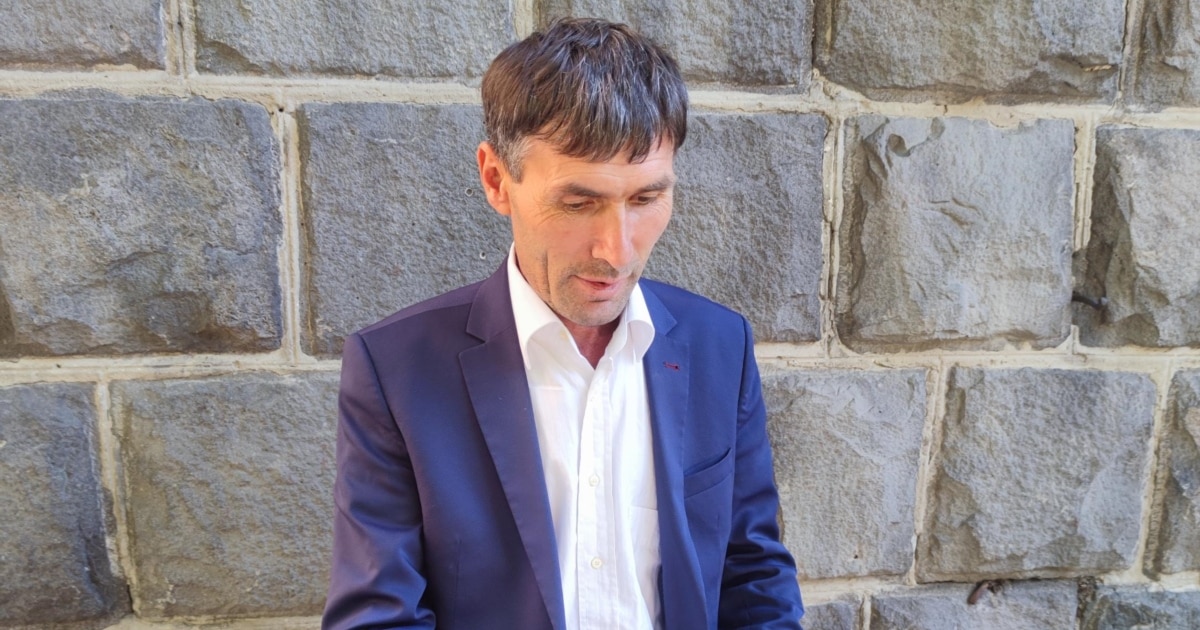
Former Tajik OMON Officer Says Authorities Pressure Elderly Father and Brother to Secure His Return from Abroad
A former member of Tajikistan’s OMON special police, Asomuddin Rajabov, has told RFE/RL that Tajik authorities have summoned and pressured his 80-year-old blind father and his brother to demand that he return to Tajikistan. Rajabov, who faces extremism accusations linked to his online criticism of the government’s 2022 crackdown in Gorno-Badakhshan and who has moved between several countries, was briefly detained on the Armenian border in late March before being released.
By Clémence Desjardins
908 views
A former officer of Tajikistan’s OMON special police force has accused Tajik authorities of exerting pressure on his family in an effort to compel him to return to the country. Speaking to RFE/RL, Asomuddin Rajabov, who is living abroad, said that his 80-year-old blind father and his brother were summoned to the police and questioned as part of what he described as an effort to secure his repatriation.
Rajabov said family members were told by officials that he had been amnestied, was not under investigation, and could safely return to Tajikistan. According to Rajabov, the authorities did not provide any paperwork or documentation to substantiate those claims. He told RFE/RL that he asked his parents to give his phone number to the authorities and to inform them that he had no intention of returning to Tajikistan.
The allegations come against a backdrop of long-running tensions between the Tajik government and critics of its conduct during violent unrest in the remote Gorno-Badakhshan Autonomous Region (GBAO) in 2022. Rajabov says he was accused in Tajikistan of extremism after he criticized government actions in online exchanges with opposition figures following the suppression of protests in GBAO.
Rajabov told RFE/RL he witnessed bloodshed while serving in the special police unit, after which he resigned from OMON and left Tajikistan. He said he initially went to Russia, then to Turkey, and later to Georgia. On March 23 media reported that he was detained at the Armenian border at the request of Tajik authorities when he arrived from Georgia. Rajabov says he was released the following day and is now residing in Armenia.
Rajabov added that he has documentation in order to leave Armenia for a third country. He has framed the summons of his elderly, visually impaired father and the questioning of his brother as part of a broader pattern of coercion by Tajik authorities aimed at forcing the return of a critic who has fled abroad.
Human rights groups and observers have previously documented a hardening of state measures in Tajikistan after the May–June 2022 unrest in GBAO. Those clashes resulted in dozens of deaths; hundreds of residents were detained in the aftermath, and many received lengthy prison sentences. The events triggered what rights organizations have described as a wave of repressive measures against civilians and perceived opponents in the region.
The case of Rajabov illustrates the transnational pressures faced by Tajik critics in exile, including the use of family members at home as leverage. Forcible return, detention on foreign borders based on requests from home governments, and the targeting of relatives are practices human rights advocates caution can amount to collective punishment or coercion and may violate international human rights norms.
RFE/RL reported Rajabov’s account; there was no public confirmation from Tajik authorities in the reporting about the interactions with his family or the asserted amnesty. Given the broader context of arrests and prosecutions related to the 2022 GBAO unrest, Rajabov’s allegations add to concerns among rights monitors about the treatment of critics, the safety of exiles, and the tactics used by states to silence or repatriate dissenting former officials and activists.