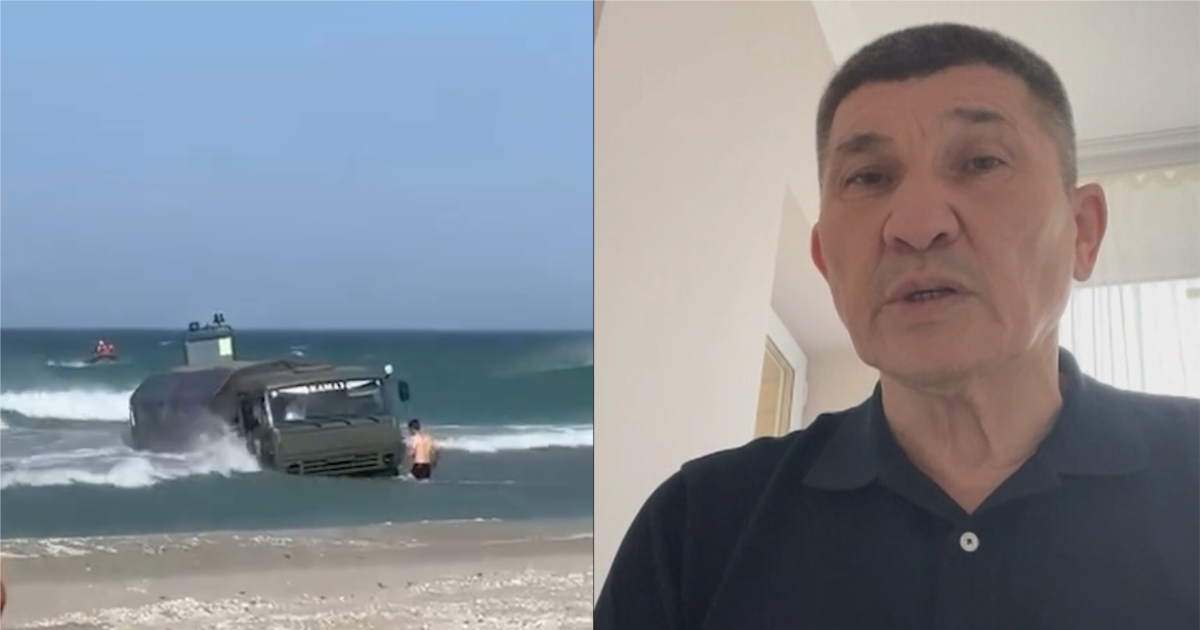
Former Kazakh Navy Commander Says Military Leadership Responsible for Deaths of 14 Servicemen, Urges That Caspian Exercises Should Have Been Postponed or Canceled
Vice-Admiral Zhandarbek Zhanzakov, the former commander of Kazakhstan’s naval forces, has blamed military leaders for a recent tragedy that claimed the lives of 14 servicemen during exercises on the Caspian Sea. Zhanzakov said the drills should have been postponed or called off as weather conditions worsened, and his comments raise questions about decision-making and accountability within the military.
By Christopher Manley
949 views
A former commander of Kazakhstan’s naval forces has publicly held military leadership responsible for the deaths of 14 servicemen during recent exercises on the Caspian Sea, saying the drills should have been postponed or canceled in light of deteriorating weather conditions.
Vice-Admiral Zhandarbek Zhanzakov, who served as the head of Kazakhstan’s naval forces, spoke about the incident in direct terms. He said that commanders who ordered the drills to proceed are accountable for the resulting fatalities. "The exercises should have been postponed or canceled," Zhanzakov said, underscoring his view that the decision to carry out the maneuvers amid worsening weather was a critical error.
The incident, which resulted in the deaths of 14 servicemen, has drawn attention to safety protocols and command decisions during military exercises. Zhanzakov’s remarks represent a stark assessment from a senior former officer and add a notable voice to public discussion about how the armed forces plan and execute training operations under potentially hazardous conditions.
Details about the exact circumstances of the incident — including the precise sequence of events, whether equipment failures were involved, and the identities of those who died — have not been provided in Zhanzakov’s statement. His comments, however, emphasize weather as a principal factor and focus scrutiny on the judgment of active military commanders who authorized the exercises.
Calls for accountability in the aftermath of military accidents often center on whether risk assessments were adequate and whether established safety procedures were followed. Zhanzakov’s position implies that, in his view, commanders either misjudged the risk posed by the weather or failed to act on available information warning of danger. As a former chief of the naval forces, his critique carries weight within military and public discourse in Kazakhstan.
The tragedy is likely to prompt demands for clarity from families of the deceased, the public, and oversight bodies, and may lead to inquiries into how the military assesses and responds to changing environmental conditions during training. Zhanzakov’s intervention puts pressure on current leadership to explain decisions that led to the exercise continuing and to outline any steps that will be taken to prevent similar losses in the future.
While Zhanzakov’s statement focuses on immediate responsibility for the deaths, it also touches on broader questions about institutional accountability within the armed forces: how risk is evaluated, who has the authority to halt operations, and what safeguards exist to protect servicemen and women during training.
The comments were published by Azattyq, the Kazakh service of Radio Free Europe/Radio Liberty, which reported Zhanzakov’s assessment following the deadly incident on the Caspian Sea. As the situation develops, observers will be watching for official responses from military authorities, any formal investigations announced, and measures proposed to ensure greater safety during future exercises.