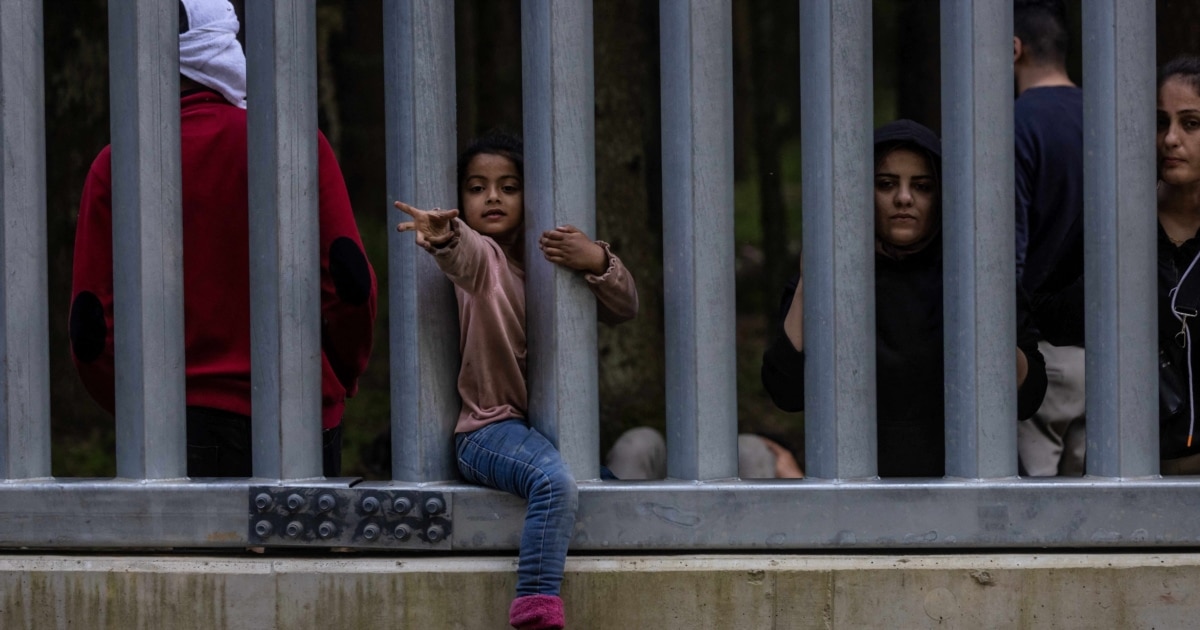
Five EU Countries Agree to Joint Model for Migrant Holding Centres Outside Europe; Rights Groups Raise Alarms
Austria, Germany, Greece, Denmark and the Netherlands have agreed to develop a unified model for centres to hold migrants outside the European Union for people whose asylum claims have been rejected. While EU officials and some governments frame the centres as a pragmatic response to low deportation rates, international agencies say they have not yet been approached formally and human-rights groups warn the plan risks outsourcing responsibility and undermining protections for vulnerable people.
By Alexander Walter
962 views
Five European Union member states — Austria, Germany, Greece, Denmark and the Netherlands — have agreed to develop a common model for facilities to hold migrants outside the EU, with the first people possibly being placed in such centres as early as 2027, according to reporting by the Associated Press. The proposal aims to provide a mechanism for migrants whose asylum requests in those countries were rejected but who, for various reasons, cannot be returned immediately to their countries of origin.
Danish Minister for Immigration and Integration Morten Bødskov was cited by AP describing the planned sites as intended for people who “do not have lawful grounds to remain in the EU” but who cannot be returned home. In the Russian-language report, the Danish minister’s remarks were quoted as: "центры содержания — это не эвфемизм для центров задержания и депортации, но шанс для тех «нелегальных мигрантов, которые не имеют законных оснований оставаться в ЕС, однако по каким-либо причинам не могут вернуться в свои родные страны." The governments involved have begun discussions with potential host countries in Africa, according to the AP account.
European officials say oversight of the proposed facilities could involve the International Organization for Migration (IOM) and the UN Refugee Agency (UNHCR). However, the UNHCR told AP that the agency had not yet been approached by the countries proposing the centres and therefore was not prepared to comment on any specific arrangements or a future role. The lack of formal engagement with international protection bodies has raised questions about how safeguards for asylum seekers and migrants would be enforced.
The announcement comes after the European Union adopted a new migration law on June 1 that, among other measures, enables the establishment of “Return Hubs” — centres located outside the union for the deportation of migrants who lack legal grounds to stay. European Commissioner for Migration Magnus Brunner appealed to public frustration with low deportation rates when advocating the approach, arguing that only a minority of the hundreds of thousands ordered to leave the EU are actually returned. European statistics cited by officials show that of more than 491,000 people required to leave the bloc last year, roughly 135,000 were deported.
Reports earlier this year, notably in Politico, named Kazakhstan and Uzbekistan as two countries under consideration to host such centres. Both Central Asian governments have since denied those reports. Erlan Zhetybaev, chair of the Kazakh committee on international information at the foreign ministry, said in a briefing that Kazakhstan is negotiating with the EU on simplifying visa rules for its citizens, not on hosting detention centres. Amonulla Faiziev, a spokesperson for Uzbekistan’s foreign ministry, told local outlet Kun.uz that the reports were not true and that the issue was not being discussed by the EU delegation in Tashkent.
Human-rights organisations have voiced strong objections to the plan. Critics say that outsourcing migration control to third countries risks systematic rights abuses and allows EU states to sidestep legal responsibilities to protect asylum seekers. The head of Brussels-based NGO PICUM, Michelle LeVoy, told AP that the approach amounted to an old tactic of outsourcing migration control: "аутсорсинг контроля над миграцией – это старая тактика, направленная на то, чтобы просто убрать людей с глаз долой и уклониться от обязательств по защите прав человека." Rights groups also warn that deportations carried out from such external centres could send people to countries with which they have no links, raising the possibility of refoulement or other violations of international protection standards.
Proponents of the centres argue they would create orderly procedures to return migrants and reduce irregular arrivals and chaotic border situations inside the EU. Opponents counter that unless independent monitoring, access to asylum procedures and legal safeguards are guaranteed, the centres could institutionalise a system that prioritises removal over the protection of vulnerable people. With discussions continuing with potential host states and international agencies, the coming months will be critical in determining whether the plan moves from model design to operational reality, and what legal and humanitarian safeguards will be put in place.