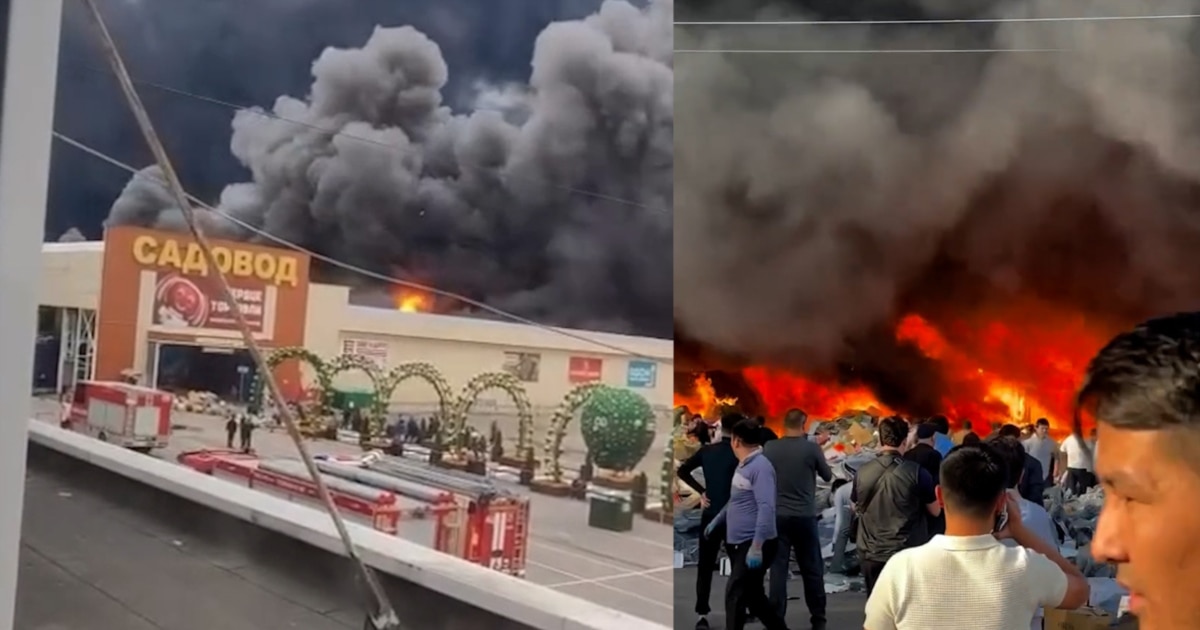
Fire Ravages Moscow’s Sadovod Market During Mass Drone Attacks; Major Hub for Central Asian Workers Affected
A large fire broke out at the Sadovod wholesale-and-retail complex in Moscow in the night of June 18, during a wave of drone strikes on the Russian capital and the Moscow region. The market — a significant place of work for migrants from Central Asian countries — was engulfed amid the assaults, raising urgent concerns about the safety and livelihoods of its many workers.
By Christopher Manley
1,133 views
A large fire broke out overnight on June 18 at the Sadovod wholesale-and-retail market complex on the outskirts of Moscow, according to a report by Azattyq. The blaze occurred amid what the outlet described as a mass drone attack on the Russian capital and the surrounding Moscow region. The initial report provided limited operational details about the cause of the fire beyond its coincidence with the broader drone incidents.
Sadovod is widely known in Moscow as one of the city’s major commercial hubs, combining wholesale and retail operations that serve both local markets and traders from other regions. The complex has long been a significant source of employment for migrants from Central Asian countries; Azattyq noted that “Садовод” is known as one of the large places of work for citizens of Central Asia. That profile underscores the potential human and economic impact of the blaze on a population that often works in precarious conditions and depends on daily earnings and informal supply chains.
Details about casualties, the number of people displaced, or the extent of physical destruction at Sadovod were not made available in the initial report. Local authorities’ statements, official damage assessments, emergency-response timelines and the broader causes behind the fires or the drone strikes have not been included in Azattyq’s short dispatch. Given the scale of the reported attack on Moscow and the Moscow region, the absence of immediate, verified figures and on-the-ground reporting leaves open significant questions about the humanitarian consequences.
For migrant workers, fires and sudden disruptions at major employment sites can have immediate and severe consequences: loss of daily income, interruption of remittance flows to families in home countries, and increased vulnerability to eviction or exploitation. Markets like Sadovod often house small-scale vendors, warehouse operations and informal labour, meaning many affected people may lack social protections, insurance, or access to emergency assistance. The incident therefore highlights broader human-rights concerns about protecting civilians — particularly non-citizen workers — during episodes of armed escalation.
Beyond the direct human costs, the incident at Sadovod may have implications for commerce and logistics in and around Moscow. Wholesale markets function as key nodes in urban supply chains; prolonged closures or destruction could ripple through retail supply, affecting goods availability and prices. For migrants who rely on these sites for income, economic dislocation can quickly translate into housing insecurity and reduced ability to meet basic needs.
The report by Azattyq did not assign responsibility for the drone strikes or link any party directly to the Sadovod fire. In the absence of further verified information from emergency services or independent observers, attributing cause or assessing the full scale of harm would be premature. Human-rights monitoring groups and labor advocates will likely be watching for follow-up reporting on casualties, damage assessments, and whether affected workers receive support or compensation.
The incident underscores the wider human-rights stakes when urban areas and civilian infrastructure come under attack. Markets, workplaces and transit hubs are integral to the livelihoods of migrant and low-income populations, and damage to such sites can disproportionately affect marginalized groups. Continued reporting is needed on the fate of Sadovod’s workers, official response measures, and any steps taken to account for and assist those directly impacted by the fire and the wider drone assault on Moscow and its environs.