Feud Between Marcos and Duterte Factions Strains Philippine Institutions as Impeachment and ICC Warrant Spark Turmoil
Rivalries between the Marcos and Duterte political camps have escalated in recent weeks, placing pressure on Philippine institutions and raising the prospect of legislative gridlock ahead of the 2028 presidential election. Key developments include the House impeaching Vice President Sara Duterte, a contested installation of a Senate president aligned with her, and a failed attempt by NBI agents to serve an ICC warrant on Senator Ronald "Bato" dela Rosa on Senate grounds.
By Christopher Manley
912 views
Over the past three weeks the Philippines has experienced a rapid escalation of high-profile political conflicts that are testing the resilience of state institutions and could complicate governance in the run-up to the 2028 presidential election. Two intertwined scandals that surfaced on and around May 11 have sent shock waves through the country's political landscape: the impeachment of Vice President Sara Duterte in the House of Representatives and a separate confrontation in the Senate involving an International Criminal Court warrant and efforts to change parliamentary leadership.
On May 11 the House of Representatives moved overwhelmingly to impeach Vice President Sara Duterte and transmitted the articles of impeachment to the Senate for trial. Under the procedural timetable, the vice president faces a June 1 deadline to formally answer the articles, and the Senate has scheduled a trial to begin on July 6. The impeachment marks a major escalation in the public political dispute and elevates a partisan confrontation into a constitutionally prescribed adjudicative process handled by the legislature.
Also on May 11, senators aligned with the vice president succeeded in installing a political ally as Senate president. That leadership change occurred amid heightened tensions on the Senate floor and immediately became part of the broader power struggle between rival political camps. The rapid reconfiguration of Senate leadership has potential consequences for legislative priorities, committee assignments and the management of high-profile cases heard in the chamber.
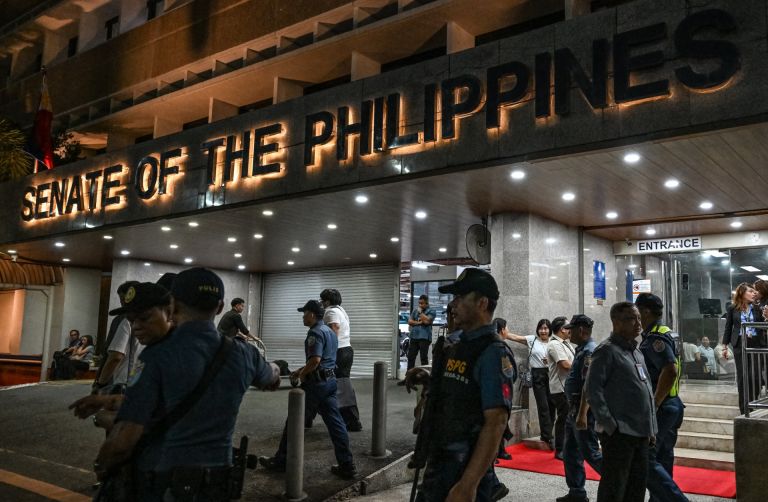
Complicating matters further, agents from the National Bureau of Investigation (NBI) attempted, and failed, to serve an International Criminal Court (ICC) warrant on Senator Ronald "Bato" dela Rosa on Senate premises. Dela Rosa, a former national police chief, is described in contemporaneous reporting as being accused of crimes against humanity during the 2016-2018 controversial anti-drug campaign; the source material notes the allegation but truncates further detail. The unsuccessful effort to effect service inside the Senate underscored the fraught relationship between national law enforcement agencies, international judicial mechanisms and parliamentary privilege or immunity concerns.
Taken together, the simultaneous unfolding of impeachment proceedings, a contested change in Senate leadership and an aborted attempt to execute an ICC warrant within a legislative setting has raised alarm among observers about the politicization of institutions that are meant to serve as checks and balances. The developments threaten to entrench partisan divisions within both chambers of Congress and to inject heightened uncertainty into legislative scheduling and policymaking. If the Senate becomes consumed with the impeachment trial and intra-chamber power struggles, lawmakers may find it difficult to advance routine and urgent public-policy measures.
Beyond the immediate institutional effects, the convergence of these scandals carries broader political implications. The escalation is occurring against the backdrop of a deeply polarized political environment dominated by influential dynastic families, and it signals how high-stakes conflicts between rival factions can spill into the formal mechanisms of governance. With the next presidential election not scheduled until 2028, the current turmoil could shape political alignments, public perceptions of accountability and the operational capacity of core government institutions in the months and years ahead.
The coming weeks will be critical in determining whether the Senate can manage its dual role as a legislative body and an impeachment tribunal without becoming paralyzed, and whether national institutions such as the NBI and international actors such as the ICC can navigate legal processes amid intense domestic political scrutiny. How these institutions respond to the pressures of factional rivalry and high-profile legal actions will influence both the immediate trajectory of policymaking and the longer-term credibility of democratic checks and balances in the Philippines.