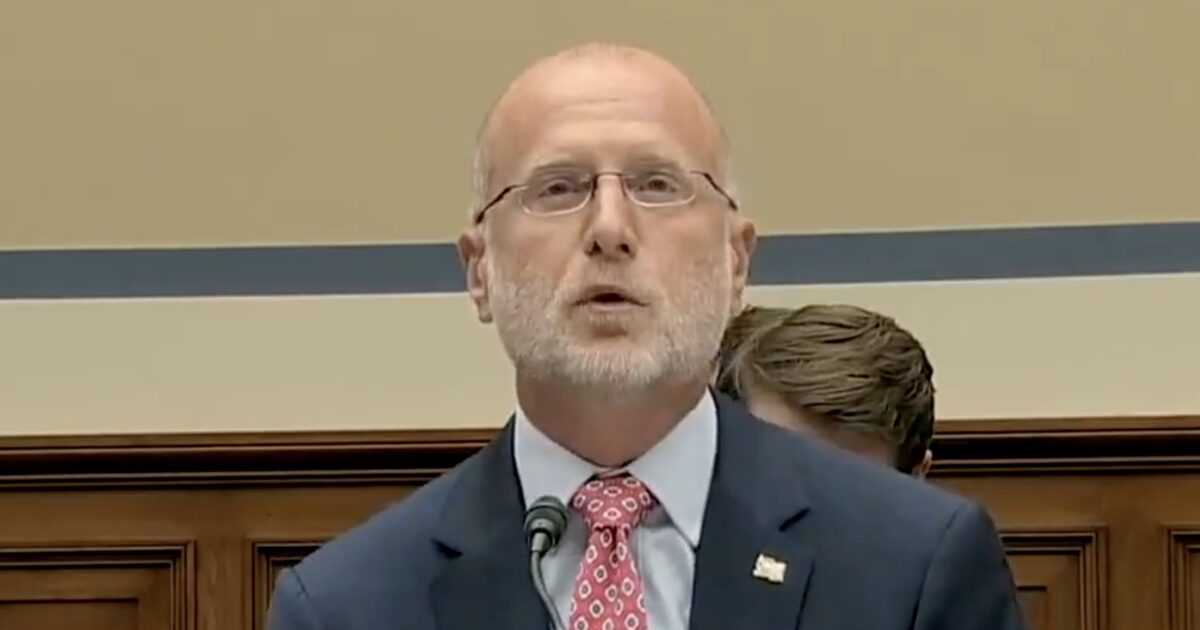
FCC Chairman Warns Broadcasters They Could Lose Licenses Over Alleged 'Fake News' About Iran Conflict
Federal Communications Commission Chairman Brendan Carr issued a public warning to broadcast networks, saying those that air what he called "hoaxes and news distortions" about the war with Iran might face license revocation at renewal. The statement followed President Donald Trump's rebuke of mainstream outlets over reporting on damage to U.S. aircraft tankers and drew public rebukes from White House officials and pro-Trump commentators.
By Jim Hᴏft
1,049 views
Federal Communications Commission Chairman Brendan Carr on Saturday issued a pointed warning to U.S. broadcast networks, saying stations that spread what he described as "hoaxes and news distortions" in coverage of the escalating conflict with Iran could face consequences when their licenses are reviewed. Carr framed his remarks around the legal duty of broadcasters to serve the "public interest" because they operate on publicly owned airwaves.
Carr's comments came after President Donald Trump publicly criticized mainstream media reporting about the conflict, including headlines that claimed U.S. aircraft tankers had been significantly damaged during an Iranian strike. In a message posted on social media, Carr cautioned broadcasters to "correct course before their license renewals come up," and reiterated that "the law is clear. Broadcasters must operate in the public interest, and they will lose their licenses if they do not."
In his post, Carr also argued that changing editorial practices would serve broadcasters' business interests, asserting that "trust in legacy media has now fallen to an all time low of just 9% and are ratings disasters." He added that "The American people have subsidized broadcasters to the tune of billions of dollars by providing free access to the nation’s airwaves," and said it was "very important to bring trust back into media, which has earned itself the label of fake news." Carr linked perceived media distortions to broader political consequences, writing that when misleading coverage persists "it means the public has lost faith and confidence in the media. And we can’t allow that to happen."
The statement explicitly named no single outlet in Carr's post, but partisan commentators and officials immediately pointed to a range of mainstream television and print organizations. The Gateway Pundit article reporting Carr's remarks accused CNN, MSNBC, ABC, CBS and NBC, along with print outlets including The New York Times, Wall Street Journal and The Atlantic, of acting more as "Iranian propagandists" than American journalists—an allegation these organizations have not accepted in their reporting.
White House Press Secretary Karoline Leavitt joined the public criticism of some news coverage, appearing in a video clip shared on social media in which she labeled certain reporting "ABHORRENT" and said that some stories relied on anonymous sources without sufficient verification. Commentators aligned with the Trump administration echoed those sentiments; New York Post commentator Lydia Moynihan wrote on X, "The job of the press is to be skeptical and ask questions… but what we’ve seen the last few weeks is politicians and members of the media seemingly rooting for us to fail in Iran because of antipathy to Trump."
Carr's warning underscores a clash between regulatory authority and journalistic independence. Broadcast licensees are subject to statutory and regulatory obligations that include a public-interest requirement, and Carr framed his comments as enforcement of that mandate. He also tied the remarks to political concerns about media trust and election coverage, suggesting that perceived misinformation played a role in recent political outcomes.
The comments have potentially significant implications for broadcasters. Television and radio stations operate under licenses granted by the FCC for use of public airwaves; those licenses are periodically renewed and have historically been subject to review for compliance with public-interest obligations. Carr's statement signals a willingness by the FCC's leadership to highlight perceived inaccuracies in news coverage when considering license renewals, though the precise legal and procedural steps that would be taken were not detailed in his post.
The debate also highlights broader questions about misinformation, media accountability and the boundaries of government influence over news organizations. Advocates for press freedom often warn that regulatory pressure tied to partisan disputes over coverage risks chilling independent reporting. Supporters of Carr's stance argue that broadcasters have obligations because they use a public resource and must be held to standards that ensure accuracy and trust.
The story was carried by conservative outlets including The Gateway Pundit and has drawn both praise and criticism across political lines. The long-term impact of Carr's warning on newsroom behavior, FCC enforcement patterns, and public trust in media will depend on how the agency acts in the months ahead and whether broadcasters alter practices in response to the public admonitions and political scrutiny.