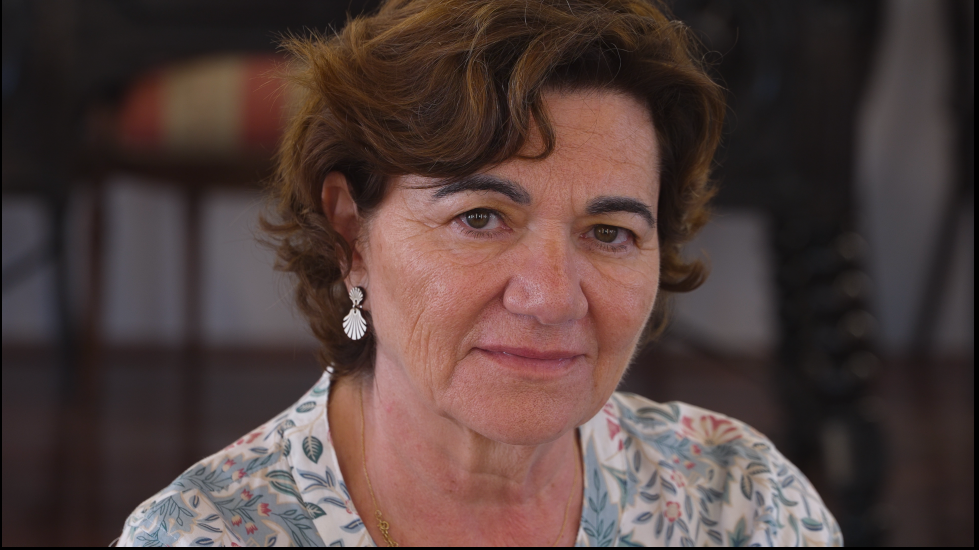
In El Palmar, where fishing rights had passed only to sons since 1250, this is the story of the women whose decades-long fight overturned a medieval rule, winning in court years before their own village was willing to accept them.
By Maryam Raz
1,150 views
Carmen Serrano Soler is soft-spoken, but what she describes, in barely more than a whisper, about a nearly twenty-five-year battle for women’s right to fish in El Palmar, is anything but silent.
El Palmar is a small village nestled in the Albufera lagoon, just south of Valencia, Spain. The privilege of passing down exclusive fishing rights solely to male heirs was granted to El Palmar’s fishermen’s community (Comunidad de Pescadores de El Palmar) by King Jaume I in 1250. A family without sons could not earn a living through fishing.
That medieval rule persisted in practice in El Palmar until the 1990s. In 1992, Carmen became the president of a local women’s association, a group of housewives affiliated with the Tyrius organisation, who longed to step out of the village and as Carmen frames it “do things they had never done.” But this desire soon evolved into accomplishing something bigger for the women and for the children of El Palmar. And that was reclaiming the right for women to inherit and pass on fishing rights.
Initially five fishermen’s daughters decided to challenge the law. Carmen and her lifelong friend, Teresa Chardi, were among them. When internal negotiations with the fishermen’s community failed, these women took the case to a regional court in Valencia.
In October 1998, the Tribunal Superior de Justicia de la Comunidad Valenciana (TSJCV) ruled in the women’s favour, declaring male-only inheritance discriminatory. The sentence relied on the gender equality protections guaranteed by the 1978 Spanish Constitution.
“We celebrated our first victory with fireworks,” Carmen says, chuckling. “But the community was so offended that the successive victories had to be celebrated in silence, behind closed doors.”
The fishermen’s community appealed the court’s sentence. Subsequently, the case was taken to the Spanish Supreme Court, which definitively upheld the women’s right to fish in 2001 and ruled in favour of admitting female members into the Comunidad.
Though this seemed to be the end of the fight, the main battle was only beginning; as social acceptance took years longer. “It was not easy to stand up to a closed society,” Carmen says, timidly smiling. “We were not supposed to let people know about our situation outside the village. It was seen as a betrayal.”
Even when legal doors opened, social barriers remained. Teresa recalls demonstrations demanding their expulsion from the village. The most painful part of witnessing that, for her, was spotting familiar faces among the crowd. She now runs a restaurant in El Palmar and says that if the initial court sentence in 1998 had been recognised by the community at the time, she would have never sought a career other than fishing. “My father was a fisherman. My brother never wanted to fish, but I adored it. When we were finally allowed onto the lake, we were in our late forties. It was too late for us.”
It was not until 2008 that the fishermen’s community fully ceased resistance. That same year, Carmen’s eldest daughter was able to register in the Comunidad, inheriting the very fishing spot previously held by her grandfather. Having six granddaughters and no grandson, he had defended equality rights and consequently, had been expelled from the community. Upon inheriting her grandfather’s fishing spot, the first thing the granddaughter felt was the desire to share this news with him, but she couldn’t, because he had died before seeing her claim his legacy.
“There were men who supported us and because of that were expelled from the community. It was intense,” Teresa says under her breath.
We asked El Palmar’s fishermen’s community to comment on the time gap between the 2008 court ruling and the effective admittance of women, but to this day, we have received no response.
Despite everything, these two women express no resentment and stress that “the main reason for the negative reactions in the village was fear of the unknown.”
Today’s most active members of the fishermen’s community in El Palmar have inherited their rights from their mothers, including Teresa’s two sons, who are among the few who still choose to fish despite scarce financial rewards.
Decades of environmental degradation since the 1970s, economic pressure and over-tourism have changed the landscape of El Palmar. This little village now has almost thirty restaurants and regular buses from Valencia bring tourists eager for boat tours on the Albufera lake, which was once the main resource for the village’s survival.
“I don’t want our village to lose its identity,” Carmen says. “I am not against welcoming visitors, but sometimes I feel like an indigenous woman in the Amazon. The invasion is so great that it feels like you and your way of life are being wiped out.”
Fishing was once a profitable profession in El Palmar, but now almost no one relies solely on it to live. Both women recall that at a certain point, the villagers would go fishing and come back empty-handed. El Palmar which was once settled and sustained by the Albufera lake, is now abandoned by the younger generation, who choose to leave and seek other occupations.
The image of Carmen and Teresa sitting in the empty hall of the fishermen’s community could not be more iconic. They recall the days when that hall was overflowing with people, specifically on fishing spot allocation dates; now, they say, “in its best moments, it is half empty”.
The two women chatter together even after the interview is over, reviewing their most rewarding moments. Teresa says, “All of a sudden we became so famous. We were travelling, narrating what was happening to us.” They both recall retelling their story to a room full of women in northern Spain. When the session ended, there was dead silence before the women stood up and applauded for more than fifteen minutes.
“I would do it all over again,” Teresa mutters. Inside the empty assembly hall of the Comunidad de Pescadores, a place where women were once forbidden even to step past the staircase, Carmen’s words echo slightly above a whisper: “I think it was worth it too.”