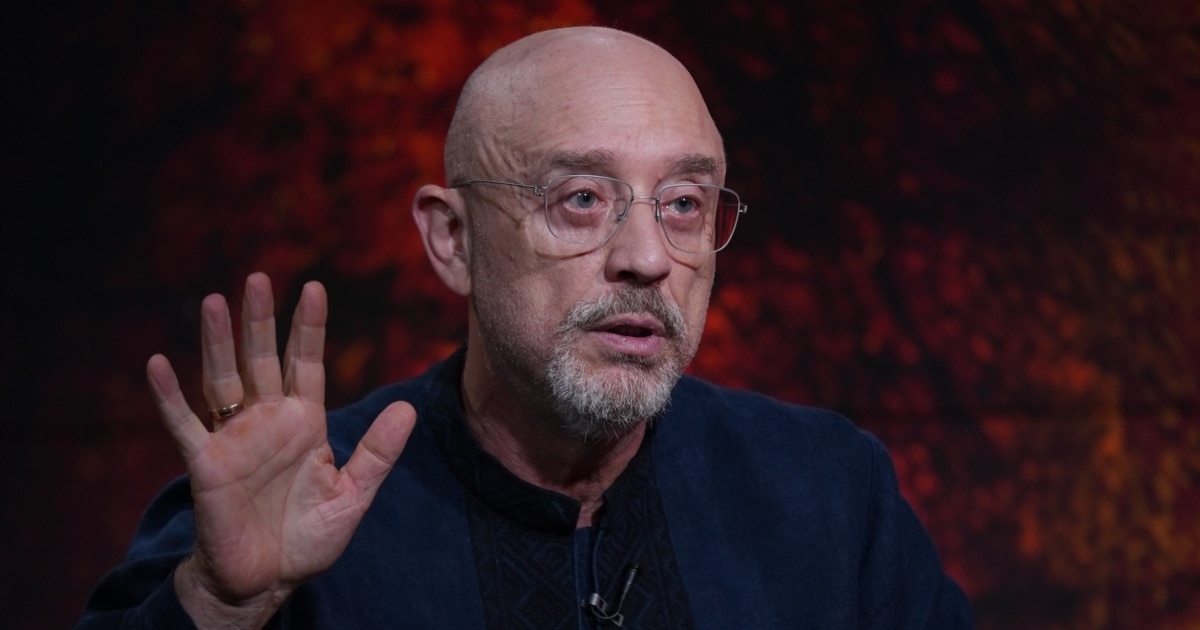
Ex-Defence Minister Oleksii Reznikov Rejects Procurement Overpricing Claims, Backs Mobilising Women and Defends Wartime Record
In his first extended interview since leaving office, former Ukrainian defence minister Oleksii Reznikov rejects allegations that the ministry bought supplies at inflated prices and repeats that “яєць по 17 гривень не існувало ніколи.” He says he had no capacity to audit purchases made by other agencies while managing international defence relations during the full-scale Russian invasion and argues the Verkhovna Rada should legislate to include women in mobilisation to expand manpower.
By Blake Marriott
876 views
Oleksii Reznikov, who served as Ukraine’s defence minister through the onset of the full-scale Russian invasion, has given his first extended interview since leaving the post, addressing explosive procurement allegations, public protests over defence appointments and how Kyiv should expand mobilisation. The interview, published by Radio Svoboda, presents Reznikov’s defence of his record and his view that public controversies—especially the now-viral claim that the ministry paid 17 hryvnias for an egg—were false and stemmed from poor communication.
Reznikov reiterates that the oft-repeated line “яєць по 17 гривень не існувало ніколи” and other similar claims about Ministry of Defence contracts were untrue. He said his office repeatedly disputed the meme and that its persistence has harmed his reputation and caused distress within his family. He acknowledged mistakes in how the ministry communicated at the time, saying that better messaging would have mitigated reputational damage even if the facts were being defended behind the scenes.
The procurement row prompted formal inquiries: media reporting by Yurii Nikolov in Dzerkalo Tyzhnia alleged high prices for military food purchases, and Ukraine’s State Bureau of Investigations (ДБР) opened probes and detained several suspects, while the National Anti-Corruption Bureau (НАБУ) reported evidence of a corruption scheme. Reznikov said that while these investigations moved forward after his resignation, he himself had no time while serving to examine procurement practices in parallel ministries. He described his workload as round-the-clock: coordinating with allied defence ministers and officials from countries including Australia, New Zealand, Canada and the United States; travelling to the front; and representing Ukraine at international forums such as the Ramstein meetings.
Asked whether he had seen corruption in drone procurement or other schemes flagged by his former deputy Vitalii Deinega, Reznikov said he had no direct knowledge. He stressed that the Ministry of Defence did not always directly contract for equipment and that procurement decisions often rested with the General Staff. On earlier comments that prompted criticism—referring to some small commercial drones as “весільними дронами”—Reznikov said he was relaying the judgment of senior commanders. He attributed the phrase to Valerii Zaluzhnyi, quoting a conversation in which the former commander explained a preference for heavier, combat-grade platforms over hobbyist quadcopters.
Reznikov also addressed contemporary political tensions. He said he would not support what he called “картонкові протести,” arguing that demonstrators’ demands were not sufficiently “mature” and that President Volodymyr Zelenskyy, having access to top-level information, must make ministerial appointments. Nonetheless, he praised the work of Mykhailo Fedorov’s team—particularly the Diia digital services—and said he applauds reforms where he saw them in practice while leaving final personnel judgments to the president.
On mobilisation, Reznikov advocated expanding the pool of potential service members by legally including women in general military obligations. He told Radio Svoboda that adopting such a change in the Verkhovna Rada would “immediately double” the mobilisation resource and enable better allocation of men and women across combat and rear-support roles. Drawing a parallel to Israel, he argued that Ukraine will have to evolve culturally toward broader civic defence duties and said he expects the legislature and society to move in that direction.
The former minister said some current and former senior officials have volunteered for frontline service, including unnamed ministers serving as non-commissioned officers and at least one deputy minister who was seriously wounded. He declined to name them, citing potential security and intelligence risks. Reznikov said such choices are deeply personal and that publicising them can be counterproductive if it endangers sensitive information or the safety of those individuals.
Since leaving office, Reznikov says he has returned to private life while remaining connected to defence education and training. He describes himself as a “civil worker” with the armed forces who teaches at the Berezniak Military Academy of the GUR, lectures at the SBU academy and international universities, and focuses on preparing future defence attaches and negotiators. He also said his family remain in Ukraine. While defending his record, Reznikov accepted responsibility for communication lapses and urged that public debate focus on systemic reforms, transparent procurement, and legislation to broaden the country’s mobilisation base rather than on memes and personal attacks.