EU’s António Costa Makes Short Informal Contacts with Kremlin to Restore Dialogue on Ukraine, Reuters Says
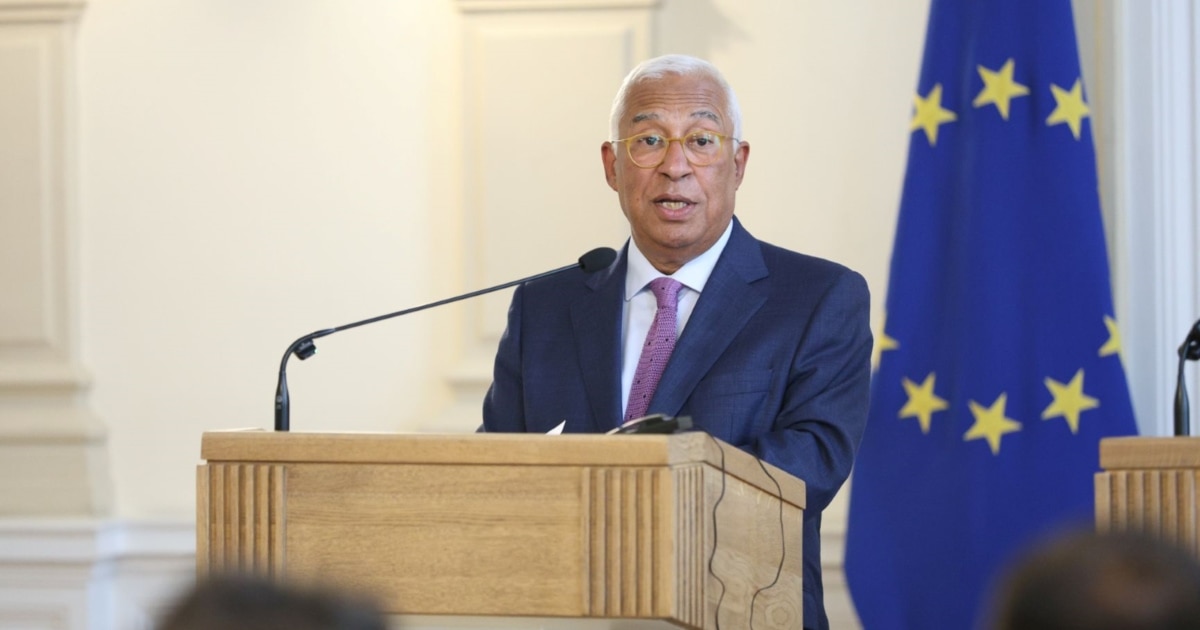
European Council President António Costa has held brief, informal diplomatic contacts with Russian leadership to try to re-establish a channel of communication between Brussels and Moscow aimed at halting the war in Ukraine, Reuters and Bloomberg reported on June 17. EU officials say no substantive matters were discussed, but they emphasize the importance of keeping working diplomatic channels open to protect the bloc’s interests in any future scenario.
By Christopher Manley
1,022 views
European Council President António Costa has engaged in short, informal diplomatic contacts with senior Russian officials as part of an effort to revive a line of communication between Brussels and Moscow aimed at finding a way to halt the war in Ukraine, Reuters and Bloomberg reported on June 17. The outreach, described by an EU official to Reuters, focused on re-establishing contact rather than negotiating substantive matters.
“Mahiyyət etibarilə heç bir məsələ müzakirə olunmayıb. Amma istənilən gələcək ssenaridə Avropa İttifaqının qorunmalı olan xüsusi maraqları var. Buna görə də Rusiya ilə işlək diplomatik kanalların saxlanılması vacibdir,” the Reuters source said, underlining the EU’s position that maintaining working channels is essential to safeguard specific European Union interests under any future scenario.
Both Reuters and Bloomberg attributed the reporting to European officials and informed sources. According to those accounts, the contacts were brief and informal, intended to ensure that diplomatic lines remain usable should circumstances evolve in ways that require direct communication with Moscow.
The outreach comes against a backdrop of wider debate within EU member states about whether and how to open talks with Russia aimed at securing a peace settlement in Ukraine. Several European governments have begun discussing potential candidates for a special envoy charged with negotiating with Moscow over a ceasefire or wider settlement. Politico reported at the end of May that names under consideration included António Costa himself, Finland’s former president Sauli Niinistö, Finland’s current president Alexander Stubb, former European Commission president Jean‑Claude Juncker, former German chancellor Angela Merkel and former Italian prime minister Mario Draghi.
Russian President Vladimir Putin has already signalled his own preference for a high-level interlocutor by proposing former German chancellor Gerhard Schröder as a candidate for any such role. The selection of an envoy, and whether Moscow would engage with any nominee, remains contentious among European capitals, with disagreements reflecting differing views on how to balance pressure on Russia with efforts to explore diplomatic openings that might reduce civilian suffering and restore stability.
EU officials say the recent contacts were not the start of formal negotiations and that no agreements or detailed proposals were exchanged. Rather, the engagement was framed as a precautionary diplomatic step to preserve the possibility of dialogue in the future. The approach reflects a broader calculation in Brussels: even where punitive measures such as sanctions are being pursued, policymakers often regard the preservation of communication channels as a pragmatic tool for protecting the bloc’s strategic interests and for facilitating de‑escalation if windows for negotiation emerge.
The developments will be watched closely by Kyiv and by member states across the EU, where public opinion and political positions on negotiations with Moscow vary. For Ukraine, any talks that involve concessions or that do not include Kyiv’s direct participation raise concerns about outcomes shaped without adequate consideration of Ukrainian sovereignty and the protection of civilians. For EU governments, the dilemma is balancing continued pressure on Russia for its actions in Ukraine with the need to be prepared to act rapidly should an opportunity for reducing hostilities present itself.
As discussions continue about the possible appointment of an EU special envoy and the modalities of any contacts with Moscow, officials stress that preserving diplomatic channels does not signify agreement with Russia’s actions in Ukraine nor imply a willingness to accept territorial changes by force. Instead, officials present the limited contacts as part of contingency planning designed to keep options open in a conflict with profound humanitarian and geopolitical consequences.