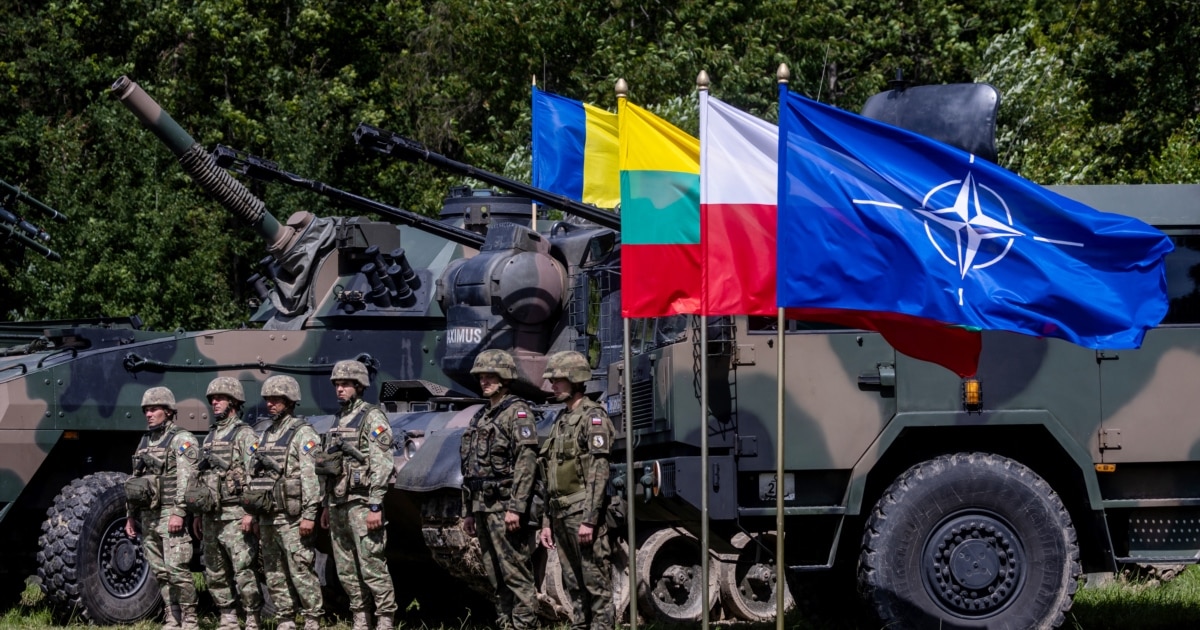
Europe Intensifies Emergency Planning as Officials Warn of Rising Russian Provocations and Possible Attacks on NATO Territory
European and NATO officials are stepping up contingency planning amid growing warnings that Russia may conduct attacks—ranging from sabotage to limited strikes—against NATO or EU members to undermine support for Ukraine. Latvian and Estonian leaders say non-conventional provocations are already occurring, while Western capitals and analysts debate scenarios and readiness measures.
By Vanessa Bergmann
581 views
European capitals and NATO allies have quietly increased contingency planning as Western intelligence services and senior leaders warn that Russia could escalate a campaign of provocations and limited attacks against NATO or European Union territory in the coming months. The warnings, voiced by officials from the CIA to NATO capitals, as well as by French President Emmanuel Macron and Poland’s Prime Minister Donald Tusk, have prompted officials to consider a range of emergency responses even as Moscow denies involvement in acts of sabotage attributed to it.
Latvian President Edgars Rinkevics told Radio Free Europe/Radio Liberty on September 21 from the United Nations that the region is already seeing such actions. "We are not talking about conventional war. We are talking about all kinds of provocations, all kinds of sabotage, all kinds of testing and it is definitely something that is already happening while we speak," Rinkevics said. His comments reflect growing concern in the Baltics and across Europe that Russia may use hybrid tactics to test NATO’s political will and readiness to invoke collective defense commitments.
Analysts and Western officials point to a string of incidents in recent months that they attribute to Russian operations. The Institute for the Study of War described these as a "coordinated series of kinetic campaigns," including arson, alleged assassination plots, and infrastructure sabotage such as damage to rail lines and electronic jamming. Moscow has consistently denied responsibility for such operations. Nevertheless, NATO capitals and EU institutions have stepped up planning for emergency scenarios and measures to counter hybrid threats.
One scenario under discussion is the so-called "Narva scenario," a hypothetical case in which Russia would attack a NATO member using hybrid tactics similar to those employed at the start of Russia’s 2014 seizure of Crimea. Narva is an Estonian border town with a sizable ethnic Russian population, and analysts say an incursion there could be designed to probe whether NATO would accept a small, strategically insignificant territorial grab rather than risk direct confrontation with Moscow.
Estonian Foreign Minister Margus Tsahkna has warned of increased hybrid attacks across Europe, and has said there are persistent rumors of a possible larger Russian military operation against the Baltic states or Poland. At the same time, he noted that Estonia’s intelligence services have not detected any significant Russian force buildups near their borders sufficient to mount a full-scale invasion. ISW analysts cautioned on September 21 that while Latvia and Estonia say they have not observed massing forces, scenarios of Russian action have not received the detailed analysis they require.
Western diplomats contacted by RFE/RL acknowledged that planning is underway but largely classified. Several diplomats declined to provide specific examples, citing the confidential nature of readiness plans. A central European official confirmed informal, working-level discussions about logistical preparations should an attack occur against the Baltics or Poland, but said there are no public directives or visible large-scale preparations. A NATO official told RFE/RL that member states maintain national defense plans "which are strictly confidential" and lay out actions across various wartime scenarios.
The mounting tensions have also drawn attention from Washington. U.S. officials are reported to be considering troop deployments, base arrangements, and status-of-forces agreements with host nations. Last week, U.S. President Donald Trump said Washington and Warsaw were making "great progress" on establishing a permanent U.S. military base in Poland, a move that could expand American presence on NATO’s eastern flank. The comment followed a temporary closure of the Lublin and Rzeszow airports in Poland when Russian strikes hit areas of Ukraine near the Polish border.
Polish Prime Minister Donald Tusk has warned that Russia could attempt strikes with drones or missiles on NATO countries that support Ukraine and portray them as accidents intended to test alliance reactions. Such incidents, he said, could be calibrated to undermine allied unity and gauge whether Article 5 of the NATO treaty — the alliance’s mutual defense clause — would be invoked in practice. The Baltic states were alarmed last year when three Russian combat aircraft entered Estonian airspace for about 12 minutes, allegedly ignoring radio calls from two Italian F-35 pilots operating under NATO’s Baltic Air Policing mission.
Estonian leaders have already invoked Article 4 consultations — a mechanism for allies to consult when members perceive threats to their security — calling for unified readiness should provocations escalate. "We must be prepared to act together," Tsahkna told RFE/RL. Estonian officials have voiced concern that Russian President Vladimir Putin shows little sign of seeking a lasting, just peace in Ukraine and that a successful campaign to seize Ukrainian territory could be followed by further aggression in Europe.
The wave of warnings and preparatory work highlights the dilemma facing NATO and EU members: how to deter and respond to non-conventional attacks designed to stay below the threshold of full-scale war while protecting civilian populations and alliance cohesion. For now, much of the planning remains classified and debated at working levels, but officials and analysts agree that the alliance must be ready to respond decisively should provocations produce casualties or an overt strike on NATO soil.