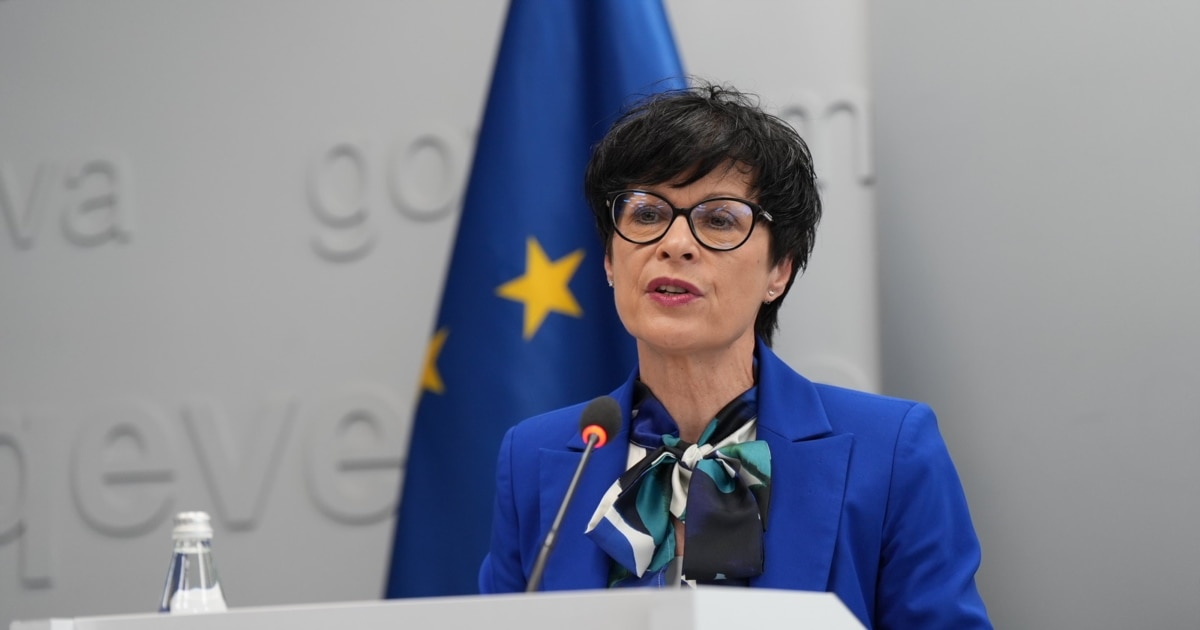
EU Commissioner Marta Kos Condemns Smear Campaigns Against Serbian Civil Society, Calls for Respect and Protection of Free Speech
European Commissioner for Enlargement Marta Kos said representatives of Serbian civil society have been subjected to smear campaigns and personal attacks in recent days, and urged authorities to ensure respect for their freedom of expression without intimidation. Her comments came as writer-activist Vladimir Arsenijević was physically attacked in Belgrade and as prosecutors pursue criminal and administrative cases linked to an analyst and last year’s mass protests.
By Blake Marriott
916 views
European Commissioner for Enlargement Marta Kos said this week that many representatives of Serbian civil society have faced smear campaigns and personal attacks in recent days, stressing that vibrant civic engagement is essential for democratic development and the enlargement process. In a post on the social network X, Kos wrote: "Snažno civilno društvo i angažovani građani prednost su svake demokratije i ključni za uspješan proces proširenja. Zaslužuju poštovanje i slobodu govora bez zastrašivanja ili pokušaja da se njihov rad delegitimiše." Her remarks follow a series of incidents that have alarmed rights groups and external observers.
Prominent writer and activist Vladimir Arsenijević, founder of the association Krokodil, was assaulted on July 11 in central Belgrade hours before a commemorative event titled "Ljudi pamte ljude" to mark victims of the Srebrenica genocide. Arsenijević said on Instagram that a group of 20–30 young people waited for him near the planned memorial site and physically attacked him, beating, kicking and threatening him.
Authorities later reported finding nationalist graffiti at the plateau below the steps under Branko's Bridge where the commemoration was to take place, including the slogans "Ratko Mladić heroj", "Slava VRS" and "3627 srpskih žrtava". The assault drew condemnation from the EU ambassador to Serbia, the British embassy, the commissioner for the protection of equality, and several opposition parties, all of whom called for an investigation.
The prosecutor’s office said it identified two suspects in the attack on Arsenijević but concluded that their actions did not constitute a criminal offense and that administrative (prekršajne) charges would be filed instead. The decision that the incident was not a criminal act has raised concern among civil society organizations and diplomatic missions that regard the episode as an example of intimidation and delegitimization of dissenting voices.
Separately, the Higher Public Prosecutor’s Office in Belgrade has sought an arrest warrant for military analyst Aleksandar Radić, following a criminal complaint filed by Serbia’s Ministry of Interior. Radić is suspected of preparing acts against the constitutional order and security of the Republic of Serbia and of disclosing secret information. Prosecutors say suspicions against Radić arose after searches of his electronic devices and forensic analysis of his mobile phone on July 17, and allege that he used contacts among state officials to obtain information marked with various levels of secrecy.
Radić has been linked in public discussion to claims about a so-called "zvučni top"—a purported sound weapon—during mass anti-government protests on March 15 of the previous year. That day, participants reported unusual sounds and vibrations at a large demonstration in which thousands gathered to pay respects to victims of a collapse of a Novi Sad canopy; protesters fled the area after the disturbances. The prosecutor’s office is investigating whether the incident was a "simulation" organized by students involved in the blockade; student organizers deny the allegation. Radić has been among those who publicly discussed the alleged use of a "zvučni top" at the protest.
Radić told Beta news agency on June 26 that he left Serbia after media outlets published footage showing him being followed, footage that also captured his minor daughter. The unfolding legal case, combined with the attack on Arsenijević and a wider environment of vilification, has prompted calls from international bodies for independent scrutiny.
Both the European Union and the United Nations have urged Serbian authorities to enable an independent investigation into the incidents. The concerns voiced by EU and UN officials underscore broader apprehension about the treatment of civil society actors and the safeguarding of freedom of expression in Serbia—issues that bear directly on democratic norms and on Serbia’s relations with international institutions.
As investigations continue, the interplay of physical attacks, public smear campaigns, and criminal proceedings against analysts and activists has heightened tensions between civic groups and state institutions. Civil society organizations say the pattern of intimidation risks chilling public debate and undermining the space for dissent that is essential to democratic accountability and to the enlargement process the EU insists on as a condition for closer ties.
Radio Free Europe/Radio Liberty, which reported the developments, noted the array of domestic and international reactions while highlighting the ongoing responsibilities of Serbian authorities to investigate attacks impartially and to ensure that civic actors can operate free from threats and harassment.