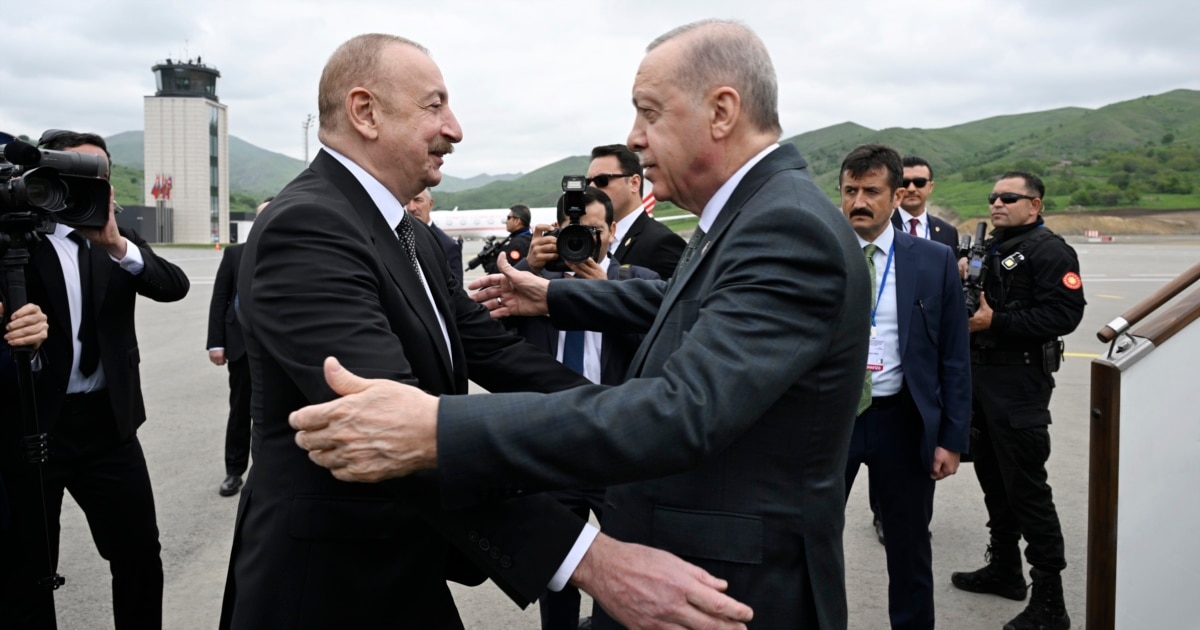
Erdoğan Announces Planned Visit to Azerbaijan Amid Travel Bans and Prosecutions Targeting Turkish Citizens
Turkish President Recep Tayyip Erdoğan said he intends to visit Azerbaijan on November 8 for Victory Day, after speaking by phone with Azerbaijani President Ilham Aliyev. The declaration comes as Baku has declared 31 Turkish citizens undesirable, opened criminal cases alleging calls to overthrow the state and incitement of religious hatred, and placed several Turkey-based individuals on international wanted lists — moves that have alarmed rights advocates and raised questions about bilateral ties between two close allies.
By Alexander Walter
832 views
Turkish President Recep Tayyip Erdoğan has announced his intention to travel to Azerbaijan on November 8 to mark the country’s Victory Day, saying in public comments that he had already spoken by telephone with Azerbaijani President Ilham Aliyev. Erdoğan described relations between the two countries as surpassing ordinary diplomatic ties, calling them an unbreakable brotherhood rooted in common history, culture and destiny, and said he hoped the visit would allow the two governments to take "necessary steps" together.
Erdoğan’s planned trip comes against a backdrop of increased friction between the two capitals. Azerbaijan last month did not send President Aliyev to the 13th summit of the Turkic Council held in Ankara on October 29–30, a move that some political analysts read as a symptom of a recent cooling in relations. The omission has fed speculation about differences between the two governments even while Ankara and Baku continue to stress formal and rhetorical commitments to close cooperation.
Tensions escalated publicly in October after the Azerbaijani Foreign Ministry announced that 31 Turkish citizens had been placed on a list of persons "undesirable" in Azerbaijan. The list reportedly includes lawmakers, journalists and public figures, among them Fatih Erbakan, head of the Yeniden Refah Party, and a number of commentators and former youth officials associated with President Erdoğan’s Justice and Development Party (AK Party). Azerbaijani officials said the designation was based on social media and internet statements they judged aimed at undermining Azerbaijan’s sovereignty, national security, constitutional order, or that incited religious hatred or attempts to forcibly change the government.
The government’s move was followed by criminal investigations led by the Azerbaijani Prosecutor General’s Office. On October 16 prosecutors said they had opened a case after reviewing social media posts by several individuals, including Turkish national and columnist Celal Çiftçi of the "Şanlıurfa Olay" newspaper. The probe cites Criminal Code provisions including article 281.2 (repeatedly making open calls to seize power by force and change the constitutional order), article 283.2.1 (inciting religious hatred through the use of force), and article 167-3.1 (preparing, storing and distributing material calling for religious extremism). Çiftçi was named as an accused person and Azerbaijan said it had issued an international search notice for him while seeking legal assistance from Turkish authorities.
Earlier, on October 19, Azerbaijan’s prosecutor’s office announced that seven additional Turkey-based individuals had been placed on an international wanted list on accusations of publicly calling for the forcible seizure of power and spreading materials that foment religious hatred. The Binagadi District Court reportedly ordered their pretrial detention in absentia. Azerbaijani officials said some of the accused participated in or supported demonstrations outside Azerbaijani diplomatic missions in Turkey that included similar allegations.
The measures have drawn public criticism from Turkish opposition figures and rights defenders. Turkish MP Ömer Faruk Gergerlioğlu, who was named among those declared undesirable, wrote on Facebook that the situation in Azerbaijan demonstrated a collapse of democracy and escalating human rights violations, with mounting pressure on dissidents, journalists and human rights defenders. One of those placed under international search, Turkish citizen Ahmet Şanlı, released a video statement rejecting the Azerbaijani actions as legally unenforceable and characterizing the moves as an illustration of how the Aliyev government treats its critics. According to the Azerbaijani statement, attempts to reach the accused persons, their lawyers and Turkish authorities for comment had not yet yielded responses.
Amid the disputes, Erdoğan and Aliyev have sought to manage tensions through high-level contact. The two leaders spoke by phone on October 21, according to Azerbaijan’s presidential press service. The call covered bilateral relations as well as regional and global issues. Erdoğan reiterated his belief that cooperation rooted in brotherhood between Turkey and Azerbaijan would continue to deepen, and invited Aliyev to the Turkic Council summit. Aliyev, the presidential service said, expressed confidence that Azerbaijan–Turkey relations would develop successfully.
Analysts warn the episode highlights broader risks to free expression and cross-border political engagement between allied states. Marmara University professor Ali Satan told AzadlıqRadiosu that the recent public rifts in media and civil society are difficult to interpret fully from the outside and may reflect attempts by external forces to manipulate public opinion. He nonetheless emphasized the depth of ties between the two governments and argued that the political experience of both leaders should be able to withstand manufactured campaigns. Regardless, legal measures taken against individuals for online statements and the travel bans have intensified scrutiny from rights groups and could complicate cooperation between Ankara and Baku. Erdoğan’s planned November visit is likely to be closely watched as a test of whether the two states can contain the recent disputes and reaffirm their alliance while addressing concerns about freedom of expression and due process raised by the prosecutions and blacklists.