Eighth Day of Wildfire in Yalta Mountains; Officials Cite Terrain and Weather as Obstacles as Press Access Is Restricted
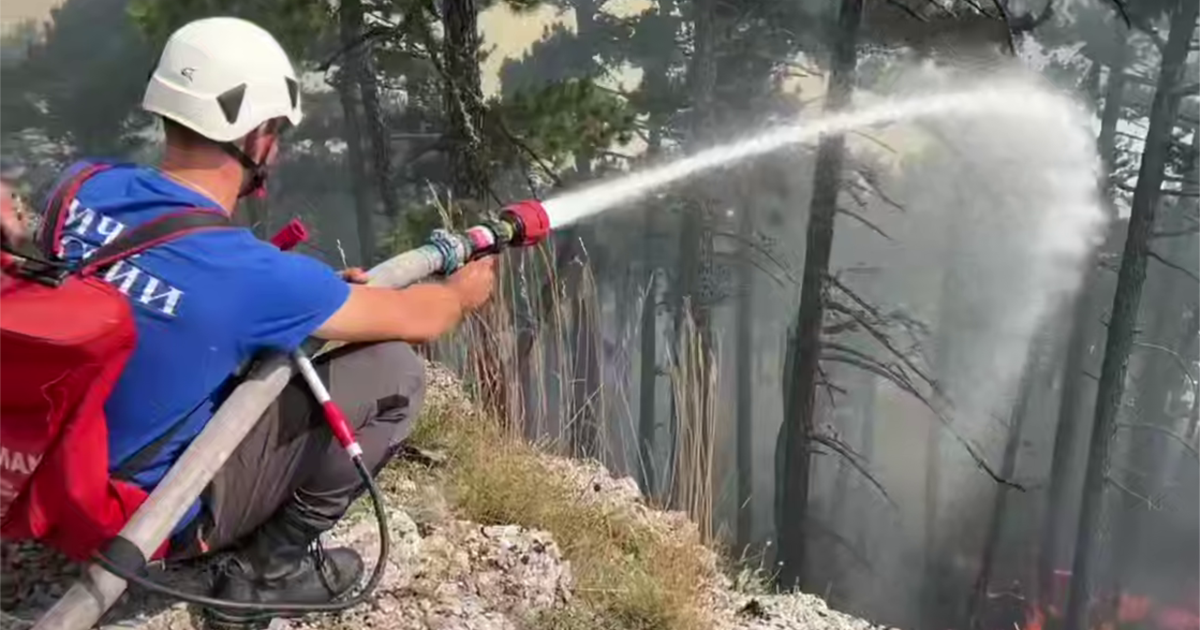
A forest fire burning in the mountains above Yalta has entered its eighth day, with Russian emergency services saying operations are hampered by steep slopes, limited water sources, and hot, windy conditions. Local authorities have classified the blaze as a regional natural emergency while residents complain of smog and breathing problems; at the same time Roskomnadzor has been trying to block access to independent outlet Krym.Realii, raising concerns about information access during the crisis.
By Clémence Desjardins
1,055 views
A forest fire in the mountains above the Crimean coastal city of Yalta entered its eighth day on Monday, continuing to burn in the vicinity of the Autka microdistrict, Russian authorities and local media reported. The main directorate of the Russian Emergency Situations Ministry in Crimea (МЧС РФ) said firefighting tactics and the allocation of forces have been adjusted at active sectors of the fire “с учетом особенностей ландшафта и погодных условий.”
Firefighting officials quoted by the regional news outlet Крыминформ said that wind and hot weather have repeatedly hindered suppression efforts. The blaze was first reported during the night of 19 August. Initial estimates put the affected area at several hectares; by 20 August officials raised that figure to about 10 hectares, and by 21 August they said the fire had spread to roughly 50 hectares. Local residents have reported a persistent layer of smog over the city and described difficulties with breathing.
Steep slopes, the lack of nearby water sources for firefighting, and strong winds have complicated ground and aerial operations, emergency services said. Some local media and other sources have linked the origin of the fire to an alleged drone attack during the night of 19 August, but Russian authorities have not provided an official cause for the ignition.
The head of the Crimea administration, Sergey Aksyonov, who the report describes as “подконтрольный РФ,” signed a decree granting the Yalta fire the status of a “природной чрезвычайной ситуации регионального характера,” a classification that enables the mobilization of additional regional resources for emergency response. The decree followed growing local concern about air quality and public-health risks posed by the ongoing blaze.
While the physical firefighting effort continues, the flow of public information about the situation has itself become a point of contention. Roskomnadzor, Russia’s communications regulator, has attempted to block access to the Krym.Realii website, the regional outlet that published detailed coverage of the fire. Krym.Realii has published a mirror link to allow continued access in areas where the main site is blocked: https://krymrnzoqirqadlxo-dhgye0ddf5hzh3be.z02.azurefd.net/. The outlet also reminded readers that Radio Svoboda and Krym.Realii have been designated “нежелательной” organizations in Russia, a status that has broader implications for independent reporting in the country.
Residents and local observers say restraints on accessing independent reporting make it harder to verify details of the emergency and to follow instructions from emergency services in real time. Human-rights advocates and press-freedom groups generally warn that limiting access to independent media during natural disasters and other emergencies can undermine public safety by impeding the free flow of information needed for evacuation, health advisories and accountability.
At present emergency services continue to fight the blaze, rotating tactics and choosing key operational directions according to terrain and weather conditions, the МЧС statement said. Officials continue to emphasize weather and landscape as the principal obstacles. With the fire ongoing and air quality concerns persisting, authorities in the region say they will use the legal framework of the declared regional natural emergency to direct resources to containment and public-protection measures.
The situation remains fluid: firefighters face difficult conditions on the ground, local residents continue to report breathing problems due to smoke, and independent media covering the event say they are encountering regulatory obstacles to reporting. The combination of a protracted emergency, health consequences for residents, and constraints on access to independent information has raised questions about both the adequacy of the emergency response and the transparency of public communication during the crisis.