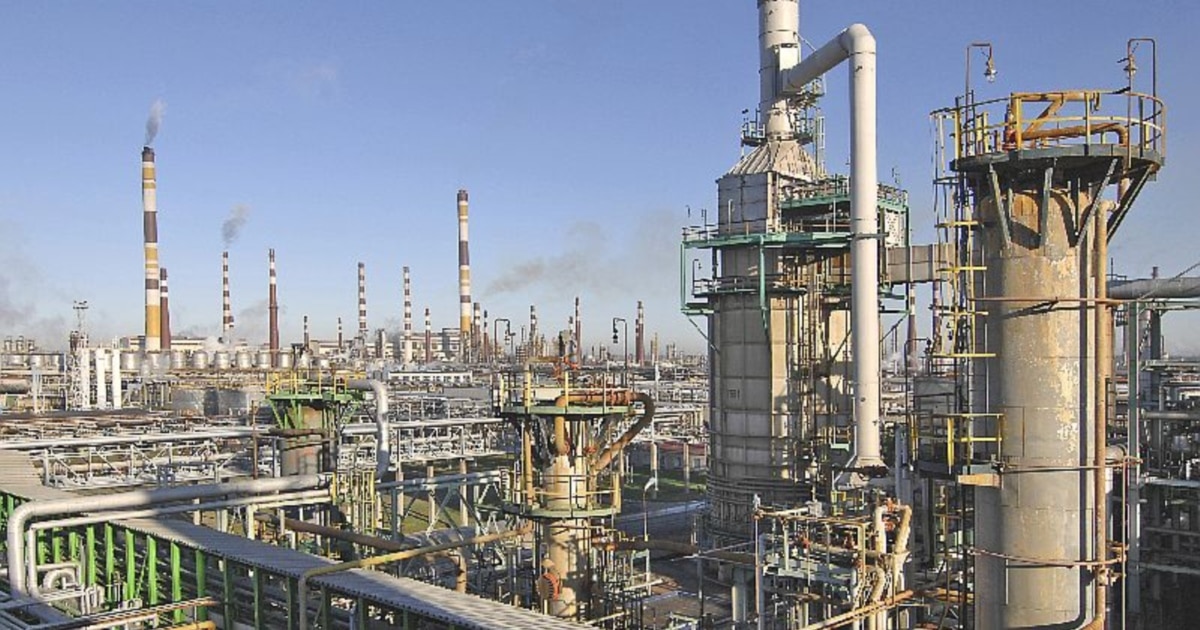
Drone strike on Kirishi industrial area sparks fire at major Russian refinery, officials say
Regional authorities in Russia's Leningrad region say a wave of drone strikes on the night of Nov. 9 hit the industrial zone of Kirishi and caused a fire at the Kirishinefteorgsintez refinery. The plant, which is part of the Surgutneftegaz group and ranks among Russia's largest by processing volume, has been attacked before and its damage has previously contributed to fuel shortages in nearby St. Petersburg.
By Clémence Desjardins
976 views
Regional officials in Russia’s Leningrad region reported that a night-time series of drone strikes on Nov. 9 struck the industrial district of the city of Kirishi and triggered a fire at a major oil refinery, according to local authorities and Russian media outlets. Alexander Drozdenko, head of the Leningrad regional administration, said 113 Ukrainian unmanned aerial vehicles attacked the area and that debris from the drones struck an apartment block.
Local news outlet ASTRA reported that the incident led to a blaze at the Kirishinefteorgsintez refinery. The plant is part of the Surgutneftegaz group and is widely described in Russian reporting as the country’s second-largest oil refinery by processing volume. According to company and media descriptions, Kirishinefteorgsintez produces gasoline, diesel, aviation kerosene, fuel oil, sulfuric acid, bitumen, paraffin and various hydrocarbon products.
Ukrainian Telegram channels also reported the attack, according to the regional and media accounts. The Kirishi refinery has been targeted in previous drone strikes, most notably in September 2026, when damage to the plant was reported to have contributed to fuel shortages in nearby St. Petersburg.
The Russian Defence Ministry said its air-defence systems intercepted and shot down 430 Ukrainian drones overnight. Those figures were published by the ministry in its own statements and have not been independently verified by third-party sources. Independent confirmation of the number of drones involved, the extent of the damage at the refinery, and any casualties was not available at the time of reporting.
The incident underscores the vulnerability of energy infrastructure in areas within range of drone and missile strikes. Attacks on refineries and other fuel facilities can have immediate civilian consequences, including damage to residential buildings and disruptions to fuel supplies, as seen after earlier strikes on the Kirishi plant.
Kirishinefteorgsintez’s membership in the Surgutneftegaz corporate group and its role as a major regional fuel supplier make it a strategically significant facility. The company’s product list and its position in Russia’s refining network were highlighted in media reports about the latest attack, which again raises questions about the security of critical industrial sites located close to populated areas.
Official Russian statements framed the event as a defensive success in terms of air-defence activity while acknowledging localized impacts from debris and the reported fire. Independent verification from international monitors, independent journalists, or neutral observers was not available in the immediate aftermath. The evolving situation has potential implications for civilian safety and regional energy distribution, particularly given the refinery’s previous targeting and the reported link between prior damage and fuel shortages in St. Petersburg.
Both the scale of the reported attack and the disparate figures issued by Russian regional and national authorities highlight continuing difficulties in independently confirming details in fast-moving strike events. Further reporting will be required to establish an accurate account of the physical damage, any injuries or fatalities, and the operational impact on fuel supplies and refinery output.