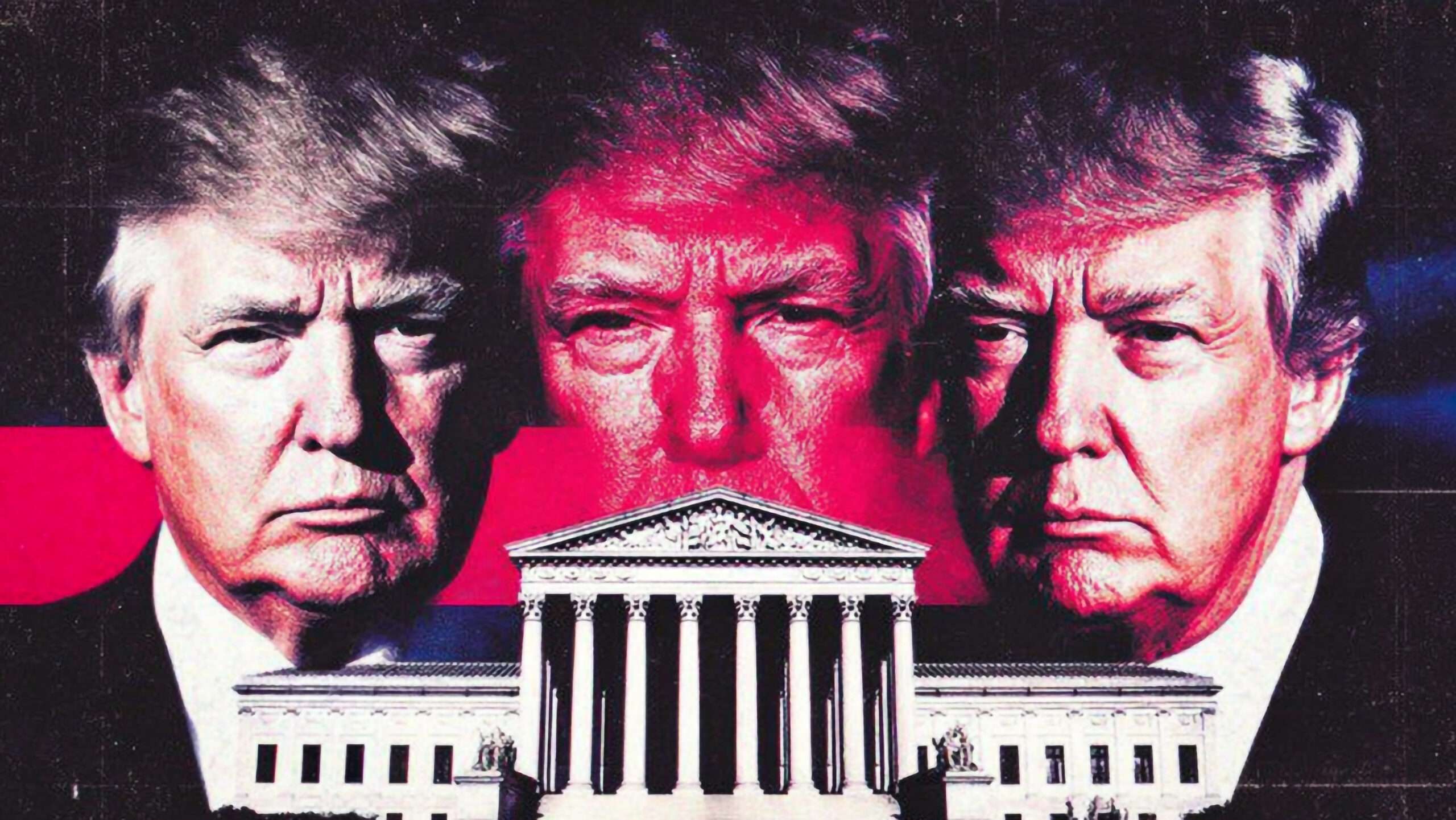
DOJ Settlement Creates $1.776 Billion 'Anti-Weaponization Fund'; Critics Say It Lacks Judicial Oversight and Risks Political Payouts
President Donald Trump dismissed his own lawsuit against the IRS after the Justice Department announced a $1.776 billion payment to establish an "Anti-Weaponization Fund" intended to hear claims from people who say they were victims of government "weaponization and lawfare." Legal experts and observers say the settlement is unprecedented in its scope and structure because it was reached without court approval and could enable politically motivated distributions of taxpayer money.
By Joe Lancaster
1,127 views
Last week, President Donald Trump abruptly dropped his own lawsuit against the Internal Revenue Service after the Department of Justice announced it would provide $1.776 billion to create an "Anti-Weaponization Fund" intended to "provide a systematic process to hear and redress claims" by individuals who say they suffered from government "weaponization and lawfare." The settlement, which also includes a formal apology from the IRS and language barring the agency from prosecuting or pursuing the president for existing offenses, has prompted sharp criticism from legal scholars, commentators, and some lawmakers who say the arrangement is unprecedented and vulnerable to corruption.
The lawsuit that prompted the settlement was filed in January 2026, when Trump sought $10 billion in damages after a government contractor leaked tax returns to the press. Some observers dismissed the underlying claim as without value. Cato Institute scholar David Post called it "nonsensical and worthless," estimating that "a reasonable valuation of this claim" was "$0.00." Despite that skepticism, the settlement resolves the suit and promises the large taxpayer-funded fund as redress for unspecified alleged victims of government overreach.
Critics say the mechanics of the deal are troubling. Under the terms announced, the fund would be administered without the sort of judicial supervision that typically accompanies large class-action settlements, and the agreement was reached and finalized outside of court approval. Josh Gardner, a former Department of Justice attorney who served as lead counsel in the Keepseagle litigation, warned that "in Trump v. IRS, the parties settled the case without court approval and the claims administration process will not be subject to judicial oversight." That absence of court scrutiny contrasts with prior precedent used by the DOJ to justify the structure of the Anti-Weaponization Fund.
Acting Attorney General Todd Blanche cited the 2010 settlement in Keepseagle v. Vilsack as a comparable precedent. Keepseagle, a class-action suit alleging decades of discriminatory lending practices by the U.S. Department of Agriculture toward Native American farmers, resulted in a settlement that included $680 million in direct compensation and $80 million in loan forgiveness. After claims processing, that settlement still left hundreds of millions of dollars to be distributed, some of which went to nonprofits and ultimately helped create the Native American Agriculture Fund. But unlike Keepseagle, which was subject to rigorous judicial oversight under Federal Rule of Civil Procedure 23 and survived appellate review, the Trump settlement was not presented to a court for approval.
Some commentators drew parallels to other politically sensitive payouts. National Review writer Dan McLaughlin acknowledged that the Anti-Weaponization Fund "looks a lot like a collusive operation to create a slush fund to pay off friends and political allies" but argued Trump was following a playbook used by previous administrations, citing the Keepseagle deal and New York City's $41 million settlement with the Central Park Five. The key legal distinction, however, is that those settlements were approved and overseen by courts; de Blasio's pledge to settle the Central Park Five case only became official after a magistrate judge approved the payout.
The DOJ's own policies also complicate the settlement’s optics. During the Trump administration’s first term, then-Attorney General Jeff Sessions articulated a policy that settlement funds should go first to victims and then to the American people, "not to bankroll third-party special interest groups or the political friends of whoever is in power." The Justice Department reaffirmed a similar policy as recently as February 2025. Yet the Anti-Weaponization Fund, as structured, leaves plaintiffs named in the suit—Trump, his business, and two of his sons—aside while opening the door for unspecified third-party claimants who could include political allies.
The settlement also contains potentially consequential protections for Trump. The agreement reportedly bars the IRS from prosecuting or pursuing the president for existing offenses, potentially shielding him from more than $100 million in fines related to unpaid taxes. That provision, together with the substantial taxpayer-funded pot that could be distributed outside of congressional appropriation and judicial review, has prompted some Republican lawmakers to express concern.
Supporters of the settlement point to the acknowledged lapse that precipitated the lawsuit: after a rogue contractor leaked hundreds of thousands of tax returns, including Trump’s, the IRS apparently failed to detect the culprit for several years, and the agency has apologized to affected taxpayers in the past, including hedge fund billionaire Kenneth Griffin. An apology tailored to Trump, some argue, is not unreasonable. But critics counter that a nearly $2 billion cash fund is an excessive and unprecedented form of restitution absent court oversight or congressional appropriation, and they warn that the agreement risks creating a politically discretionary, taxpayer-funded vehicle for rewarding allies.
As debate continues, the settlement raises core questions about separation of powers, the role of judicial oversight in settling claims against the government, and safeguards against the potential politicization of taxpayer funds. Observers and legal analysts will likely continue to scrutinize how the fund is administered and whether any further legal challenges arise over the unusual path this settlement took to resolution.