Documents: Russia Plans Carbon-Fiber Expansion to Mass-Produce Kamikaze Drones, Satellite Images Show Site Clearing
Documents obtained by Politico and analyzed satellite imagery indicate that Russia is preparing to boost carbon-fiber output at the Alabuga-Volokno plant, a Rosatom-linked facility in Tatarstan already under Western sanctions. Experts cited in the reporting warn the expansion could enable production of tens of thousands more loitering munitions annually, escalating the capacity for attacks in Ukraine.
By Alexander Walter
605 views
Documents reviewed by Politico and satellite imagery compared by the publication indicate that Russia is moving to significantly increase domestic carbon-fiber production — a key material used in the manufacture of loitering munitions often described as “kamikaze” drones. The reporting focuses on activity at the Alabuga-Volokno facility in Tatarstan, a site linked to state nuclear corporation Rosatom and placed on Western sanctions lists in 2023.
Politico said it obtained planning documents that outline steps to expand production capacity at Alabuga-Volokno. The outlet compared satellite images taken in May and July that show land at the site being cleared, which it interprets as preparatory work for new facilities or equipment. According to the documents and expert assessments cited by Politico, widening output at the plant could add roughly 500 tonnes of aerospace-grade carbon fiber per year by 2029.
Experts quoted in the reporting told Politico that such an increase in carbon-fiber supply could translate into a large rise in drone manufacturing capability. Their calculations suggest an additional 500 tonnes annually could enable the production of about 28,000 more military loitering munitions per year — a rise of roughly 78 percent compared with current production levels for that class of weapon.
Ukrainian authorities and analysts have previously warned about expansive Russian production of so-called Geran drones, the name used in Russia for Iranian Shahed models. Ukraine estimates that Russia is already able to produce more than 36,000 such kamikaze drones annually. The Politico revelations, if borne out, suggest Kremlin-linked industrial planning could further swell those numbers and increase the availability of these weapons on the battlefield.
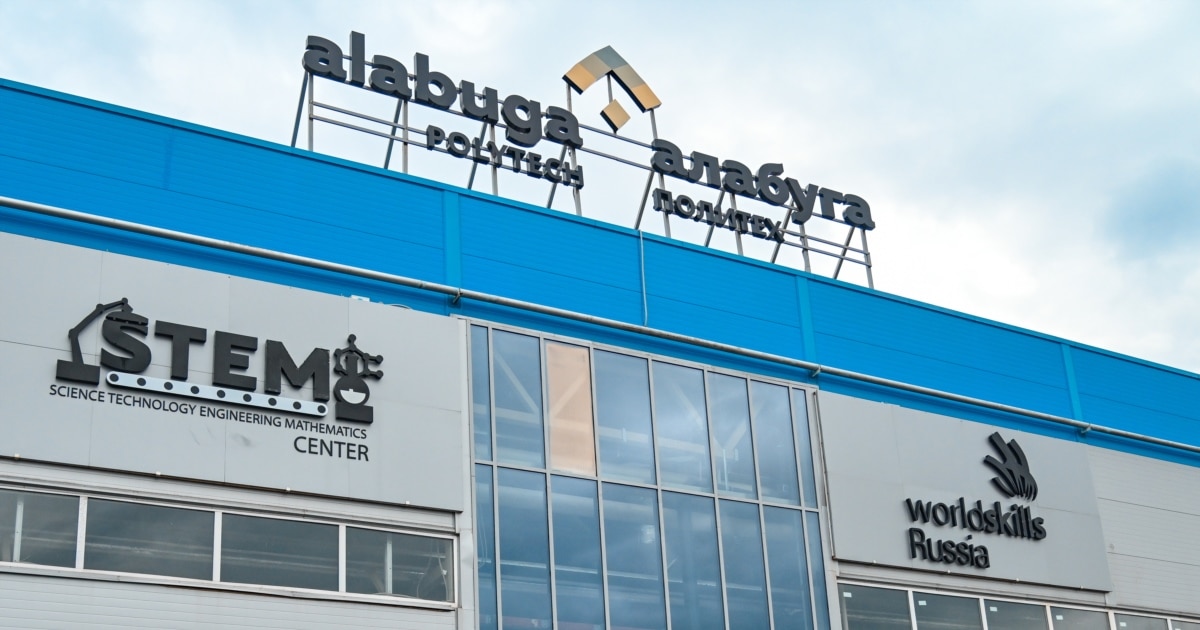
The Alabuga special economic zone, where the plant is located, has been a focal point for drone-related production since the start of the Russian invasion of Ukraine, the reporting notes. Politico and other outlets have reported that components or entire systems based on Iran’s Shahed designs — designated Geran-2 in Russian service — have been assembled or produced in locations within the zone. The Azatliq reporting that first drew attention to the Politico story also references earlier accounts that students from the local Alabuga-Polytech institute have been recruited into work connected to drone production, a claim that has raised ethical concerns about the involvement of educational institutions in military manufacturing.
Alabuga-Volokno’s presence on Western sanctions lists since 2023 highlights the international scrutiny of facilities tied to Russia’s military-industrial expansion. The latest disclosures underscore potential limitations to sanctions effectiveness when industrial planning and local supply chains are adapted to continue production. They also raise questions for governments and arms control monitors about the domestic industrial measures Russia is taking to secure materials critical to drone manufacture.
Analysts say an expanded domestic supply of carbon fiber would reduce Russia’s dependence on imports for an essential drone component and could accelerate the deployment of loitering munitions that have been used extensively in the conflict in Ukraine. Such an increase in strike-capable unmanned systems would have direct implications for civilian safety, battlefield dynamics, and efforts to disrupt the flow of lethal capabilities.
The Politico reporting and the satellite analysis it relied upon provide a contemporaneous glimpse into industrial moves that could materially change the scale of one class of weapon employed in the war. Independent verification of the full scope and timetable of the Alabuga-Volokno expansion will be important for assessing how quickly any increased output might come online and for shaping policy responses aimed at limiting further proliferation of these systems.