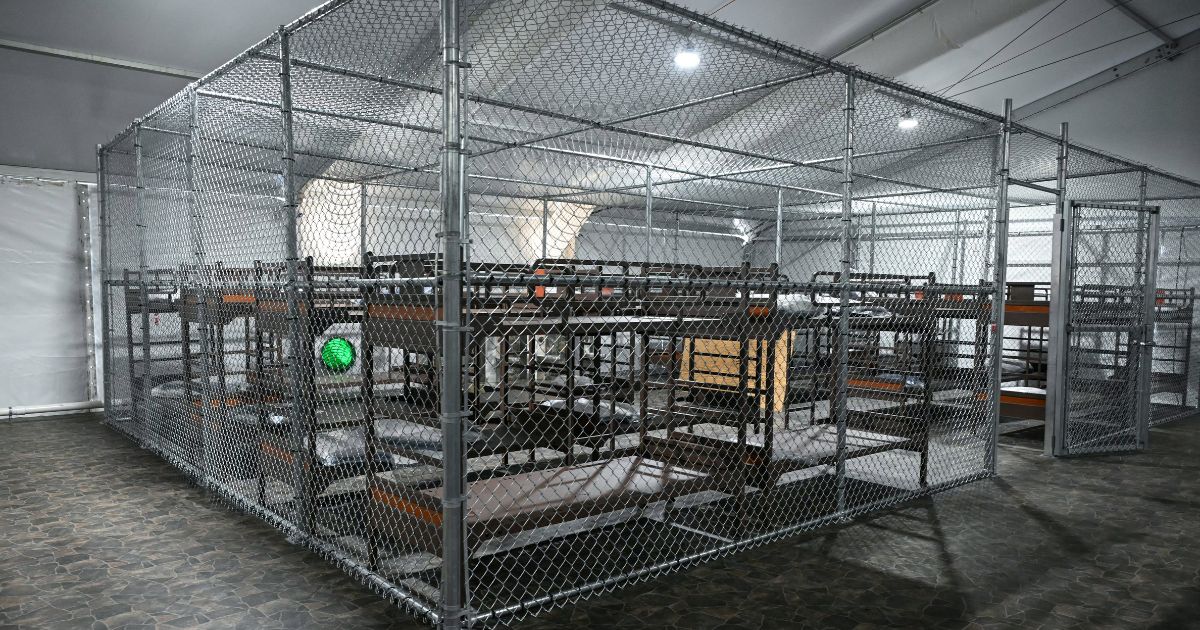
Detainees at Florida’s 'Alligator Alcatraz' say guards withheld water and food to force them to sign English documents
More than half a dozen detainees held at Florida’s tented immigration facility known as “Alligator Alcatraz” told an advocacy group this week that guards denied them clean water, meals and timely medication to force them to sign papers presented only in English. An audio-recorded call to the Workers Circle included claims that the water recently supplied contained mosquito larvae and that prison staff withheld lunch and water until some detainees agreed to sign.
By Clémence Desjardins
1,178 views
Detainees at the Florida immigration facility widely known as “Alligator Alcatraz” say guards withheld drinking water, meals and even timely medication as pressure to force them to sign documents presented only in English that they did not understand. In a telephone call recorded and heard by the Guardian, more than half a dozen men in the detention center described the treatment and identified themselves by name and by the sections and cage numbers where they were held; the Guardian is withholding those identifying details because the men said they feared reprisals.
“They took all the water, and they don’t want to give us water,” one detainee told a representative of the Workers Circle, the advocacy organization that acted as a liaison between detainees and their families. He said detainees had been complaining for several days about the quality of the water they were being given and that on Thursday morning chants of “agua, agua” broke out when the water was withheld altogether. “They haven’t given us lunch, and they are mistreating us here. Right now, at this very moment, half past one in the afternoon, we haven’t had lunch here in Alcatraz, and they wanted to make us sign a paper in English that we don’t know what that paper says.”
Those on the call claimed the water supplied in recent days was “rotten” and contained visible mosquito larvae. “The water has pests, the water has a bad taste, [you] open the water tubs and they have mosquito larvae,” one detainee said. Another described the water as “stinky and rotten” and said he had observed mosquitoes emerging from a substance in the water. Several detainees said they had not signed any documents.
The callers also alleged that medication was delayed and withheld, noting that people with chronic conditions were being put at risk. “They took away the water and medicine to people who need medication. Today the medicine came very late, but here we have people here who are diabetic, one here with high blood pressure,” one detainee said.
Noelle Damico, director of social justice for the Workers Circle, said the reported actions appeared to be an intensification of tactics aimed at pressuring detainees to consent to leave the United States. “They’re being asked by guards to sign documents that they cannot fully see, nor do they understand,” she said. “This has been going on for several days, and right now they’ve stopped giving them water. The water in the past three days has been unusually disgusting with mosquito larvae, dirt in it, and tasting absolutely rotten. So that predates today, now they’ve removed the water. They were fed breakfast this morning, but lunch was withheld. This is an outrageous violation of basic human rights under international and national law.”
The tented facility, erected on a little-used training airport deep in the Florida Everglades and operated by the state of Florida on behalf of US Immigration and Customs Enforcement, opened nearly a year ago and has developed a reputation for harsh conditions and alleged rights abuses. Reports since its opening have accused the center of restricting detainees’ access to immigration lawyers, frequently moving detainees suddenly to other facilities and exerting pressure on people to agree to deportation without legal representation. Authorities said the site would begin winding down operations in June, leading to an eventual closure.
The Guardian contacted the Florida Department of Emergency Management, which oversees the operation of the facility using private guards, for comment. In a statement on 29 May responding to an earlier allegation that a detainee with diabetes was denied medication, Stephanie Hartman, the department’s director of communications, said: “Medical facilities and staff, including a pharmacy, are available 24/7 to detainees.” The department has previously denied allegations of mistreatment or abuse of detainees.
The detainees’ allegations, if confirmed, raise urgent questions about the facility’s compliance with national standards and international human rights norms regarding the treatment of people in custody. Advocates say denying essential food, water and medication as pressure tactics can have serious health consequences and could amount to violations of law. The reports add to a body of criticism surrounding the tented camp and underscore continuing calls from immigrant rights groups for greater oversight and accountability while the site remains operational.