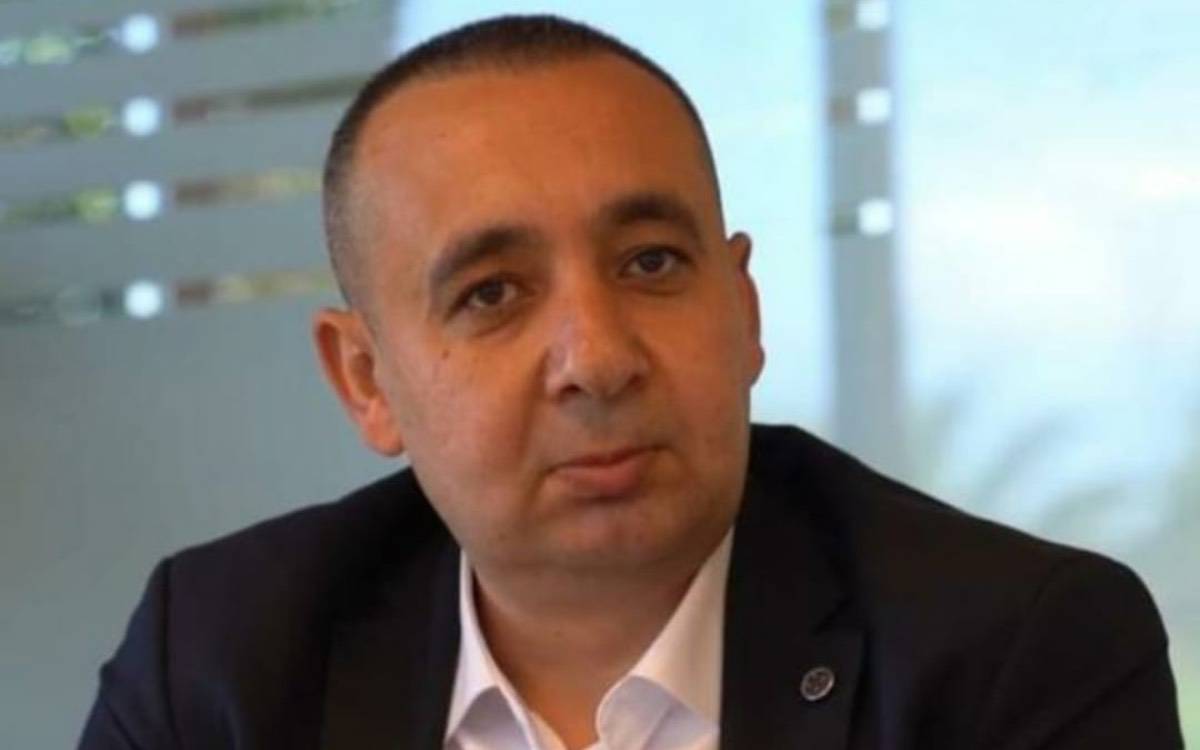
Deported activist Taha Elgazi says new Syria offers unprecedented but fragile opportunity: 'Peace must be rebuilt daily'
Taha Elgazi, a long-time migrant rights advocate who was stripped of Turkish citizenship in May 2025 and sent back to Syria, describes the overthrow of the Assad regime on 8 December 2024 as a historic turning point that opened an opportunity for change. He warns that political transformation is only the start: turning it into safer daily lives, jobs, services and accountability requires sustained reconstruction, protection of minorities, and urgent international support.
By Ferhat Yaşar
969 views
Taha Elgazi, a human rights activist who for years worked with the Göçmen Dayanışma Ağı migrant solidarity network in Turkey, was stripped of his Turkish citizenship in May 2025 and deported to Syria. He is now serving as director general of the Syria Education and Research Center (SEAM) and has emerged as a vocal commentator on the country’s fragile transition after the fall of the Assad regime.
Elgazi told interlocutors that the ouster of the regime on 8 December 2024 marked what he called “a historic transformation” that ended a prolonged period of fear and political stagnation. He said that, on the ground, Syrians are showing an openness to discuss politics and public affairs in ways that were previously impossible, and there is a broad sense that the country’s future is no longer closed to change.
But Elgazi urged realism. Decades under an authoritarian system, he said, have left long-lasting scars. “Syria is inheriting a worn economy, damaged infrastructure, millions of displaced persons and refugees, and institutions that need rebuilding,” he warned. Political change, he added, must be translated into day-to-day improvements—jobs, functioning public services, electricity, schools, health care, and reconstruction—if it is to be meaningful for ordinary people.
Asked whether a genuine process of change has begun, Elgazi answered affirmatively but stressed the early and precarious nature of that process. He said the main task now is to convert political openings into tangible progress in livelihoods and public services. Elgazi pointed to United Nations statements that describe the return of Syrians as a historic opportunity, but he emphasized the UN caveat that success depends on whether the economy, public services and infrastructure can absorb returning populations. According to the figures he cited, UN data show more than 1.6 million returnees to Syria since December 2024, a figure that does not include many internally displaced people who have also returned.
Elgazi also warned against collective blame and divisive rhetoric. He said any response to abuses must be based on individual responsibility, evidence and the law, not collective punishment of religious or sectarian communities. He invoked the example of attacks affecting Alawites and other groups, arguing that conflating an entire community with supporters of the former regime or with armed actors would be both morally and politically wrong. “Alevilere saldırı derin bir etki bıraktı,” he said, underlining the deep societal wounds such incidents create. He called for legal investigations and accountability through proper institutions while simultaneously opposing hate speech, generalizations and incitement.
The situation in Sweida, the governorate with a significant Druze population where recent violence left deep scars, exemplifies the complexity Elgazi describes. He urged that Sweida not be treated as a merely local issue, arguing that the Druze are an integral part of Syrian society and that instability there affects the national future. He recommended a three-part approach for the area: restoring security, engaging in meaningful dialogue with local communities, and improving living conditions and public services. For Elgazi, protection of civilians must be paramount and politically motivated or identity-based accusations must be avoided.
On returns and reconstruction, Elgazi stressed that decisions to go back are rarely purely political and often rest on stark practical questions: Where will I live? Can I find work? Are schools and health services available? Are homes intact? He noted UNHCR’s observations that many Syrians have returned and that Turkey is among the principal countries of origin for returnees. But he also pointed to a UN assessment carried out in early 2026 covering more than 7,000 households across Syria that identified economic security as a primary vulnerability: respondents reported an unemployment rate of about 30 percent and listed food, income, employment and shelter among the most critical unmet needs. Returnees confront damaged or destroyed housing, limited job opportunities, document and property disputes, high rents, and the danger of unexploded ordnance in some areas.
Given these challenges, Elgazi argued that return must be accompanied by reconstruction and development, not treated as a simple border-crossing. He urged the international community to expand its focus beyond emergency humanitarian aid to include investments in rebuilding infrastructure, creating jobs, education and long-term services — measures he said UN agencies likewise recommend.
Speaking from his own experience after more than a decade in Turkey, Elgazi described being struck by the contrast between physical destruction and people’s resilience. He said he initially assumed returning would be merely a geographic change, but found it to be a profound human experience: neighborhoods and cities needing reconstruction; families who had lost homes and livelihoods; and, alongside that loss, a palpable will among many to work and rebuild. He noted a new civic and political vitality in which people are more openly discussing state affairs and the country’s future. Yet, he concluded, the hardest task will be rebuilding trust among people — a process that will be central to any sustainable peace.
Elgazi also cautioned about the gap between online images and the daily realities in Syria, saying social media portrayals can differ substantially from what people face in their neighborhoods. “Syria is not a single image,” he stressed, implying that policy responses must be grounded in nuanced, on-the-ground assessments rather than simplified narratives.