Defence Teams to Appeal Hague Convictions of Four Former KLA Leaders; Specialist Chambers’ Appeal Process Explained
Defense lawyers for four former Kosovo Liberation Army commanders have said they will appeal convictions issued by the Specialist Chambers in The Hague on 16 September. The trial chamber convicted the men of war crimes and imposed prison terms of 13 to 25 years, while dismissing charges of crimes against humanity; appeals could take years and follow a formal timetable under the court’s rules.
By Vanessa Bergmann
1,105 views
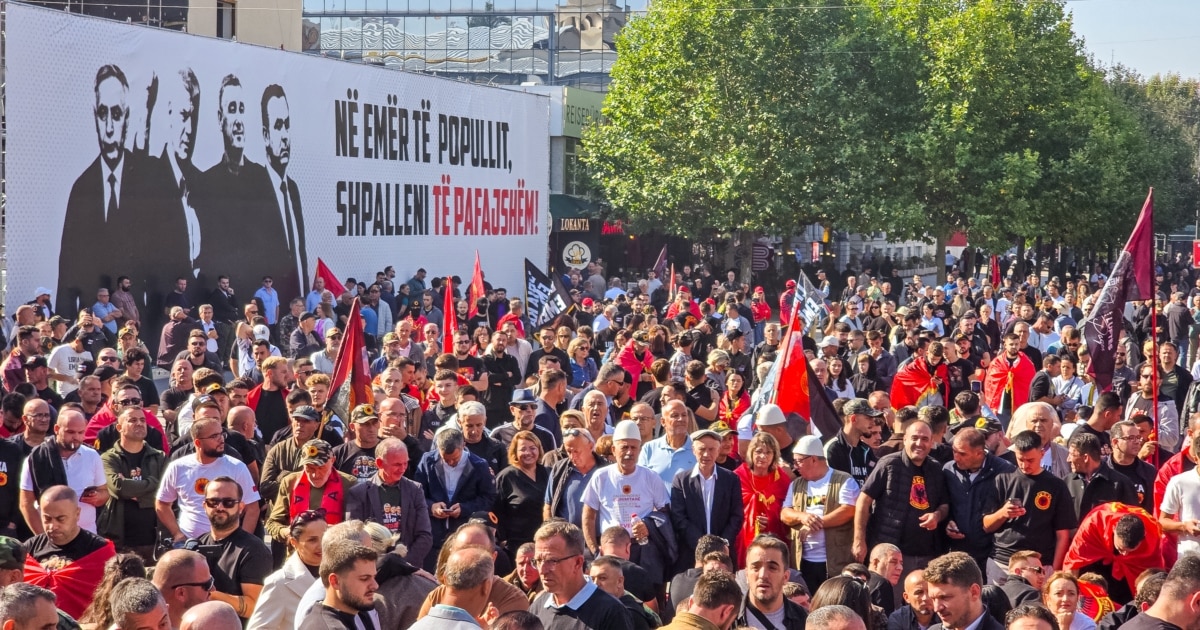
Defense teams for four former commanders of the Kosovo Liberation Army (known by the Albanian acronym OVK or English KLA) have announced they will lodge appeals against guilty verdicts issued by a trial chamber of the Specialist Chambers in The Hague on 16 September. The chamber found the defendants criminally responsible for a range of war crimes, including unlawful or arbitrary detention, cruel treatment, torture and unlawful killing, and imposed prison terms ranging from 13 to 25 years.
The four men convicted are former Kosovo president Hashim Thaci, sentenced to 25 years; former parliamentary speaker Jakup Krasniqi, also sentenced to 25 years; former intelligence chief Kadri Veseli, sentenced to 18 years; and former lawmaker Rexhep Selimi, sentenced to 13 years. The trial chamber, after a 41-month trial, rejected charges by the Specialist Prosecutor’s Office that the accused committed crimes against humanity.
All four defendants have been in detention in The Hague since November 2020. During the sentencing judgment the trial chamber described a common plan among the accused and other leaders to secure Kosovo’s independence and the political control of the emerging state. According to the judgment, that plan included identifying and neutralizing persons perceived as obstacles to their goals — a campaign the court said was executed through killings, arrests and detentions without lawful process, and through physical and psychological abuse and intimidation.
The trial chamber identified a broad range of alleged targets, including members and representatives of other political and armed formations such as the Democratic League of Kosovo (LDK) and the Armed Forces of the Republic of Kosovo (FARK), individuals believed to be linked to Serbian authorities, and members of Roma and Serbian communities. In its findings the court cited specific incidents it said demonstrated personal participation by some accused — for example, noting that Thaci played a key role in formulating and implementing the common plan and personally participated in some crimes, citing the case of Behajdin Allaqi.
Following the verdict, the Specialist Prosecutor’s Office welcomed the convictions but said it would review the judgment in full, including the trial chamber’s dismissal of crimes-against-humanity counts. Defence lawyers have said they will appeal the convictions and that the appellate process could take years.
The Specialist Chambers’ procedural rules set out a detailed timetable and stages for appeals. Parties wishing to challenge the decision on conviction or sentence must file a notice of appeal within 30 days of the judgment, stating the grounds for appeal. A judge-rapporteur is typically appointed to handle pre-appeal procedures and to prepare the case for the Appeals Chamber. Within 21 days of the notice, a conference may be convened to address procedural matters.
Appellants must then file a full appeal brief containing all legal arguments and supporting authorities within 60 days of the notice (or 30 days when the appeal concerns sentence only). The opposing party files a response brief — usually within 30 days for substantive appeals and 15 days in sentence-only cases — and the appellant may subsequently file a reply. The rules allow parties to submit additional evidence during the appeal; if accepted, the other side may present rebuttal evidence. After these filings, the Appeals Chamber may schedule oral arguments if necessary.
On appeal, the Appeals Chamber may confirm, reverse, or amend the trial chamber’s decision, or order a new trial. Under the applicable law three primary grounds for appeal exist: an error of law that vitiates the judgment, an error of fact that resulted in a miscarriage of justice, or an error in sentencing. If only convicted persons file appeals, the Appeals Chamber is not permitted to impose a harsher sentence than that of the first instance. The Appeals Chamber must issue its decision within 60 days of the last filing, although it may request one additional month for reasons to be explained in writing.
If any party remains dissatisfied with the Appeals Chamber’s ruling, further recourse exists through the Specialist Chambers’ Supreme Court and ultimately the Constitutional Court of the Specialist Chambers. Defence teams have warned that the multi-stage process, and potential requests for additional evidence, means final resolution could extend over years, prolonging legal uncertainty for the defendants and keeping a politically sensitive case in the international spotlight.
The convictions and anticipated appeals carry broader implications for Kosovo’s politics and for regional reconciliation. The Specialist Chambers’ findings — that members of the former guerrilla leadership engaged in systematic abuses while pursuing political aims — touch on long-standing tensions in Kosovo over wartime conduct, the accountability of resistance movements, and the balance between seeking justice and maintaining social and political stability in a still-fragile post-conflict society.
Members of the public and potential witnesses continue to be encouraged by the Specialist Chambers to come forward with evidence relevant to the court’s work through the established confidential channels. The outcomes of the appellate process will determine whether the trial chamber’s findings and sentences are upheld, altered, or sent for retrial, and will shape ongoing debates over accountability and rule of law in Kosovo and the Western Balkans.