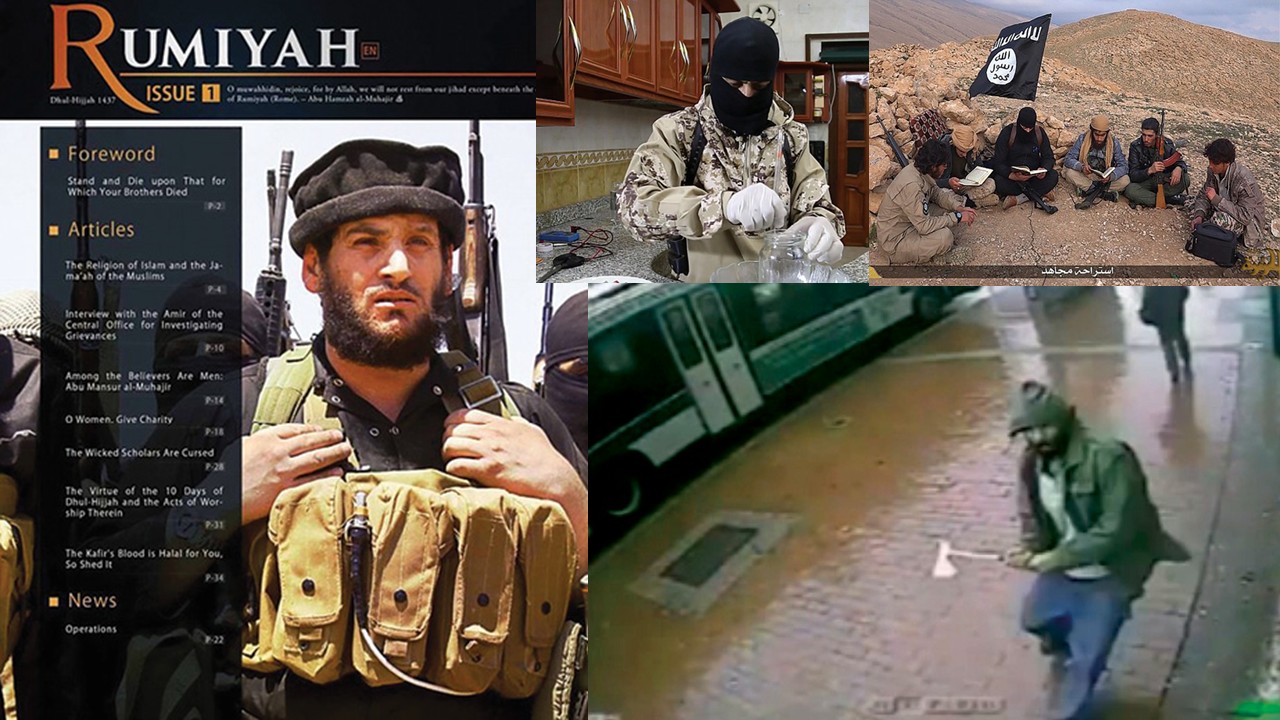
Debate Over Terrorism Priorities: Western Officials, Analysts Differ on Islamist Extremism Versus White Supremacy
A commentary published by The Gateway Pundit asserts that Western leaders and counterterrorism programs have increasingly downplayed the threat posed by Islamic extremist groups, instead emphasizing white supremacist or right-wing threats. The article cites statements from U.S. lawmakers and officials, shifts in programs such as the UK’s Prevent, and international terrorism data to argue that Islamist groups remain the principal global security danger.
By Antonio Graceffo
1,046 views
A commentary published in The Gateway Pundit argues that a number of Western political leaders and counterterrorism programs have minimized the threat posed by Islamist extremist groups while elevating the danger of white supremacist and right-wing violence. The piece, by Antonio Graceffo, cites public statements by U.S. politicians, testimony by senior officials, and international terrorism data to support its contention that political correctness and shifting policy priorities have, at times, overridden assessments from intelligence and academic sources.
The article points to several high-profile examples in U.S. politics. It notes that President Donald Trump has said he is working to protect Christians in Nigeria who have been targeted by Islamist militant groups. By contrast, the commentary highlights remarks by Representative Ilhan Omar when asked about jihadist terrorism on Al Jazeera, in which she reportedly said Americans “should be more fearful of white men across our country” and called for profiling and monitoring white men. It also cites House Minority Leader Hakeem Jeffries’s response in March 2026 to ISIS-inspired attacks in the United States: “Islamophobia is a cancer that must be eradicated from both Congress and the country,” a statement made as Republicans were publicly focusing on Islamic extremism.
On policy toward violence in Nigeria, the article quotes a joint statement by Rep. Gregory Meeks and Rep. Sara Jacobs, which described “clashes between farmers, many but not all of whom are Christian, and herders” as driven by resource scarcity and competition over land rather than primarily by religion. Secretary of State Antony Blinken is also quoted as telling the House Appropriations Committee on May 22, 2024, that killings of Christian farmers in Nigeria “have nothing to do with religion,” a characterization the commentary says conflicts, in Congress’s own words, with available evidence referenced elsewhere.
The piece also surveys policy choices in other Western democracies. In Australia, officials pledged to crack down on both right-wing extremism and Islamist terrorism after an ISIS-inspired massacre of Jewish civilians at Bondi Beach. In the United Kingdom, it argues, the Prevent counterterrorism program redirected resources away from Islamist cases toward right-wing extremism even though documentation cited in the article shows Islamist terrorism accounted for a majority—between 67 and 80 percent—of terrorism investigations, arrests and foiled plots. The commentary further alleges that some authorities in Britain withheld information about sexual grooming gangs, largely Pakistani, for fear of being labeled Islamophobic.
To assess the balance of threat, the article turns to research institutions and intelligence assessments. It lists START at the University of Maryland, the Combating Terrorism Center at West Point, and the U.S. Intelligence Community’s annual threat assessments as leading sources that have, it says, ranked Islamist extremist terrorism among the top national-security threats for at least a decade. The commentary emphasizes findings from the Global Terrorism Index (GTI) 2026 report identifying Islamic State and its affiliates, JNIM, Tehrik-e-Taliban Pakistan, Al-Shabaab, ISWAP, and Boko Haram as among the deadliest groups worldwide in 2025, and it notes other organizations tracked by U.S. agencies such as al-Qaeda, AQAP, Hamas, Hizballah, the Houthis, ISIS-K and the Haqqani Network.
The article cites the Office of the Director of National Intelligence’s 2026 Annual Threat Assessment to argue that Islamist terrorism continued to pose an active threat in 2025, recording at least three Islamist attacks inside the United States and disruptions of at least 15 U.S.-based Islamist plotters. It adds that the commentary’s author and cited government reports found no evidence of white supremacist organizations directing, claiming or framing domestic attacks during the same period. A U.S. Government Accountability Office analysis using START’s Extremist Crime Database is invoked to compare lethality: from Sept. 12, 2001, through Dec. 31, 2016, the GAO reported Islamist attacks killed 119 people in 23 incidents, while right-wing attacks killed 106 people in 62 incidents, indicating higher lethality per Islamist incident. The commentary also notes that including the Sept. 11, 2001 attacks—carried out by al-Qaeda and responsible for 2,996 deaths—produces a significantly larger toll attributable to Islamist extremist violence in the United States.
Finally, the piece addresses methodological disputes over how terrorism is counted and categorized. It argues that datasets emphasizing incident frequency over casualties, expanding definitions to include acts not charged as terrorism, or attributing lone-actor murders to organized white supremacist movements can distort comparisons with Islamist terrorism. The author contends that, after adjusting for these distortions, Islamic extremist groups emerge as the dominant threat both globally and on the U.S. homeland. The commentary frames the disagreement as consequential for resource allocation and national-security policy, suggesting that how threats are defined and measured affects counterterrorism priorities across Western democracies.
The article presents a view that counters assertions by some Western leaders and programs that place greater emphasis on white supremacist or right-wing threats. It relies on public statements by elected officials, testimony from senior U.S. government officials, and published assessments from research institutions and intelligence agencies to document the debate over which forms of violent extremism should receive priority attention and resources.