Dark Zone: How Russia and Iran Are Deepening Nuclear Cooperation and Challenging Oversight
Facing growing Western pressure, Russia and Iran have converted a hurried, pragmatic partnership into a sustained strategic axis, with nuclear cooperation at its core. Analysts and investigative teams warn that Rosatom’s civilian projects in Iran, notably expanded work at Bushehr and a $25 billion agreement for a new multi‑reactor plant on the Gulf coast, are creating opaque channels for dual‑use technology transfers and weakening the reach of international safeguards.
By Clémence Desjardins
1,004 views
Russia and Iran have moved quickly from transactional ties driven by sanctions pressure into a more durable strategic partnership, with nuclear cooperation emerging as one of the most consequential and controversial elements. The two states formalized the relationship through a comprehensive strategic partnership agreement that came into force on October 2, 2025, and backed it with a confidential intergovernmental cooperation plan for 2024–2026. That plan explicitly links construction of shadow financial infrastructure — with an aim of raising bilateral settlements in national currencies to as much as 71 percent by 2026 — to an expanded program of collaboration in the peaceful atom.
Security analysts from the Israel National Security Studies Institute (INSS) and the Friedrich Naumann Foundation say Moscow’s posture toward Iran’s nuclear ambitions has shifted markedly. According to their analysis, Russia has moved from a more cautious approach that balanced ties with Tehran against Western concerns about proliferation to an open diplomatic and technological sheltering strategy. Moscow now uses its leverage over joint nuclear projects, particularly in talks with Washington, as a bargaining chip and as a means to blunt international pressure on Iran.
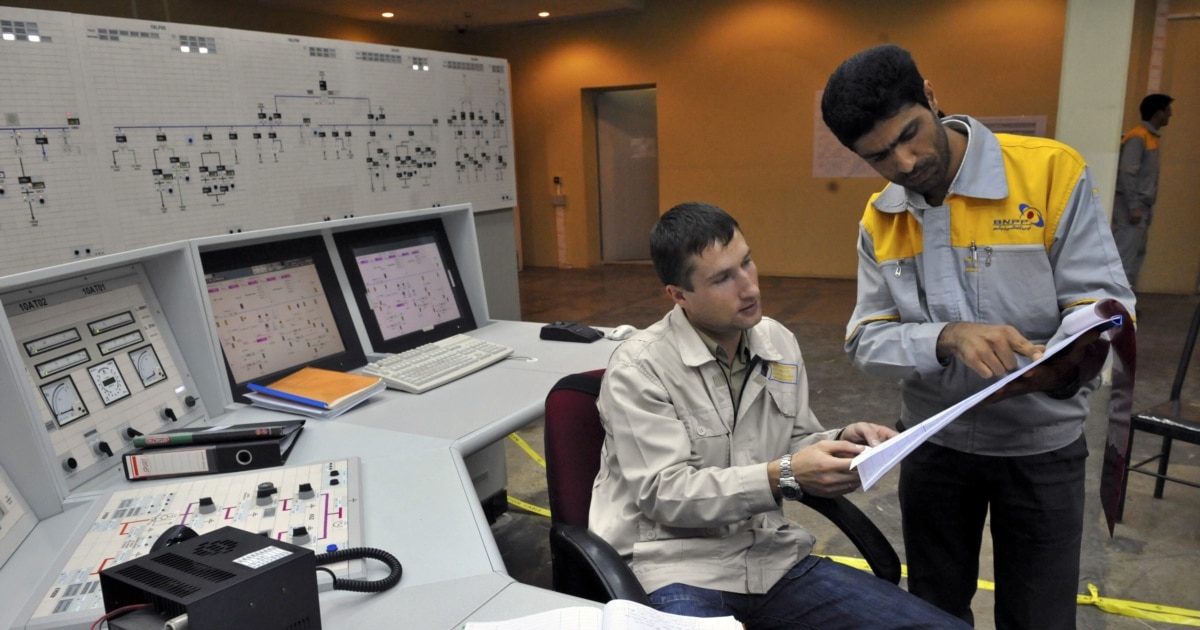
The long‑running Bushehr reactor complex, built with Rosatom assistance, has become a visible symbol of that tandem. Decades after an initial contract was signed in 1995, the plant’s first unit reached full commercial operation only in 2013. Despite military escalations in the region and targeted attacks that prompted several temporary evacuations of Russian specialists, Rosatom has maintained and in some cases increased its presence on the site. The company’s core specialist complement at Bushehr reportedly expanded from roughly 25 to about 100 staff by the autumn of 2026. Reports also indicate that by April a multi‑stage evacuation of more than 600 personnel from Bushehr had concluded, following earlier partial withdrawals that at one point involved 198 staff.
Beyond Bushehr, Moscow and Tehran took a decisive step in 2025 by signing an executive deal worth approximately $25 billion to build a new, large‑scale reactor complex on Iran’s southern coast in Hormozgan province — often referred to in Western coverage as the ‘Sirik’ or ‘Hormuz’ plant. The project envisions four reactors totaling some 5 gigawatts of capacity. For analysts, the scale of the agreement is worrying not only because of the civilian energy implications but because of the technological dependence it appears to lock Iran into: specialists say it binds Iran to Russian fuel‑cycle technologies and creates long‑term technical links that could complicate oversight.
Those concerns are heightened by a deterioration in international monitoring. Investigative timelines cited in the source material describe a series of strikes and disruptions to Iran’s nuclear sites in 2025 and 2026 that degraded the IAEA’s continuity of knowledge about enriched uranium stocks. The agency’s director, Rafael Grossi, warned in March that nearly half of Iran’s stock of uranium enriched up to 60 percent had been stored in tunnel complexes near Isfahan and might still be there. The source also reports that in late 2026 Tehran restricted inspectors’ access to construction sites and demanded new protocols, leaving Bushehr as one of the few locations where IAEA inspectors continued to operate on a limited basis.
Investigations by Western outlets and think tanks, including reporting aggregated by the Financial Times and The Moscow Times alongside research from CSIS and the Institute for Science and International Security (ISIS), outline how Rosatom’s civilian projects may provide cover for the transfer of dual‑use technologies. These inquiries point to multiple methods of sanctions circumvention: mirror re‑exports and gray intermediaries that route Western‑origin equipment into Russia and on to Iran, the use of Rosatom infrastructure to receive sensitive components, and clandestine diplomatic channels. A prominent legal case in Boston established that an American merchant, Sam Bhambhani, participated in schemes using fictitious firms and false export declarations to ship high‑precision laser equipment to a Rosatom affiliate in Yekaterinburg — equipment later funneled, investigators say, through corporate channels toward Iranian defense‑related entities.
The intensifying cooperation and the erosion of monitoring capacity carry broader regional consequences. Analysts warn that if Iran’s civilian nuclear expansion is allowed to proceed in a legal and oversight vacuum — especially at the scale envisaged in the Hormozgan project — Gulf states worried about Tehran’s capabilities may accelerate their own military and nuclear calculations. The International Atomic Energy Agency has stated that Iran’s concealment of centrifuge data and the final disposition of enriched material prevents it from verifying the exclusively peaceful nature of Tehran’s program. The developments underscore how state‑level commercial nuclear ties, when combined with sanctions pressure and degraded inspection regimes, can create a ‘‘dark zone’’ of proliferation risk that challenges the non‑proliferation regime and complicates diplomatic efforts to restore transparency and accountability.