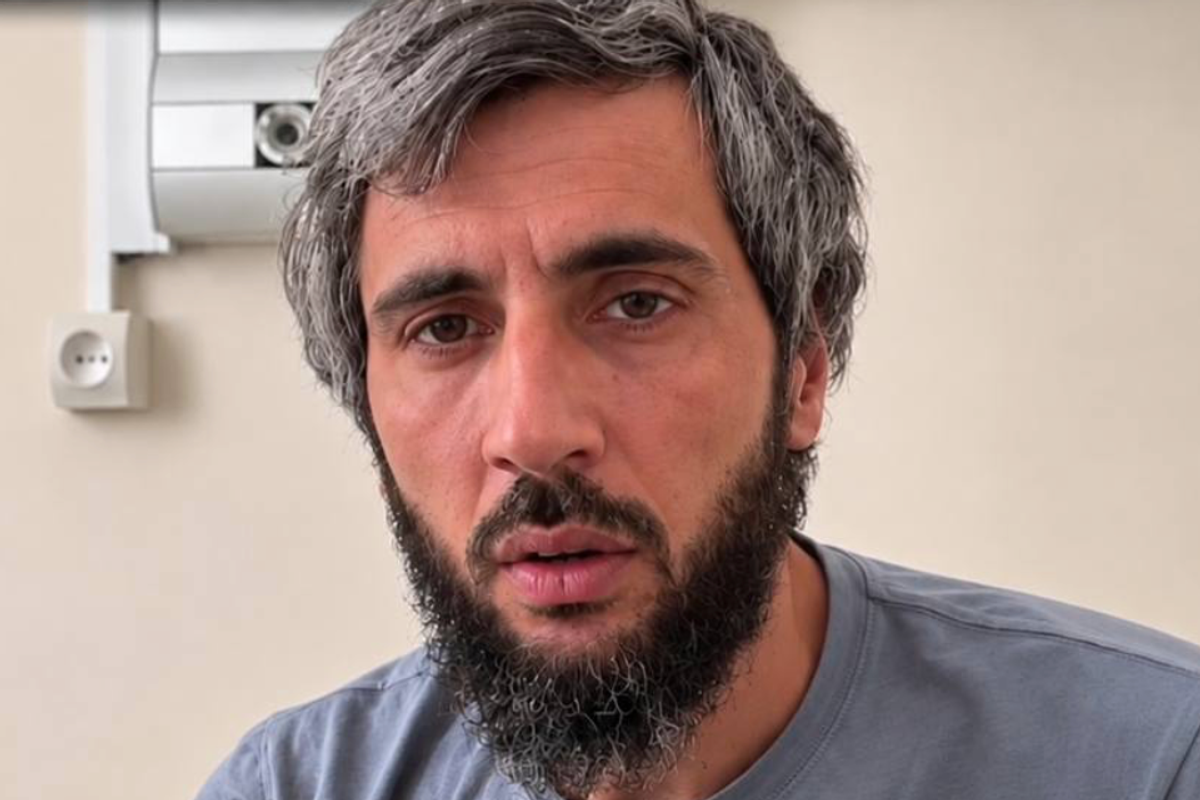
Daghestani man confesses to luring and murdering ex-wife after arranging fake tourist booking, police say
Authorities in Daghestan say 34-year-old Dinara Alkhasova was lured to a remote site under the pretense of a tourist booking and murdered; her former husband has confessed, according to the regional Interior Ministry. Police have detained the ex-husband and two alleged accomplices after finding Alkhasova’s body and say jealousy over her remarriage was the motive.
By Alexander Walter
942 views
Authorities in Russia’s Republic of Daghestan have detained three people and released a confession video after discovering the body of 34-year-old Dinara Alkhasova, who investigators say was lured to a remote location and killed by her former husband out of jealousy over her recent remarriage.
According to Gayana Garieva, head of the Daghestani Interior Ministry’s press service, Alkhasova disappeared on a Friday after dropping her four-year-old son at nursery and telling relatives she was going to work. Her phone soon stopped answering and was switched off. Relatives reported her missing and police opened an inquiry that day, examining the woman’s contacts, CCTV footage and her route through the city of Makhachkala.
Investigators say the footage showed a car repeatedly following Alkhasova’s vehicle. The car was later traced to an acquaintance of Alkhasova’s former husband, identified by his first name, Akif. Garieva said Akif had offered to help repair Alkhasova’s vehicle and used his acquaintance’s car to avoid drawing attention to his own.
Police allege the suspects exploited a known business practice: Alkhasova accepted bookings only from women. To bypass this, Akif recruited his friend’s wife to pose as a female tourist and placed a booking for a trip to the Sulak Canyon. When Alkhasova arrived at the designated location, her former husband and two associates were reportedly there. In video footage of a confession released by the Interior Ministry, the former husband says he attacked Alkhasova with a knife.
After the killing, police say the suspects transferred Alkhasova’s body to another vehicle. The man who carried the body—a 43-year-old acquaintance described by authorities as an Azerbaijani citizen who had been living illegally in Russia—drove to a relative’s plot of land on the outskirts of Novy Khushet, outside Makhachkala. There he asked a local tractor driver to dig a hole, falsely telling him it was for an outdoor toilet. After the tractor driver left, the man placed the body in the hole and covered it with earth, then called the tractor operator back under a pretext and asked him to fill the first hole and dig another nearby, the Interior Ministry said. The tractor driver has been described as unaware that he was being enlisted to help conceal a crime.
Investigators also say the suspects took steps to obstruct the search. The former husband reportedly handed Alkhasova’s phone to an acquaintance who worked as a taxi driver and instructed him to switch it on in the town of Kizilyurt, about 70 kilometres from Makhachkala, and then discard it in a ditch. Alkhasova’s car was allegedly concealed after the murder: its licence plates were changed and the vehicle left in an inconspicuous car park among other parked cars.
On the first day of the search, police questioned Alkhasova’s former husband; he was released for lack of evidence. When agents sought to question him the next day, he claimed he could not attend because of abdominal pain. He was taken to hospital, diagnosed with suspected acute appendicitis and underwent surgery. Despite this, investigators say CCTV evidence ultimately allowed them to identify and track down the suspects.
On Monday, officers discovered Alkhasova’s body on the outskirts of Novy Khushet and detained the former husband and his 43-year-old acquaintance. A third suspect, a 38-year-old woman described as the wife of a man named Baga who allegedly arranged the taxi that lured Alkhasova to the trap, was detained at Moscow’s Domodedovo Airport.
The Interior Ministry has published a video of the former husband’s confession and said jealousy was the motive: he had not accepted that Alkhasova had remarried several months earlier and did not want her new husband to raise their child. The regional authorities’ account frames the killing as premeditated and coordinated, involving deception, movement of the victim’s remains, and deliberate efforts to conceal evidence and derail the investigation.
Human rights organisations have repeatedly warned about high levels of domestic violence and femicide across the North Caucasus, and rights activists have raised particular alarm about patterns of gender-based killings in the region. The Daghestan case is likely to intensify scrutiny of how regional police and courts handle allegations of violence against women and whether more preventive and protective measures are being taken for those at risk.
Investigations are continuing and police have not yet released further details about the legal charges to be brought against the detained suspects or whether additional arrests are expected. The case underlines continuing concerns about intimate-partner violence, the use of coercion and deception in gendered killings, and the capacity of law-enforcement bodies to respond swiftly to missing-person reports and potential femicides.