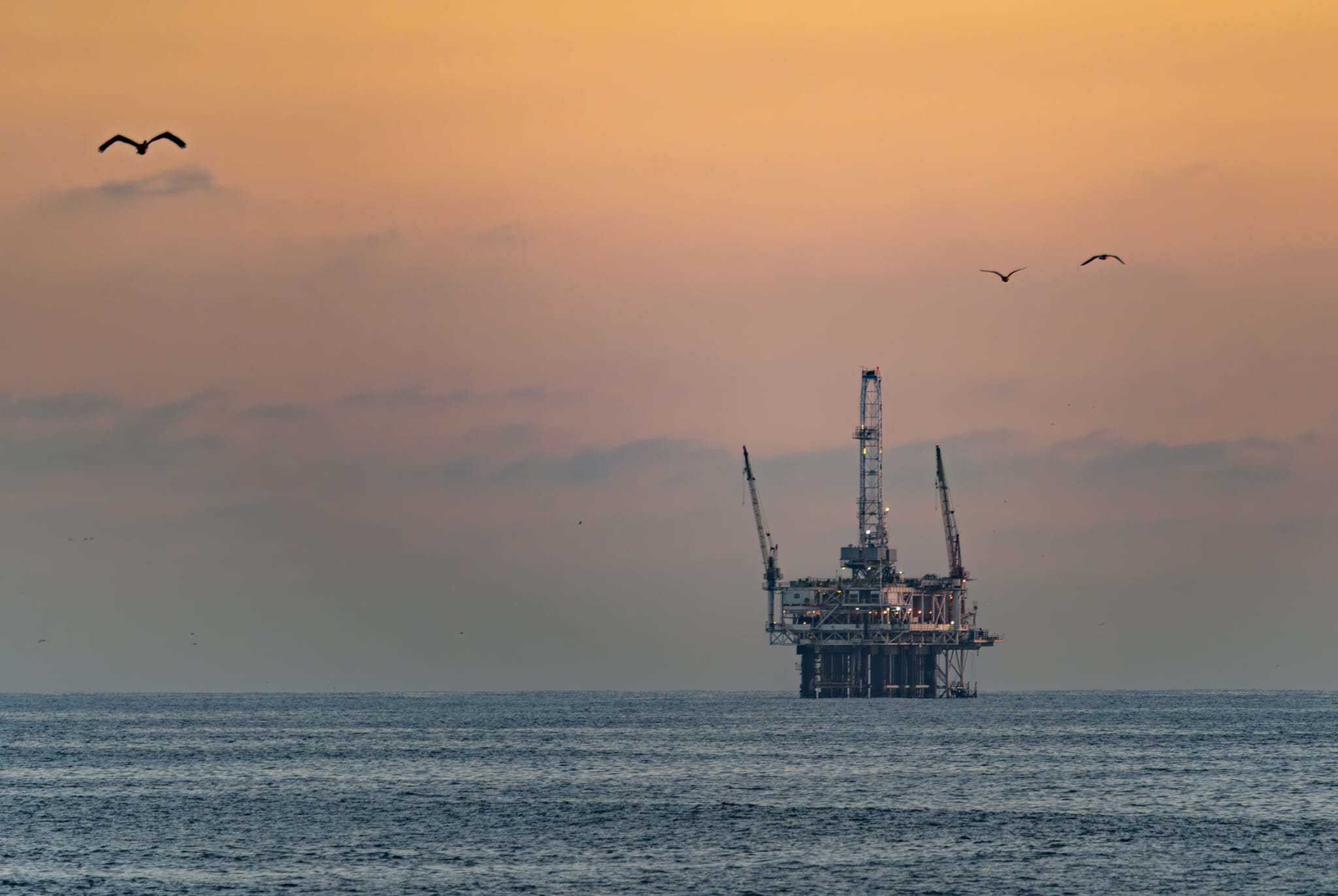
Cross-Border Climate Friction: German Green Alliances Opposition to Poland’s Baltic Oil Project Wolin-East
German environmental groups, local authorities and Polish activists are joining forces to oppose Poland’s Wolin-East oil and gas project, citing environmental risks to the Baltic Sea, threats to marine wildlife and conflicts with EU climate goals.
By Pawel Cybulski
856 views
A major cross-border dispute is unfolding along the Pomeranian Bay as German environmental organizations, local civic groups, and German municipal authorities join forces to challenge a landmark Polish offshore energy project. At the center of the controversy is the "Wolin-East" oil and gas discovery, located just six kilometers off the coast of Świnoujście near the Polish-German border. The project, led by Canadian firm Central European Petroleum (CEP), holds the potential to become the largest raw material discovery on Polish territory since the Second World War—yet it is now facing a coordinated legal and public campaign aiming to halt its development.
A Historic Discovery in the Pomeranian Bay
On July 21, 2025, Central European Petroleum (CEP)—which holds exploration concessions covering 593 square kilometers across onshore and offshore areas near the Polish-German border—announced a significant hydrocarbon accumulation at its Wolin East-1 well. Located a mere six kilometers from the port city of Świnoujście, the discovery is estimated to contain recoverable resources of approximately 22 million tons of crude oil and condensate, alongside 5 billion cubic meters of natural gas.
According to energy industry assessments published by Energetyka24, if these preliminary resource estimates are fully confirmed, the deposit’s commercial value stands at nearly €20.4 billion. For Poland, a country actively seeking to diversify its energy supply and bolster national energy security, Wolin-East represents a transformative domestic asset—the most significant fossil fuel discovery on Polish soil in post-WWII history.
The Emerging Opposition Front
Despite the economic and strategic implications for Warsaw, opposition to the project materialized rapidly across the border. On July 30, 2026, a unified alliance against the planned Baltic oil and gas extraction was formally announced. The coalition brings together major environmental heavyweights, including Deutsche Umwelthilfe (DUH), WWF Deutschland, BUND Mecklenburg-Vorpommern, and the local German civic initiative Lebensraum Vorpommern. Prior to the coalition's formal launch, BUND and local citizen groups had already spearheaded petition drives attempting to stall early planning phases.
Joining this appeal to halt the investment are the German municipality of Heringsdorf—located on the neighboring island of Usedom—and the Polish Ecological Association EKO-UNIA, which stands as the sole Polish NGO participating in the joint initiative.
Critics of the development raise severe ecological warnings, pointing out that the Baltic Sea is a shallow, semi-enclosed body of water exceptionally vulnerable to industrial pollution.
"The news of potential oil and gas extraction off the coast of Świnoujście came as a surprise to us," stated Radosław Gawlik, President of EKO-UNIA. "The Baltic is a shallow and sensitive sea. To date, no country has extracted these resources in the Pomeranian Bay, partly due to marine environmental hazards and potential consequences for tourism in the event of an accident. According to reports, this involves a modest deposit that accounts for only a small percentage of Poland's energy balance. Furthermore, like the rest of the European Union, we are in the process of transitioning away from fossil fuels toward renewable energy. Poland is planning and constructing offshore wind farms with a capacity of 12 to 16 gigawatts. Given the vast amount of clean electricity we can harness from the Baltic, it is not worth investing in oil and gas, but rather in the electrification of the energy system."
Environmental Hazards, Risk of Spills, and Decarbonization Targets
As reported by Business Insider, environmental groups warn that drilling and operational infrastructure could irreversibly degrade protected Natura 2000 marine areas in the Pomeranian Bay. Particular concern centers on the Baltic harbour porpoise (morświn bałtycki), one of Europe’s most critically endangered marine mammals, whose remaining habitat overlaps with the concession zone.
Beyond habitat disruption, opponents highlight catastrophe scenarios. Environmental assessments submitted by opponents argue that in the worst-case scenario of an offshore blowout or platform failure, up to 3,300 tons of crude oil per day could spill into the Baltic Sea, causing long-term contamination and devastating the regional coastal economy, particularly tourism in nearby Usedom and Świnoujście.
Furthermore, critics emphasize that if fully developed, hydrocarbon exploitation at Wolin-East could extend well into the 2060s—a timeline they argue directly conflicts with European Union climate neutrality targets and decarbonization mandates.
A Pattern of Cross-Border Regulatory Friction
For policy observers in Warsaw, the pushback against Wolin-East is viewed not as an isolated environmental debate, but as part of a recurring pattern in Polish-German bilateral relations. Over the past decade, German environmental NGOs and local authorities have systematically utilized EU regulatory frameworks and international legal procedures to challenge, delay, or block major Polish strategic infrastructure investments.
Notable precedents include legal challenges and administrative appeals launched against:
- The Pomeranian Nuclear Power Plant Project: Poland's flagship civil nuclear endeavor.
- The Świnoujście Container Terminal: A key commercial maritime expansion.
- The Deepwater Fairway to Świnoujście and Szczecin: Critical navigational infrastructure.
- The Turów Lignite Mine and Power Plant: A long-standing cross-border legal dispute.
- Oder River Navigation & Regulation Plans: Environmental litigation halting infrastructure works along the border river.
This broader context feeds into a growing perception among Polish industrial stakeholders that environmental objections are frequently leveraged to curb Polish economic competition and infrastructure sovereignty under the banner of ecological protection.
Current Status and Technical Scope
The Wolin-East project is currently undergoing a formal cross-border Environmental Impact Assessment (EIA) conducted by the Regional Directorate for Environmental Protection (RDOŚ) in Szczecin. Under this transboundary procedure, environmental impacts on both sides of the border are being evaluated, allowing public institutions, municipalities, and NGOs from both Poland and Germany to submit formal observations and legal objections.
Parallel exploratory drilling and geological surveys remain ongoing to confirm the exact commercial viability and precise volume of the deposit.
If the Polish government grants final environmental approval and operational permits, platform construction could begin by 2028 at the earliest. According to technical details reported by German daily BILD, the proposed extraction complex would cover a total area of 18 hectares. Beyond the main offshore drilling platform, the project blueprint includes the construction of a protective breakwater, dedicated port facilities, and an approach fairway tailored for coastal oil tankers.
Whether Wolin-East becomes a cornerstone of Poland's domestic energy portfolio or another victim of prolonged cross-border litigation will depend on the outcome of the ongoing EIA proceedings in Szczecin—and Warsaw's willingness to navigate mounting pressure from its western neighbor.