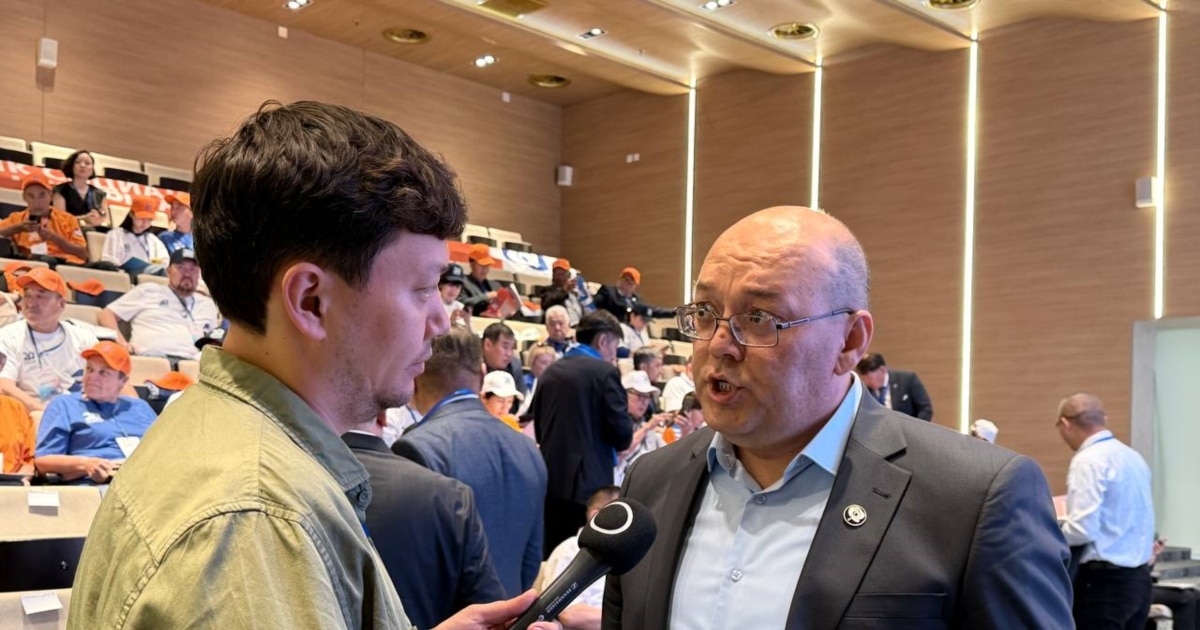
CPJ urges Kazakhstan’s new Kurultai to rescind rules restricting journalists’ access to deputies
The Committee to Protect Journalists (CPJ) has urged Kazakhstan’s newly formed unicameral parliament, the Kurultai, to cancel new rules that would confine journalists’ interactions with deputies to scheduled briefings and limit movement inside the parliamentary building. CPJ and several Kazakh rights groups say the measures lack a clear legal basis, curtail press freedom and run counter to the government's stated goals of democratization.
By Vanessa Bergmann
1,108 views
The Committee to Protect Journalists (CPJ), a New York–based press freedom watchdog, has called on Kazakhstan’s new unicameral parliament, known as the Kurultai, to reverse measures that restrict journalists’ movement inside the parliamentary building and sharply limit their ability to question deputies outside of formal briefings.
The Kurultai began operating on August 28 following the entry into force of Kazakhstan’s new constitution. According to CPJ, the disputed measures were announced publicly on September 2 by Bolat Kalyanbekov, deputy head of the Kurultai apparatus, who said on Facebook that under a «нового формата» journalists would be allowed to speak with deputies and government members inside the parliament only during scheduled briefings in a designated press center. Kalyanbekov also signaled that questions posed during those briefings would have to conform to a previously announced agenda.
Until the change, accredited journalists routinely approached deputies in plenary halls and corridors after sessions to seek comments on breaking developments or to ask follow-up or uncomfortable questions. Local media and journalists have long treated such informal access as a normal — and often essential — element of political reporting and parliamentary scrutiny.
CPJ’s Europe and Central Asia director, Fiona O’Brien, criticized the restrictions as incompatible with the government’s stated democratization aims. The organization emphasized that the new practices appear to have been issued without formal amendment to existing journalist accreditation rules or other parliamentary regulations governing media work. CPJ said any limits on journalistic activity should be grounded in clear legal authority and applied transparently and uniformly.
Four Kazakhstan-based organizations that focus on freedom of expression and human rights also voiced opposition to the new rules, arguing that the ability of a reporter to quickly approach a deputy after a session and obtain an on-the-record response is a standard practice in democratic legislatures. Those groups warned that curtailing such access would reduce parliamentary transparency and hinder journalists’ capacity to hold elected officials to account.
Kalyanbekov told local media that the rules had not yet been formalized and that some provisions were still being refined. CPJ, for its part, said it had sent a request for clarification on the media access rules to the Kurultai apparatus via Kazakhstan’s Ministry of Foreign Affairs but had not received a reply by the time of its statement.
Observers framed the dispute over access as part of a broader environment of increasing pressure on independent media in Kazakhstan. By imposing procedural barriers to spontaneous exchanges between journalists and lawmakers, critics say, the Kurultai risks insulating deputies from public scrutiny and undermining routine channels of accountability at a moment when democratic institutions are being reconfigured under the new constitution.
The CPJ statement underscores a wider international concern: restrictions on the practical ability of journalists to question those in power can have a chilling effect on reporting even when restrictions are nominally limited to certain places or formats. With no formal changes to accreditation rules published and with Kazakh authorities yet to provide detailed explanations, press freedom groups say the Kurultai should promptly rescind the new practices or adopt them only through transparent, legally grounded procedures that safeguard journalists’ ability to do their work.
CPJ’s appeal to Kazakhstan’s parliament brings additional international attention to media access inside the country’s principal legislative institution. How the Kurultai responds — whether by reaffirming unrestricted access, issuing a legally grounded rule, or persisting with informal limitations — will be watched closely by domestic journalists and international rights monitors as an indicator of the new legislature’s openness to scrutiny.