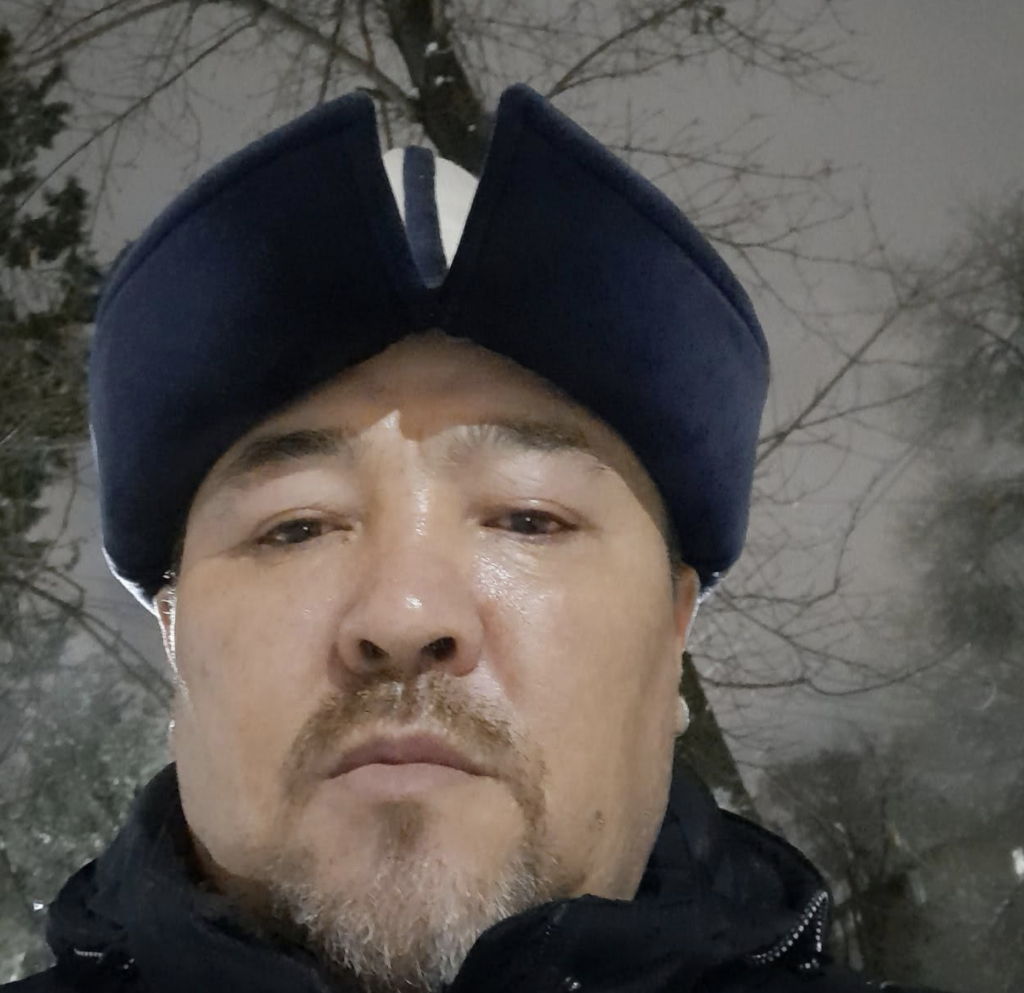
CPJ Condemns Three-Year Sentence for Reposting Kloop Story as Kyrgyz Authorities Crack Down on Corruption Coverage
A district court in Bishkek sentenced Kyrgyz citizen Baktybek Moldaliev to three years in a penal colony after he reposted a Kloop investigative video, relying on a linguistic expert’s finding that the repost was 'extremist' material. The Committee to Protect Journalists says the verdict exemplifies increasing efforts by authorities to suppress dissemination of reporting about government corruption.
By Alexander Walter
868 views
A Bishkek court on November 11 sentenced Kyrgyz citizen Baktybek Moldaliev to three years in a penal colony for reposting a video published by the independent investigative outlet Kloop. The Oktyabrsky District Court in the capital based its ruling on a forensic-linguistic expert’s conclusion that the social media repost constituted distribution of extremist materials — a determination that rights advocates say is being used to criminalize routine sharing of news and to deter scrutiny of public officials.
The Committee to Protect Journalists (CPJ) criticized the sentence on Wednesday, arguing that it reflects a broader campaign by Kyrgyz authorities to stifle the dissemination of reporting about corruption. Fiona O’Brien, CPJ’s head for Europe and Central Asia, said the verdict is “unprecedented for Kyrgyzstan” and demonstrates how severely media freedom has been curtailed under President Sadyr Japarov’s administration.
“This three-year prison term imposed on a social media user in Kyrgyzstan for sharing material from the investigative outlet Kloop is deeply troubling,” O’Brien said. “It reflects escalating efforts by the authorities to suppress publications that expose corruption in government.” Her statement frames the case as part of an emerging pattern of targeting not only journalists but also ordinary citizens who share investigative reporting.
Court records and reporting show that Moldaliev was originally accused of calling for mass unrest, but a judicial linguistic examination did not find such calls in his posts. Following that finding, the investigating authorities changed the charge to distribution of extremist materials. Among the items analyzed by the forensic expert were screenshots of Moldaliev’s posts, including the repost of the Kloop video published on April 29, 2026.
The expert-linguist whose analysis was cited by the court, Taalaybek Abdykozhoev, concluded that the repost constituted dissemination of extremist content. That same expert’s report underpinned an October 2025 court decision that declared Kloop’s materials extremist in the first place — a designation that has major implications for the outlet’s ability to operate and for citizens who engage with its reporting.
Moldaliev’s wife, Elvira Jusupova, has publicly questioned whether her husband was actually the person who reposted the video. She pointed to a previous police interaction in November 2025, when Moldaliev was summoned by investigators, questioned and then released. At that time authorities searched his apartment and seized his phone; according to Jusupova, the device was not returned. Moldaliev’s wife says the April 29 repost occurred after police had retained his phone, raising concerns that the post could have been made by someone with access to the seized device.
The case spotlights several intersecting issues: the criminalization of nonviolent online expression, the use of administrative and criminal procedures to limit access to independent investigative reporting, and the vulnerability of ordinary citizens who share content produced by journalists. Human rights and press freedom groups say that labeling investigative journalism as 'extremist' and pursuing criminal charges against readers and sharers is a dangerous escalation that chills public debate about corruption and governance.
Kloop, the investigative outlet whose video was reposted, has long focused on allegations of corruption in Kyrgyzstan and has faced growing official pressure following its reporting. The October 2025 court ruling that classified Kloop’s materials as extremist effectively broadens the legal basis for prosecutions like Moldaliev’s and increases the risks for both journalists and consumers of independent media. CPJ’s condemnation of Moldaliev’s sentence underscores international concern and raises questions about compliance with Kyrgyzstan’s obligations to protect freedom of expression under international human rights law.
Legal observers and rights advocates are likely to follow whether Moldaliev’s conviction is appealed and whether domestic or international bodies respond to what CPJ describes as an effort by the Kyrgyz authorities to quash circulation of reporting on corruption. For now, the three-year term imposed for a single social media repost stands as a significant development in the country’s shrinking civic space and a warning to others who might share investigative content online.