Covid-19, Worker Strikes and the Failure to Protect Citizens: An Update on the Central Asian Protest Tracker
Covid-19, Worker Strikes and the Failure to Protect Citizens: An Update on the Central Asian Protest Tracker
By Zhibek Aisarina, Emma Wilbur, Natalie Simpson, Elvira Kalmurzaeva, Jonathan Meyer, Doniyor Mutalov and Huma Ramazan Ali
18,695 views
As the third wave of Covid-19 hit Central Asia with the Delta variant spreading throughout the region in the first half of 2021, protests appear to be on the rise. Over the first six months of 2021, the Central Asian Protest Tracker (CAPT) registered 954 protests in the region. Protests in Kazakhstan make up more than 57 percent of all entries, while protests in Kyrgyzstan make up 30 percent of entries and protests in Uzbekistan make up more than 12 percent of entries. Tajikistan and Turkmenistan had only one rally each. 467 protests targeted national and local governments, 222 targeted local non-governmental actors, such as businesses and individuals, 168 targeted foreign actors, particularly the governments of China and Turkey, and 97 targeted the justice system.
With economies still recovering from the initial shock of the pandemic and new lockdown measures unlikely to be tolerated by local populations, governments cannot afford widespread restrictions. Issues related to income, lack of social protection, and low wages were catalysts of public discontent during the first half of 2021 throughout the region. Labor strikes demanding higher pay and better working conditions erupted in Kazakhstan, Kyrgyzstan, and Uzbekistan. Additionally, severe droughts due to extreme heat led to water shortages, resulting in a series of rallies and roadblocks by farmers from various parts of Kyrgyzstan. As temperatures rise, water shortages may become one of the most significant concerns in all five countries, fueling further tensions over scarce resources, especially in the border areas.
Human rights and justice-related issues are common themes of rallies in at least three countries this year, with protests related to ongoing transitions in Kyrgyzstan, Kazakhstan and Uzbekistan. In the first half of 2021, Kyrgyzstan underwent significant political changes, with two referenda and three elections. These events were followed by a series of protests, primarily organized by candidates who were concerned about vote-buying and other administrative violations. Moreover, the shift of power led to the persecution of political figures and the new phenomenon “kusturuu,” whereby to escape jail, politicians “donate” funds to the government. However, despite paying money to the state, some politicians still end up in prison on corruption charges. Thus, supporters of arrested former MPs organized numerous rallies across the country. Anti-democratic protests are also on the rise. Groups have led rallies in Kyrgyzstan in opposition to those protesting against the new government in the country. In Uzbekistan, protesters violently attacked a group of anime fans at the end of March, accusing them of supporting LGBT rights.
Kazakhstan – Labor Unrest and Demands for State Welfare Surge
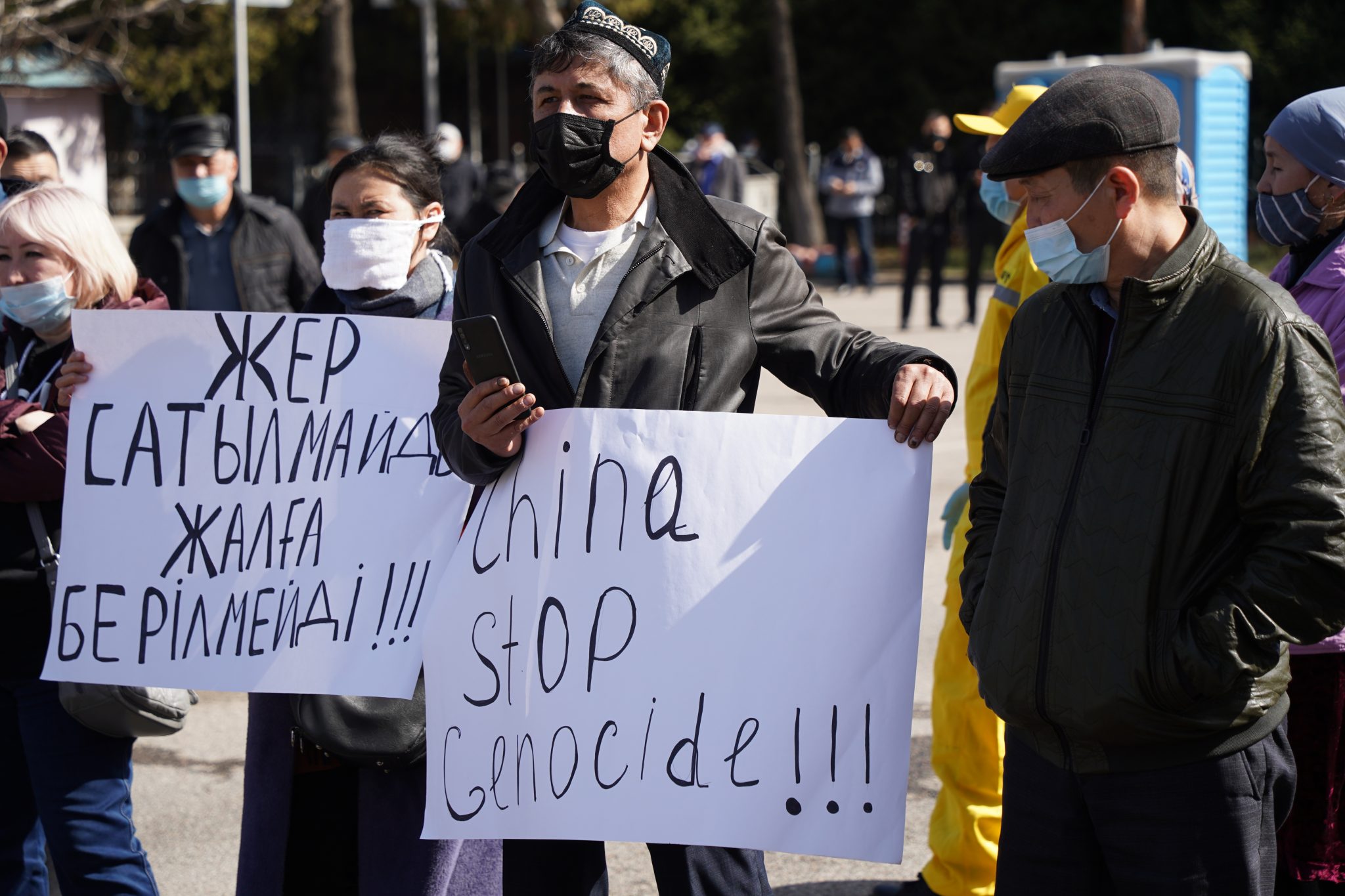
Through the first half of 2021, Kazakhstan remained the country with the highest number of protests recorded in the CAPT, with 548 cases in total. However, to avoid skewing our data, we have omitted the 113 protest entries related to a prolonged rally in front of the Chinese consulate in Almaty, which we coded as separate events, from our analysis here.
Factors driving protests in the first half of 2021 included the “non-competitive” parliamentary elections in January 2021, as well as low wages and high inflation amid the Covid-19 pandemic. Similar to last year’s data, income remains one of the critical issues driving dissent; however, in 2021, it has been increasingly connected to labor conditions. Labor strikes and income-related rallies held by workers across the country made up more than 28 percent of all registered protest activities during the reporting period.
From 2018 to 2020, of all 780 protest activities in Kazakhstan, we registered only 30 strikes, while during the first half of 2021, the number of strikes related to income and labor issues increased sharply, reaching 39. In some cases, workers went on hunger strike or blocked roads demanding higher wages and improved working conditions. Workers from a variety of sectors went on strike, from crane operators to bus drivers, medical personnel, ambulance drivers, schoolteachers and food couriers. According to local experts, cost-push inflation, weak legal protection of workers, and the lack of independent trade unions led to the labor strike surge. In June, the International Labor Organization criticized Kazakhstan for not complying with international labor rights conventions and called on the government to “stop judicial harassment practices of trade union leaders.”