Court case over alleged police torture of lawyer Murat Çelik set for third hearing amid missing SEGBİS audio
Five police officers face charges of exceeding the limits of force and intentionally injuring lawyer Murat Çelik after his arrest at a July 8, 2023 Saturday Mothers/People protest; the third hearing is scheduled for 26 June. The trial has been overshadowed by forensic findings that more than 1.5 hours of the second hearing’s SEGBİS recording contain only background noise, leaving critical testimony unavailable for transcription and inclusion in the case file.
By Hikmet Adal
824 views
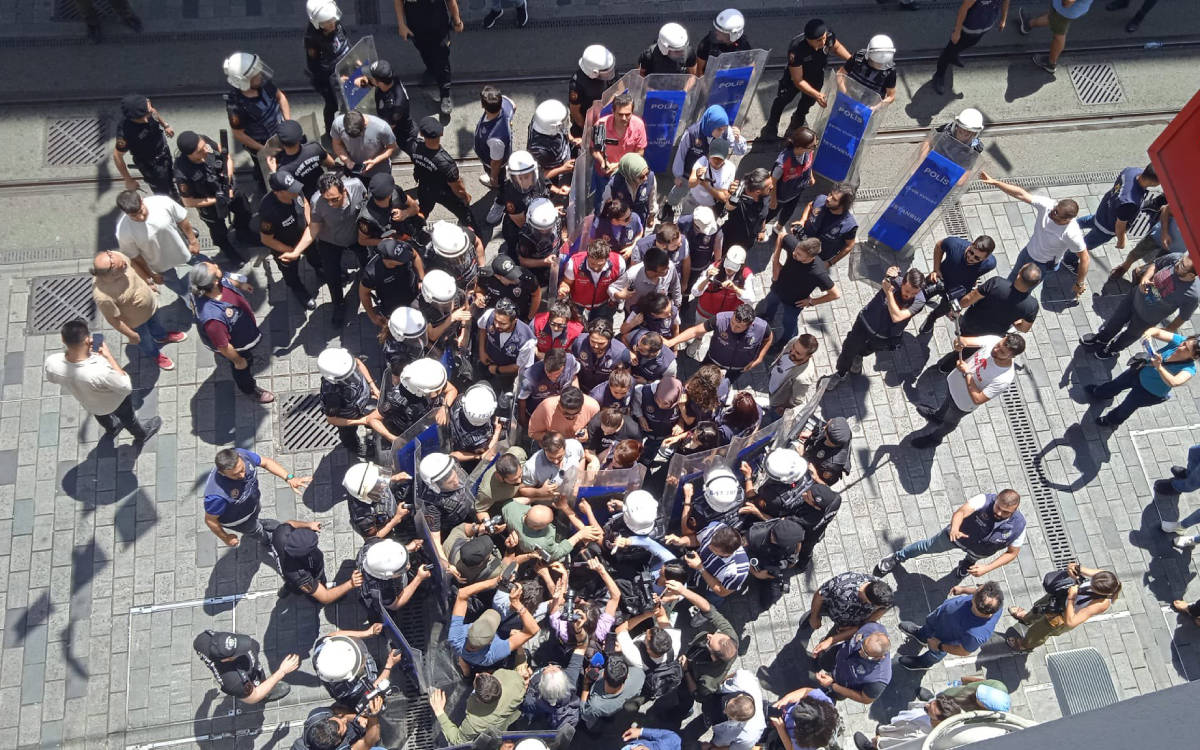
A criminal trial in Istanbul involving five police officers accused of using excessive force and injuring lawyer Murat Çelik during a July 8, 2023 protest will hold its third hearing on 26 June, the same day the United Nations marks the International Day in Support of Victims of Torture. The case, heard at İstanbul Adliyesi 62. Asliye Ceza Mahkemesi, centers on allegations that officers applied reverse handcuffs and used physical force against Çelik during the 954th weekly action of the Cumartesi Anneleri /İnsanları (Saturday Mothers/People).
The five defendants named in the indictment are two then-commissions at the Istanbul Police Department’s Security Branch, identified as Ali H. and İlhan Ç., and three police officers, Burak Mehmet Ç., Fatih A. and Zahir K. They stand accused of “zor kullanma yetkisinin sınırını aşmak” (exceeding the limits of the right to use force) and “kasten yaralama” (intentional injury). Prosecutors allege the officers used unnecessary and disproportionate force during the detention operation.
The trial’s procedural history has included two hearings to date. According to court records, the first hearing took place on 9 October 2025. At that session the five defendants did not appear. The second hearing was held on 18 February, when all defendants except İlhan Ç. were present. The court postponed the case to 26 June and ordered that İlhan Ç.’s testimony be taken by instruction—he had been reassigned to Erzurum in the interim. The four officers who attended the February hearing defended their actions in court, reportedly saying, “Zor kullandık ama yaralama niyetimiz yoktu?”
When his defense was taken by instruction at Erzurum 9. Asliye Ceza Mahkemesi, İlhan Ç. said he and others went to İstiklal Caddesi after learning that the group was staging an unauthorized march and demonstration. He told the court that officers issued a verbal warning to disperse, then asked the group—31 people including Çelik—to board a police vehicle for transport to the station. Describing Çelik’s conduct, the defendant said Çelik struck at an officer and did not board the vehicle, and that officers subdued him using force sufficient to break his resistance. “Kendisini yere attı. Daha sonra direncini kıracak derecede zor kullanarak gözaltına aldık. Bizim müdahalemiz sonucunda yere düşmedi. Suçsuzum, beraatımı talep ederim,” İlhan Ç. said in his statement.
In court in Istanbul, however, Murat Çelik identified İlhan Ç. as the officer who applied reverse handcuffs and used physical force against him. Çelik said he had informed officers at the scene that he was a lawyer and that “Avukata kelepçe takılamayacağını da söylemiştim.” He added that footage in the case file supported his account and said he suffered physical injury, has been receiving treatment for three years, and is seeking criminal sanctions against the defendant.
Beyond the factual dispute over what happened on the street, the trial has been complicated by a significant evidentiary problem relating to the court’s SEGBİS (Ses ve Görüntü Bilişim Sistemi) recording of the February hearing. The court recorded that session using SEGBİS and sent the recording to an expert for transcription and analysis. The expert reported that the total recording length was 2 hours, 18 minutes and 14 seconds, but found that a stretch of 1 hour, 33 minutes and 58 seconds contained only background noise and images—no discernible speech was recorded in that period. As a result, the expert was able to transcribe and analyze only the portion of the hearing after that timestamp.
Çelik has raised concerns about that finding and told the court that, despite his applications, no effective steps have been taken to recover or restore the missing audio portion. He warned that the absence of more than 1.5 hours of audible testimony from the hearing, on the grounds that the SEGBİS file “did not contain sound,” will be a central issue at the 26 June session: “26 Haziran’daki duruşmada, 1,5 saatten fazla bir bölümü kapsayan SEGBİS kaydının ‘ses içermediği’ gerekçesiyle yazıya dökülememesi ve dosyaya eklenememesi temel gündemlerimizden biri olacak. Başvurularımıza rağmen kayıtların kurtarılması yönünde bugüne kadar herhangi bir sonuç alınamamış olmasını da mahkeme gündemine taşıyacağız.”
After taking İlhan Ç.’s recorded defense and hearing Çelik’s identification and complaint, the court closed the hearing and ordered the file to be forwarded to İstanbul Adliyesi 62. Asliye Ceza Mahkemesi. Observers and legal practitioners monitoring the case say the missing SEGBİS audio raises questions about the integrity of court records and the ability of the defense and the complainant to rely on an accurate transcript of the proceedings. The outcome of the upcoming hearing will determine whether the court orders forensic recovery efforts, accepts the partial transcript, or takes other measures to address the evidentiary gap—decisions with implications for accountability in cases of alleged police violence.