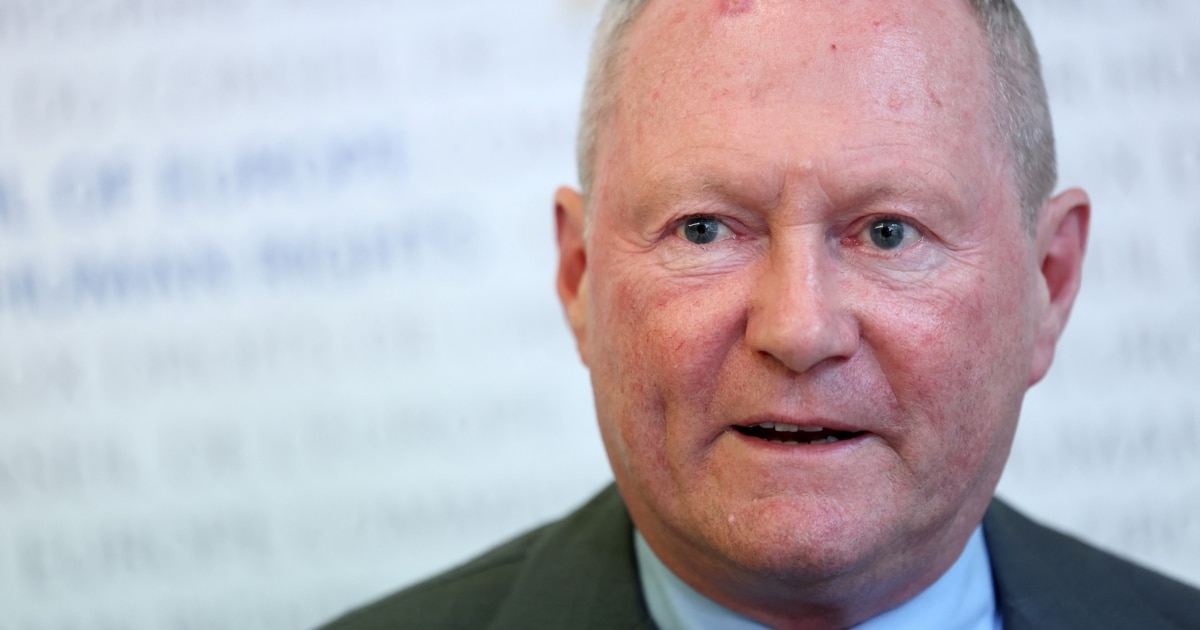
Council of Europe Commissioner Says Praising Ratko Mladić Is a Crime Under Bosnian Law
Michael O’Flaherty, the Council of Europe’s human rights commissioner, has condemned public praise of Ratko Mladić and called on authorities to act against glorification of convicted war criminals. The remarks follow warnings from Ireland’s EU minister that a state funeral for Mladić or attendance by Serbian government officials would be unacceptable to the European Union.
By Alexander Walter
883 views
Michael O’Flaherty, Commissioner for Human Rights at the Council of Europe, publicly condemned the glorification of Ratko Mladić on September 4, saying such acts amount to criminal offences under Bosnia and Herzegovina’s laws and are not protected by the European Convention on Human Rights. "Takvo veličanje predstavlja krivično djelo prema zakonima Bosne i Hercegovine i nije govor zaštićen Evropskom konvencijom o ljudskim pravima. Pozivam sve vlasti da se suprotstave veličanju osuđenih ratnih zločinaca i da ispune svoje zakonske obaveze kako bi osigurale odgovornost, zaštitile prava žrtava i očuvale pravdu", O’Flaherty said, urging authorities to fulfil their legal responsibilities to ensure accountability and protect victims' rights.
The commissioner’s statement came amid broader European concern over public expressions of support for Mladić by some officials and segments of public opinion in parts of the Western Balkans. O’Flaherty’s intervention frames such glorification not as permissible political speech but as an allegation of criminal conduct under Bosnia and Herzegovina’s criminal code, which penalises public denial, trivialisation or justification of genocide, crimes against humanity and war crimes established by final judicial verdicts. Under that law, praising or glorifying convicted war criminals can carry a prison sentence of up to five years.
The issue also drew comments from Thomas Byrne, Ireland’s minister for European affairs, whose country held the rotating EU presidency at the time. Byrne warned that a state funeral for a convicted war criminal or participation by members of the Serbian government at such an event would be unacceptable to the European Union. He told reporters ahead of an informal EU–Western Balkans ministerial meeting in Ireland that, while he understood no official state funeral was planned, "Koliko razumijem, zapravo se ne održava državna sahrana, ali je sasvim moguće da će visoki zvaničnici vlasti odati počast tom čovjeku. Dakle, i to nije prihvatljivo."
Ratko Mladić, the former Bosnian Serb military commander, was convicted by the International Criminal Tribunal for the former Yugoslavia (ICTY) and later had that conviction upheld, receiving a life sentence. In 2021 he was found guilty on 10 of 11 counts, including genocide for the mass killings in Srebrenica—where the tribunal found about 8,000 Bosniak men and boys were killed in July 1995—and for crimes including persecution, deportation, extermination, terrorising the civilian population of Sarajevo during its siege, and taking United Nations personnel hostage.
The ICTY found Mladić responsible for a range of coordinated crimes, including a widespread effort to permanently remove Bosnian Muslims and Croats through acts of persecution, extermination, killing, forced displacement and deportation. He was also convicted for orchestrating terror in Sarajevo through sniping and shelling campaigns and for the detention of UN peacekeepers at strategic military sites intended to deter NATO air strikes.
Calls from European institutions and officials warning against glorification of convicted war criminals underscore ongoing tensions in the region over memory, accountability and political symbolism. Bosnia and Herzegovina’s law criminalising denial and glorification of war crimes exists amid efforts to preserve justice for victims and prevent revisionism, but enforcement depends on domestic authorities. O’Flaherty’s appeal specifically called on all authorities to oppose public homage to those convicted of the region’s gravest crimes, to uphold legal obligations and to protect victims’ rights.
The international attention to potential tributes and how states respond also has diplomatic implications. Ireland’s EU presidency signalled that the EU is monitoring the situation and engaging behind the scenes, while the Council of Europe’s commissioner framed the matter as not only morally fraught but legally actionable. The developments highlight the continuing legacy of the 1992–1995 Bosnian war in the region’s politics and the legal and ethical responsibilities of states in confronting glorification of those convicted of genocide and other serious international crimes.
Radio Free Europe/Radio Liberty reported on the commissioner’s remarks and the related statements by EU officials. The legal framework and the ICTY verdicts cited remain central reference points for courts, governments and human rights bodies seeking to prevent the rehabilitation or celebration of wartime atrocities and to maintain accountability for victims.