Congressional Black Caucus Blocks SCORE Act Over Silence on Gerrymandering, Stalling Major College Sports Reform
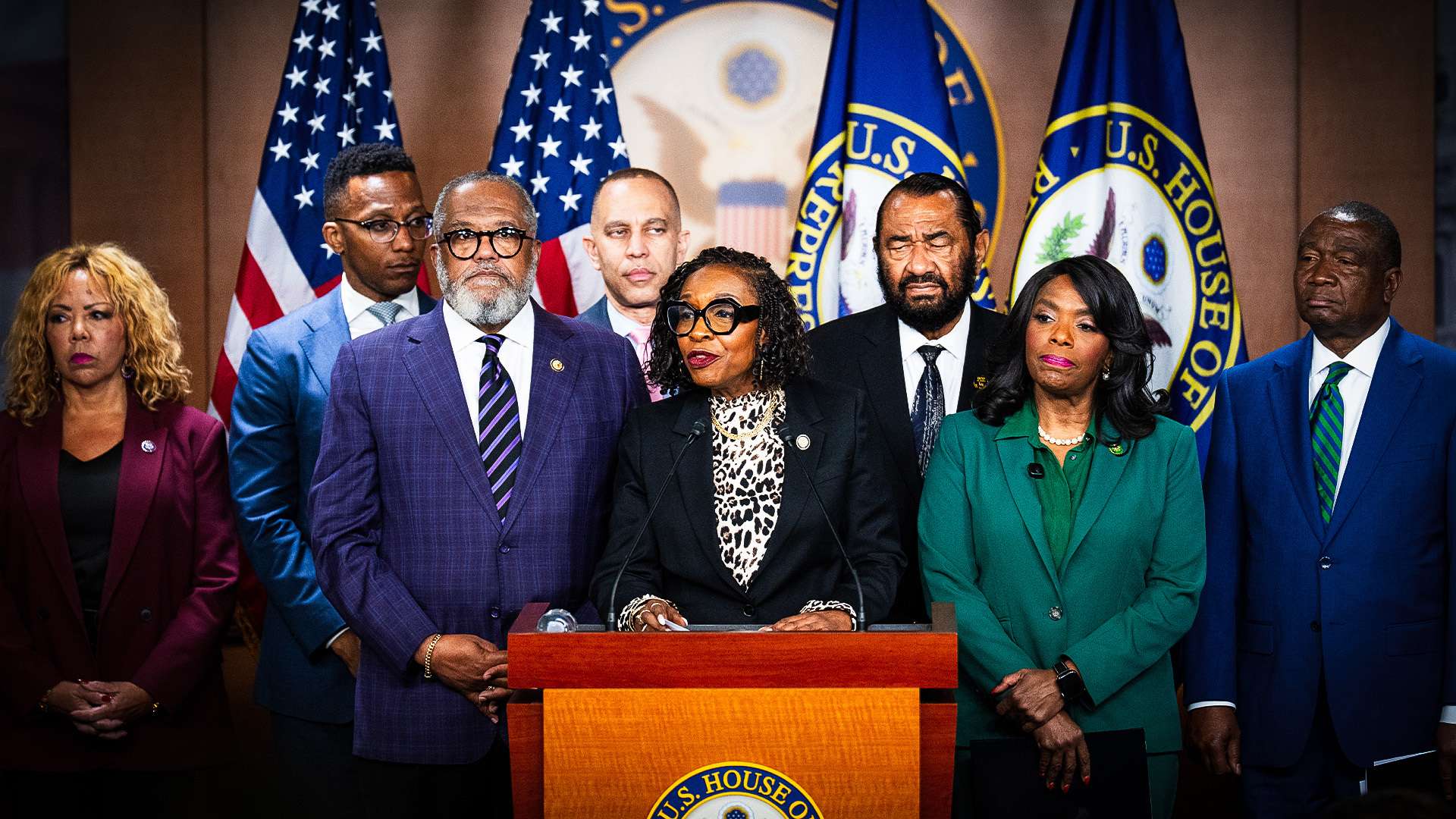
The House's long-anticipated SCORE Act, intended to settle several disputes over college athletics governance and name, image and likeness (NIL) rules, was pulled from consideration after the Congressional Black Caucus announced unanimous opposition. The CBC said it could not back legislation benefiting major athletic institutions that have "remain[ed] silent while Black voting rights and Black political power are being systematically dismantled across the South."
By Jason Russell
1,114 views
Legislation that many in the college-sports world hoped would finally bring federal order to a chaotic governance landscape was abruptly pulled from the House schedule after the Congressional Black Caucus announced unanimous opposition, scrambling what supporters had hoped would be a milestone week. The SCORE Act — the Student Compensation and Opportunity Through Rights and Endorsements Act — was set for a floor vote, but it was postponed indefinitely once the caucus and its 54 House members came out against it on Monday, May 18, 2026, tying their position not to the substance of college athletics but to a broader fight over Black political power in the South.The CBC framed its objection in stark terms. "The Congressional Black Caucus cannot support legislation benefiting major athletic institutions that continue to remain silent while Black voting rights and Black political power are being systematically dismantled across the South," the caucus said in its statement. The group revealed it had sent formal letters to Southeastern Conference Commissioner Greg Sankey, Atlantic Coast Conference Commissioner James J. Phillips, and NCAA President Charlie Baker, demanding they publicly engage on what the caucus called an ongoing assault on Black representation through redistricting and gerrymandering. The argument was explicitly leverage: the conferences and the NCAA want this bill, and the caucus signaled it would withhold support unless those institutions, which profit enormously from Black athletic talent, spoke out on voting rights. As CBC Chair Yvette Clarke of New York put it, the issue was "whether institutions that benefit from Black talent, Black labor and Black communities are willing to speak out when Black political power is under attack."The maneuver was reinforced by an allied campaign beyond Capitol Hill. The NAACP joined the effort, with its president, Derrick Johnson, declaring the organization would not watch institutions that "depend on Black athletic prowess to fill their stadiums" stay silent as Southern states strip Black communities of political voice, and House Minority Leader Hakeem Jeffries publicly backed encouraging athletes to "look elsewhere" until what he described as racially gerrymandered Southern maps are reversed. The NAACP's campaign went further still, urging current athletes at targeted schools to consider the transfer portal and to use their NIL platforms to raise awareness, encouraging recruits to weigh historically Black colleges and universities instead, and asking fans and alumni to redirect financial support. The campaign has also drawn criticism from those who see it as conscripting an unrelated sports bill into a separate political battle.The math in the narrowly divided House made the caucus's defection decisive. With Speaker Mike Johnson operating on an effectively single-vote working majority, any cohesive bloc can tip the balance, and the loss of CBC support — including, notably, two of the bill's own lead Democratic sponsors, Reps. Shomari Figures of Alabama and Janelle Bynum of Oregon, who had been negotiating changes before withdrawing their backing — left the measure short of the votes to pass. It was the second time in less than a year the bill stalled at the brink: House Republican leadership had also pulled it from the floor in December 2025, roughly two hours before a scheduled final vote, after it cleared a procedural hurdle by the slimmest of margins, 210–209, only to draw bipartisan resistance.What the SCORE Act would actually do helps explain why it drew fire from multiple directions. Introduced in July 2025, the bill sought to codify the terms of the landmark roughly $2.8 billion antitrust settlement — approved by a federal judge in June 2025 — that cleared the way for schools to pay athletes directly, while granting the NCAA and its newly formed College Sports Commission limited antitrust protections and the authority to set and enforce national rules. Crucially, it would preempt the patchwork of differing state NIL laws that has frustrated administrators, and it would stop short of classifying athletes as employees, meaning they would not be eligible for collective bargaining. That combination drew objections from athlete advocates as well: Rep. Lori Trahan of Massachusetts had earlier characterized the bill as "a gift to the NCAA and the Power Two conferences at the expense of athletes," arguing it imposed new restrictions on players while leaving the underlying instability unaddressed. The bill was favored by the NCAA and the major conferences such as the SEC and the Big Ten, and President Trump's roundtable on college sports had pressed for its completion, but it was only ever one of several competing approaches.With the SCORE Act stalled in the House, attention is shifting to the Senate, where bipartisan efforts continue. Senators Ted Cruz, Republican of Texas, and Maria Cantwell, Democrat of Washington, are reported to be developing a separate measure that would include stricter caps on NIL payments per institution, though details remain unclear; that effort would be at least the fourth distinct Senate attempt to address college athletics after court rulings and market changes, including Cantwell's earlier bipartisan work. The Senate track has its own backing from college sports power brokers: members of Trump's council on college sports sent a letter applauding the two senators' efforts, and late in the process a large majority of Division I conferences — reported as 26 of the 32 — wrote to Cruz and Cantwell in support of their potential bill.The college-sports fight unfolded amid a broader burst of congressional attention to the intersection of sports and public policy. The Senate Commerce Subcommittee on Consumer Protection, Technology, and Data Privacy held a hearing titled "No Sure Bets: Protecting Sports Integrity in America" to examine concerns about sports betting, prediction markets, and match-fixing. The hearing was prompted by high-profile game-fixing scandals that produced federal charges against figures including NBA player Terry Rozier and MLB pitcher Emmanuel Clase; Rozier, accused of tipping associates that he would leave a 2023 game early so they could profit on bets against his statistics, has pleaded not guilty as part of a sprawling federal gambling takedown that has swept up more than 30 people. The subcommittee's chairman, Cruz, framed the stakes by saying fans shouldn't have to wonder whether a player missed a shot because of a secret bet. Witnesses included the head of the American Gaming Association, a former Republican congressman now serving as a senior adviser to the Coalition for Prediction Markets, a gambling counselor warning of a public-health crisis, the head of Tennessee's sports-betting regulator, and the co-CEO of Integrity Compliance 360, a firm that flags suspicious wagering. Observers noted the hearing might not yield legislation directly, though some senators signaled appetite for federal oversight of prediction markets.On a separate legislative front, Sen. Chris Murphy of Connecticut and Rep. Chris Deluzio of Pennsylvania, both Democrats, unveiled a proposal to bar private-equity firms from investing in youth sports leagues, facilities, tournaments, and player platforms. Advocates of the ban argue that private capital tends to raise costs and impose restrictive practices on parents and clubs, while industry representatives contend that outside investment rescues struggling venues and expands access. Black Bear, a private firm that operates youth hockey leagues, told USA Today it had revitalized rinks, expanded play, and offered lower-cost and free programming — illustrating the tension between the growing commercialization of youth athletics and a more traditional, community-based model.Beyond those headline items, the sports world has seen ancillary developments that underscore the shifting relationship between sports, business, and public policy. UFC President Dana White has called for reversing a tax change in the One Big Beautiful Bill Act that he argues harms gamblers, an issue the House Ways and Means Committee may take up among related sports-tax questions. And in the NHL, the Vegas Golden Knights were reported to have lost a draft pick and seen coach John Tortorella fined a substantial sum over media-related violations following their playoff series against the Anaheim Ducks — a reminder that league-level governance disputes run parallel to the ones playing out in Congress. Meanwhile, a series of unpopular NCAA decisions, including playoff expansions in basketball and football, has continued to fuel the appetite among some lawmakers and administrators for federal intervention — even as the politics of gerrymandering have now, unexpectedly, become an obstacle to exactly that.For now, the immediate fate of the SCORE Act is uncertain. Congressional timelines, the prospect of continued litigation over college-sports rules, and competing political priorities make passage far from guaranteed. The CBC's stance demonstrates that questions of equity and voting rights can derail even narrowly focused sports legislation, and that any effort to stabilize college athletics through federal law must contend with a far broader political landscape than the playing field itself.