Columbia Faces Renewed Scrutiny as Controversial Hires at Affiliated Seminary Deepen Federal and Public Concerns
Columbia University and its affiliated Union Theological Seminary are drawing fresh criticism after UTS hired two former Harvard Divinity School officials whose program had been flagged for promoting one-sided approaches to Israel and Jewish identity. The moves come as Columbia remains under federal investigation and facing financial and compliance pressures related to claims of antisemitism on campus.
By Clémence Desjardins
1,085 views
Columbia University and its affiliated institutions have come under renewed scrutiny after recent faculty and program appointments that critics say mirror the patterns that have generated federal investigations and public backlash over antisemitism on campus. Observers note that rather than signaling a course correction, the university and its partners are bringing into their orbit academics and initiatives that have already drawn controversy at peer institutions, raising fresh questions about Columbia’s approach to campus climate and legal obligations.
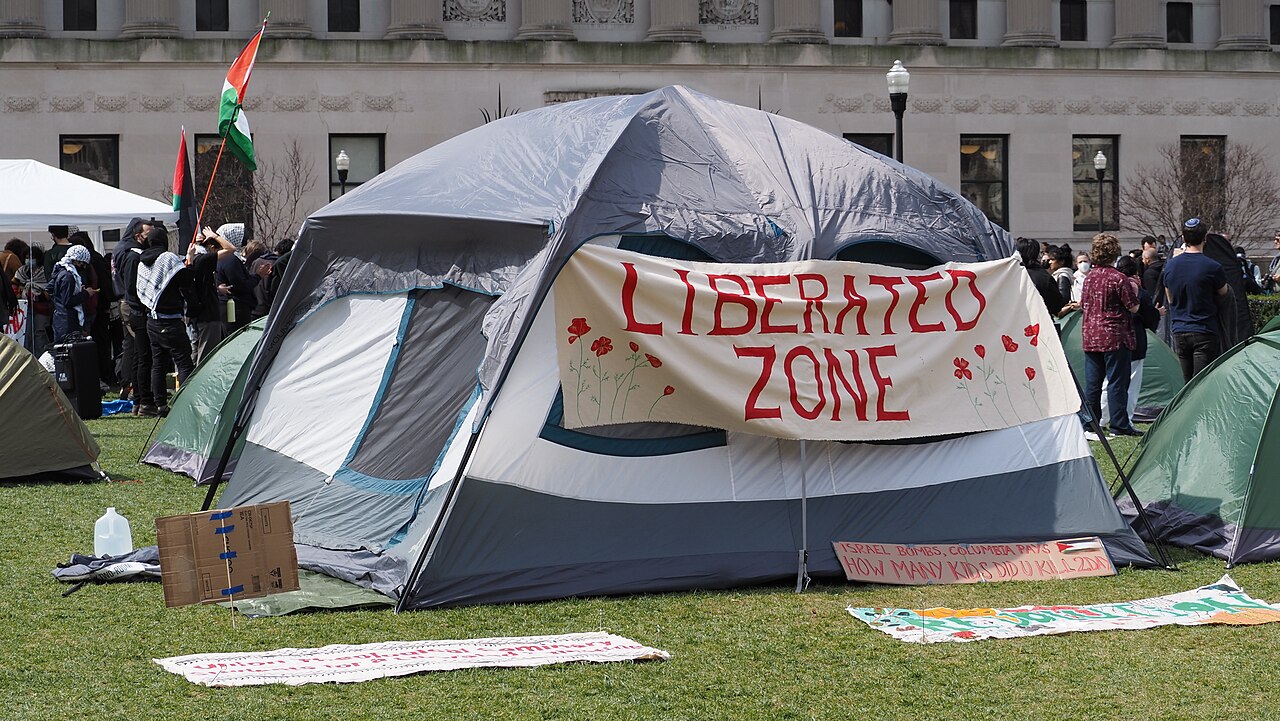
For more than two years Columbia has faced a steady stream of complaints, federal inquiries, and civil-rights scrutiny related to allegations that it did not adequately protect Jewish students or enforce nondiscrimination obligations under Title VI of the Civil Rights Act. Those external pressures have translated into tangible consequences for the university, including increased federal oversight, rising compliance costs, and reputational damage among alumni, donors, and the broader public.
Attention has also focused internally on the conduct of certain faculty members whose statements and scholarship critics say contribute to a hostile environment for Jewish students. Two frequently cited figures are Joseph Massad and Hamid Dabashi. Massad drew particular condemnation after comments following the Oct. 7 attacks that were widely interpreted as sympathetic to violence and supportive of Hamas, while Dabashi has a long record of contentious statements about Israel and Zionism. The continued prominence of such voices at Columbia has fueled doubts about whether the university will hold faculty accountable in ways that protect all students.
The controversy deepened when Union Theological Seminary (UTS), an institution affiliated with Columbia, announced that Diane Moore and Hussein Rashid would lead a new iteration of a Religion and Public Life initiative. Moore and Rashid previously headed Harvard Divinity School’s Religion and Public Life program, which was examined by Harvard’s Task Force on Antisemitism. That review concluded the program was widely perceived as promoting a one-sided, anti-Israel perspective and cited efforts described as “dezionizing Jewish consciousness” and advancing a “decolonial” interpretation of Israel and Jewish identity. Critics of the program argued these approaches could single out students on the basis of religious identity and contribute to a hostile academic environment.
Moore and Rashid departed Harvard abruptly in early 2025 amid mounting legal pressure and institutional steps to address antisemitism-related complaints. Their move to UTS, now linked closely to Columbia, has alarmed advocates who view the transfer of contested academic frameworks as potentially extending the same problems into Columbia’s broader academic network while the university remains under federal scrutiny.
Columbia has also reportedly considered additional appointments, including historian Rosie Bsheer, an associate professor at Harvard who has contributed to Jadaliyya, a platform noted for its strongly critical stance on Israel. Critics have pointed to such affiliations and programming as lacking ideological balance and as further evidence that Columbia’s affiliated institutions may be importing controversial perspectives rather than fostering a more inclusive campus climate.
Taken together, these developments are being interpreted by some stakeholders as indicative of a broader institutional pattern rather than a series of isolated personnel decisions. Legal actions at other universities, including Harvard and UCLA, have already pushed administrations to take more concrete measures in response to similar concerns. Whether comparable pressure will be necessary to produce substantial changes at Columbia remains uncertain, but the outcome may affect not only Columbia’s future reputation and finances but also national expectations for accountability in higher education.
As the debate continues, the central question facing Columbia and affiliated institutions is whether they will change policies and personnel practices in ways that address federal compliance concerns and restore confidence among students and the public. The recent hiring decisions at UTS and ongoing defense of contentious faculty underscore the challenges universities face in balancing academic freedom, free expression, and the obligation to protect students from discrimination and harassment.