Civilians in Yemen: Malnourished, caught between healthcare shortages and displacement
As renewed fighting in Yemen displaces more than 145,000 people, aid agencies warn that a health system broken by a decade of war is leaving displaced children acutely malnourished and pregnant women giving birth on roadsides as they flee.
By Albina Kastrati
1,013 views
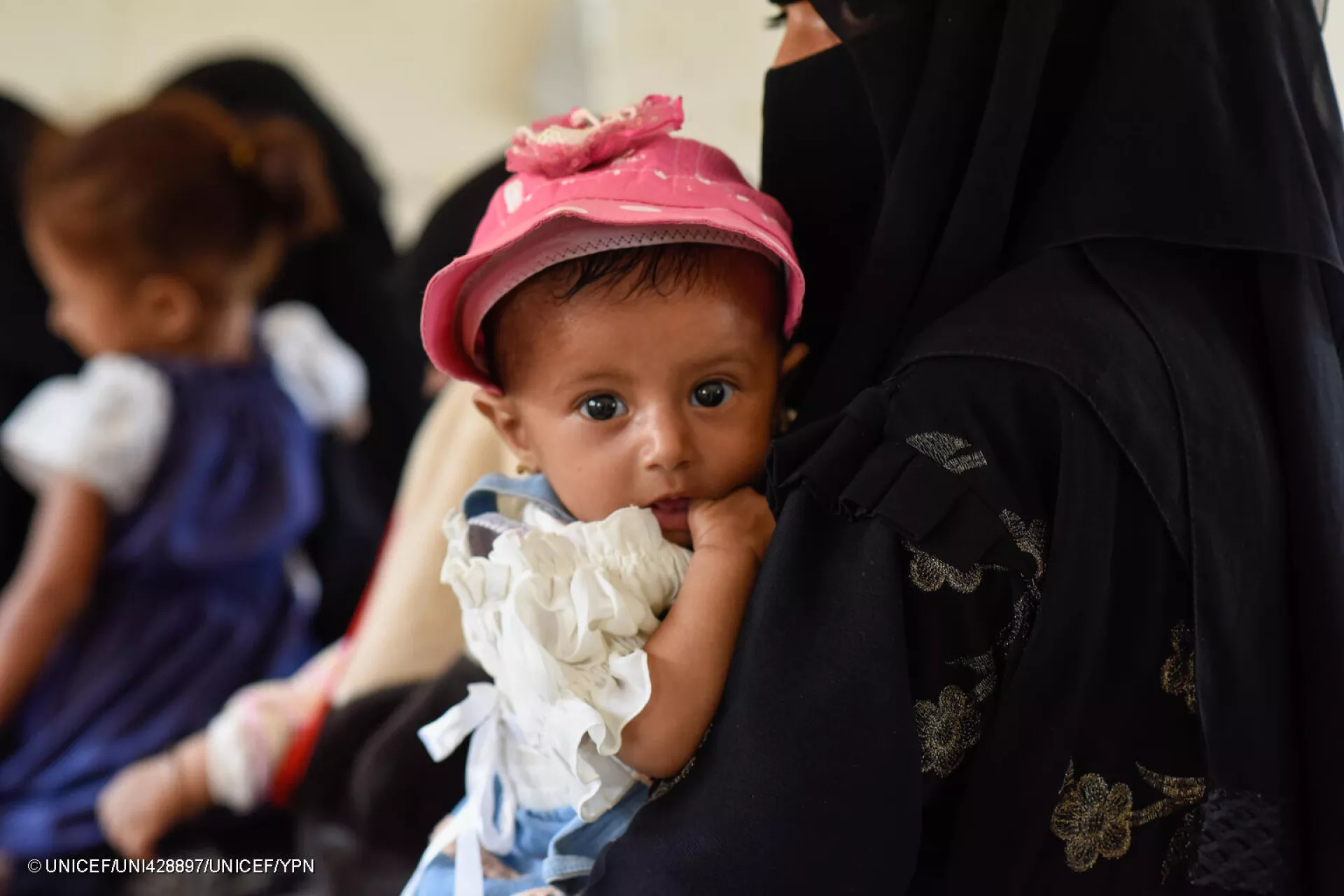
Photo: UNICEF/UNI428897/UNICEF/YPN
The latest escalation in Yemen has placed additional pressure on a health system that was already severely weakened by more than a decade of conflict between the Houthi movement, backed by Iran, and Yemen’s internationally recognized government and other anti-Houthi forces, with Saudi Arabia playing a major role in supporting the government.
The latest data from the International Organization for Migration (IOM) show that the total stands at 145,308 people, or 24,218 households, a rise of 15,870 compared with 21 September and an increase of more than 12 per cent in one week.
The impact of Yemen’s renewed fighting on civilians, particularly children already suffering from malnutrition and people struggling to access healthcare, has reached a massive scale.
According to a recent UNICEF report, the renewed fighting had displaced over 71,000 children, with nearly 2,900 children screened by UNICEF mobile nutrition teams, of whom more than one in four are acutely malnourished.
H.A., an independent journalist and a medical student who trains in two large hospitals in Yemen, described the situation.
“...there has hardly been a day when I haven’t seen people being brought in who later needed to be buried after coming from the frontlines…there are only small medical points providing immediate lifesaving interventions. The wounded are then transferred as quickly as possible to the capital, where they are treated in modern hospitals or other medical facilities depending on the nature and severity of their injuries…Those who lose their lives are also transferred to hospitals or facilities near their home areas, where the necessary procedures are completed. They are then returned to their places of birth or their villages to be buried there,” H.A. told The Liberty Bulletin.
According to a recent report by Médecins Sans Frontières (Doctors Without Borders), since 10 September, more than 60 injured patients from Yemen’s west coast have been admitted to Al-Gamhouria Hospital in Aden, requiring surgery, blood transfusions and prolonged care. MSF says hospitals are having to absorb sudden surges of wounded people while continuing to provide everyday care. In Mocha, MSF continued supporting maternity and paediatric care despite a severe shortage of health professionals. As of 13 September, 23 patients remained there, including 10 babies in neonatal intensive care.
Efforts to secure a frontline medical perspective through Doctors Without Borders were unsuccessful. MSF said it currently had no staff in Yemen available for interviews ‘given how intense the situation is for them.’
In a written statement for The Liberty Bulletin, UNICEF said that during recent visits to displacement sites, their teams have met families who fled active fighting with nothing but the clothes they were wearing. According to UNICEF, parents repeatedly told them that their biggest concerns are finding food, healthcare and safety for their children, and that their mobile teams are seeing increasing levels of malnutrition among displaced children.
“Children face multiple and overlapping risks. These include exposure to violence, family separation, psychological distress, loss of access to healthcare, nutrition treatment, safe water and sanitation services, as well as heightened protection risks. For young children, especially those already malnourished or vulnerable to disease, disruptions to essential services can quickly become life-threatening,” wrote UNICEF for TLB.
According to the medical student, there are currently no field hospitals available, and war casualties are distributed among several hospitals across the country.
“One reason for this may be the concern that field hospitals could be targeted by airstrikes or potentially be treated by the opposing side as military facilities,” he said.
On September 28, Yemen’s Health Minister Qasim Buhaibeh chaired an emergency health coordination meeting to assess the impact of the escalation on the health system, existing gaps and priority needs. According to a report published on the Ministry’s official website, officials discussed strengthening the readiness of health facilities and staff, responding to mass-casualty incidents and maintaining services for people affected by displacement.
The Liberty Bulletin contacted Yemen’s Ministry of Public Health and Population for information on how the latest escalation has affected the country’s healthcare system, and by the time of the publication, the Ministry had not responded.
It isn’t only children victims of this war, according to UNFPA more than 3,200 pregnant women are among the displaced, and its partners have reported pregnant women giving birth on roadsides while fleeing the fighting.
“Displaced women and girls are among the most vulnerable and face serious health and protection risks…The intensifying violence has disrupted reproductive health services in affected governorates. Nine health facilities have reportedly been destroyed or rendered non-functional, while eight have suspended services. The reduced access to antenatal care and safe delivery services is increasing the risks of miscarriage, premature and obstructed labour, and hypertensive complications for pregnant women.”, it was said in the report.