China Conducts Two-Pronged Naval Operations After Japanese Destroyer Transit, Signalling Pressure on Japan, Philippines and U.S. Forces
Following a Japanese destroyer transit of the Taiwan Strait on April 17, Beijing mounted coordinated naval operations that analysts say go beyond a single response and aim to signal resolve to Tokyo while rehearsing multi-directional pressure on U.S. and allied forces near the Philippines. The moves underscore the strategic stakes of the Taiwan Strait for freedom of navigation, regional trade, and the evolving balance between the PLAN and U.S. naval power.
By Antonio Graceffo
1,140 views
On April 17, the Japan Maritime Self-Defense Force destroyer JS Ikazuchi transited the Taiwan Strait — the fourth such Japanese warship transit since September 2024 and the first since Prime Minister Takaichi Sanae took office. Beijing reacted strongly, in part because the date coincided with the anniversary of the 1895 Treaty of Shimonoseki, and state media accused Tokyo of “harming the feelings of the Chinese people” by choosing that date for the passage.
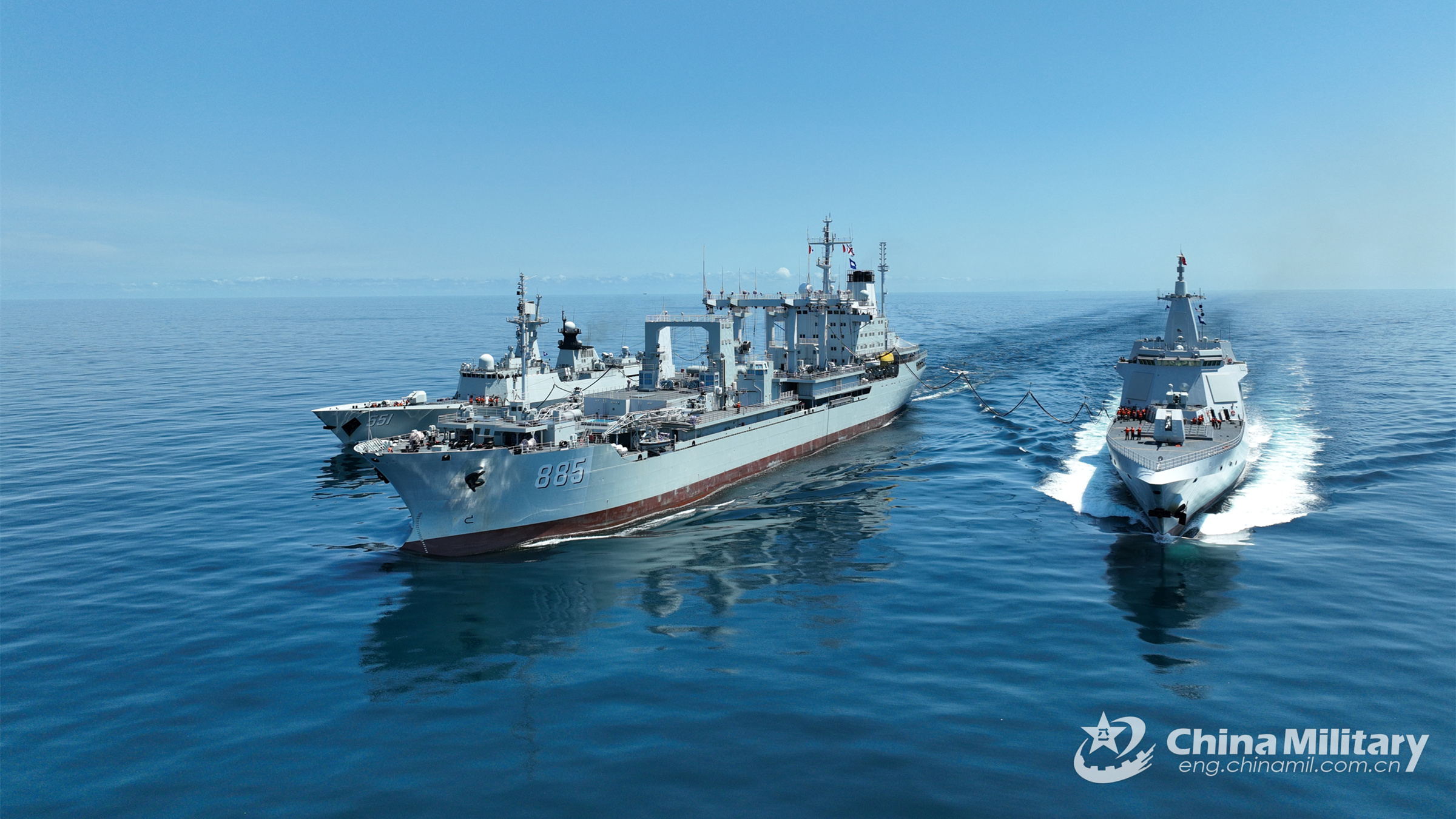
China’s response was swift and multi-faceted. The PLA Eastern Theater Command dispatched the 133rd naval task group through the Yokoate Channel — a passage among the Ryukyu Islands near the Japanese mainland — into the Western Pacific. Separately, the aircraft carrier Liaoning transited the Taiwan Strait on April 20 and proceeded south toward the South China Sea. Chinese authorities characterized the movements as “routine training activity organized in accordance with the annual plan” and said they were “not aimed at any specific country or target,” but analysts see the timing and composition of the forces as a deliberate signal rather than a routine exercise.
The transit by JS Ikazuchi also highlighted Japan’s growing alignment with U.S. freedom of navigation policy. China’s Foreign Ministry condemned the passage as a “dangerous plot” to militarily intervene in the Taiwan Strait, and spokesperson Guo Jiakun affirmed that the Taiwan issue is a non-negotiable “red line.” Washington, which remains Taiwan’s principal security guarantor, asserts that freedom of navigation through the strait is a pre-existing customary right codified but not created by the United Nations Convention on the Law of the Sea. The U.S. enforces that principle through its Freedom of Navigation Operations program, a posture Washington maintains at a scale unmatched by other nations.
Legal arguments buttress the U.S. position: under UNCLOS Article 58, freedom of navigation cannot be restricted within a coastal state’s exclusive economic zone, meaning that China lacks lawful basis to block passage through water corridors lying outside its 12-nautical-mile territorial sea. Beyond law, the economic stakes of keeping the Taiwan Strait open are substantial. About 44 percent of the world’s container fleet transits the strait annually, along with 88 percent of the largest ships by tonnage. The strait carries over 95 percent of Japan’s crude oil imports and 65 percent of South Korea’s crude oil from Middle Eastern suppliers on the most direct route.
Analysts also warn of the practical implications should China gain physical control of Taiwan. Control of both shores of the strait would make claims to regulate transit far more enforceable, even if such regulation remained unlawful under international law. Beijing has long signaled intentions to assert jurisdiction over the waterway, and military control of Taiwan’s coastline would materially advance that ambition.
Observers say the recent PLA movements constitute more than a diplomatic airing of grievance. Because the U.S.-Philippines Balikatan exercise is centered on northern Luzon, the concurrent presence of the 133rd task group in the Philippine Sea and the Liaoning in the South China Sea amounts to what analysts describe as a tactical envelopment rehearsal. In this reading, China is practicing pressure on U.S. and allied forces from two directions simultaneously, a pattern that could complicate allied defense operations around Luzon.
The scale of the Liaoning’s escorts during the December 2022 Western Pacific deployment — two Type 055 destroyers, one Type 052D destroyer, one Type 054A frigate, and a replenishment ship — provides a reference for the carrier’s combat support. There is also the prospect that Liaoning will link up with the carrier Shandong in the South China Sea, potentially as preparatory steps toward planned multi-carrier blue-water exercises later in 2025. In October 2024, the PLAN deployed the Liaoning and Shandong together in the South China Sea and conducted J-15 flight operations from both carriers, and analysts view the current movement as potentially a precursor to repeating or exceeding that milestone.
Longer-term trends amplify the significance of these events. The Pentagon’s 2025 China military report projects that Beijing could field nine carrier strike groups by 2035, roughly tripling its current force and positioning the PLAN as a near-peer competitor to the U.S. Navy’s congressionally mandated eleven-carrier fleet. For now, Beijing frames recent maneuvers as routine training, but the combination of symbolic timing, force posture, and regional exercises underscores how naval operations around the Taiwan Strait and South China Sea are being used to shape perceptions of deterrence, demonstrate resolve to partners like Tokyo, and rehearse capabilities against U.S. and allied contingencies in the Western Pacific.