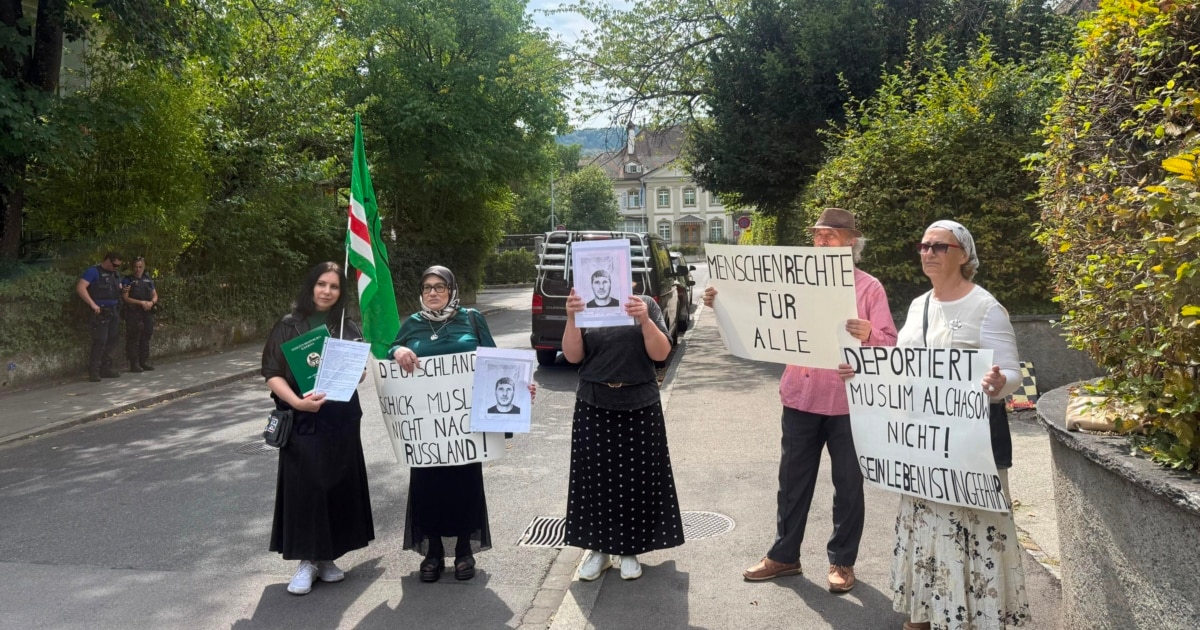
Chechen diaspora protests in Bern over German handling of cases they say risk forcible return to Russia
Dozens of members of the Chechen diaspora gathered in Bern on March 18 to protest what they described as German authorities’ actions that could lead to the handover or deportation of Chechens to Russia. Organizers and human-rights activists read a list of names of people they say face arrest, torture or other reprisals if returned, and demanded that European states refuse cooperation with Russian requests that endanger asylum seekers.
By Alexander Walter
986 views
Dozens of members of the Chechen diaspora held a protest in Bern, Switzerland, on March 18 to denounce what they described as German authorities’ handling of cases involving Chechens at risk of persecution in Russia. The demonstration was organized by representatives of diaspora groups and NGOs, who said they were alarmed by recent judicial and law-enforcement cooperation that they fear could lead to the handover or deportation of Chechens to Russian authorities.
Organizers named several representatives and organisations involved in the protest. They included Гашаева Зайнапа of Швейцарера "Европан машаран цIа", Gazieva Fatimas of the international NGO PeaceWomen Across the Globe, and Дунаева Розас, who addressed attendees and read aloud a list of names of people the group says are threatened. The list, the organisers said, comprises Chechens who have sought refuge in Europe but are now the subject of criminal proceedings, extradition requests or other actions they contend stem from politically motivated or repressive measures in Russia.
According to the protesters, German authorities have either detained or moved to transfer several Chechens whom they fear will face arrest, ill-treatment or worse if returned. Among the names read out were Алхазов Муслим (also referred to as Мубарик), and several others identified in the report as АбуевгIеран, МуртазовгIеран, ШахбиевгIеран and УмаровгIеран. Organizers described individual cases in outline, saying Alhazov in particular has been pursued in connection with events dating back to 2018 and that he has faced police actions and legal scrutiny linked to political or religious allegations.
Protesters also highlighted the case of Тазабаева Хьава, whom they said faced renewed pressure in 2022, and of Тазабаев Рамзан, alleging that authorities have sought to pursue individuals with alleged ties to structures in Chechnya. Organisers argued these actions form part of a pattern by which Russian state institutions target Chechens abroad, and they warned that cooperation by European law-enforcement bodies risks facilitating politically motivated prosecutions and rights abuses.
Speakers at the demonstration urged Swiss and German authorities to refuse requests that would expose asylum seekers and members of the diaspora to reprisals. They framed their demands in human-rights terms, arguing that sending people back to jurisdictions where they are at risk of torture or politically driven prosecutions would violate international protections. The protestors also drew a wider comparison to conflicts in the region, noting concerns about the implications of security cooperation between European states and Russia for civilians and dissidents.
The organisers said police in Germany have at times detained Chechens pursued under charges they view as politically motivated, and they warned of cases where cooperation with Russian requests has led to detention or legal jeopardy for people living in Europe. The Bern event was intended to draw public attention to these cases and to press European institutions to adhere to asylum and non-refoulement obligations.
Local authorities and German officials did not provide a detailed public response in the report; the demonstration coverage published by Маршо Радио noted that protesters presented documentation and names to make their case but did not include independent confirmation of individual legal proceedings. The organisers framed the rally as a civic appeal to European governments and human rights bodies to halt any cooperation that could result in deportations or transfers to Russian custody.
The protest in Bern reflects ongoing tensions between diaspora communities and European states over how to balance law-enforcement cooperation with protections for refugees and political exiles. Human-rights groups have repeatedly warned that extradition or transfer of individuals to countries where they face a real risk of torture or politically motivated prosecution would violate international law, underscoring the broader implications of the cases raised at the demonstration.