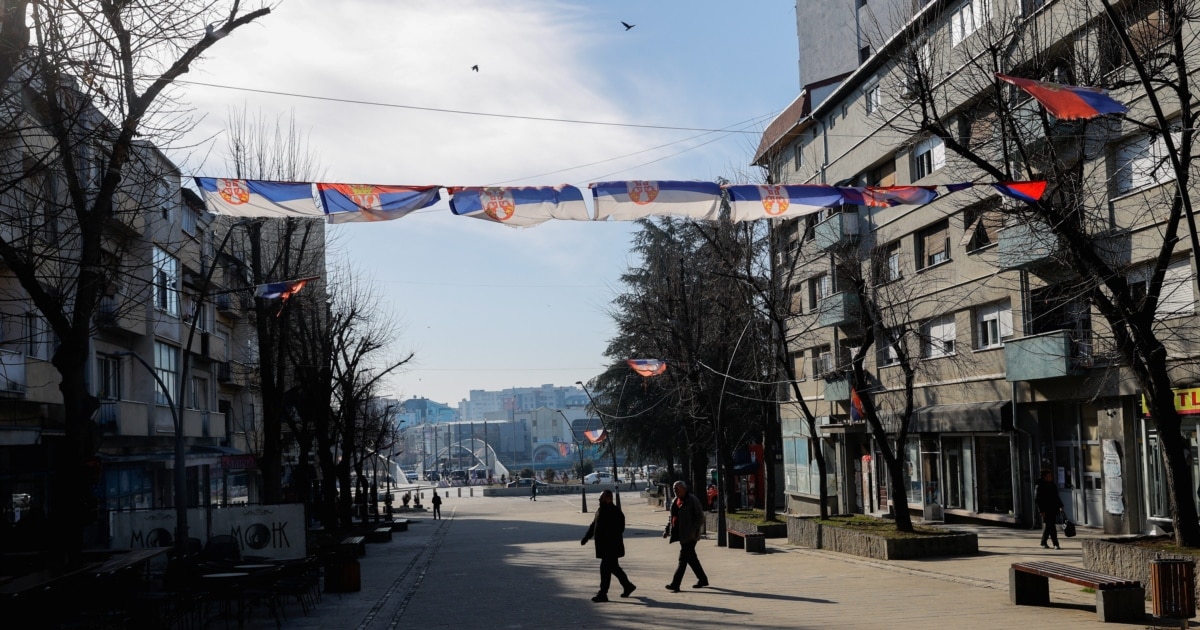
Change in Belgrade Revives Stalled Debate over Association of Serb‑Majority Municipalities in Kosovo
A shift in Serbia’s government has put renewed focus on the Association of Serb‑majority municipalities — a measure Kosovo has not implemented for 13 years. While officials in Pristina say their positions remain unchanged, Brussels continues to press for the body’s establishment, prompting debate over whether the contentious obligation can be reframed as an opportunity for Kosovo’s EU integration.
By Christopher Manley
827 views
A recent change of government in Serbia has revived attention on a politically sensitive and long‑unresolved issue in Kosovo: the establishment of an Association of Serb‑majority municipalities. The association, long promoted by international mediators as a mechanism to organize and coordinate municipal governance in areas with ethnic Serb majorities, has been a source of recurring political confrontation in Kosovo for more than a decade.
Authorities in Pristina have, according to reporting, maintained their established positions and have not bowed to renewed pressure. Meanwhile, officials in Brussels continue to demand that Kosovo move forward with implementing the association, which international actors view as part of broader normalization efforts between Kosovo and Serbia. The renewed attention follows a change of power in Belgrade that has brought the question back onto the diplomatic agenda.
Kosovo has avoided putting the association in place for 13 years, a delay that has repeatedly contributed to political tensions and stalled progress in relations with Serbia. The issue remains divisive within Kosovo, where some political actors and members of the majority population have opposed measures they perceive as undermining Kosovo’s sovereignty or enabling parallel structures. On the other hand, proponents argue that formal mechanisms for local coordination in Serb‑majority areas can help protect minority rights and improve local governance.
Brussels’s insistence on moving forward reflects the Association’s central place in international mediation efforts aimed at normalizing relations between Pristina and Belgrade. For the European Union and other international stakeholders, the association is seen not only as a technical governance arrangement but also as a component of the broader political process that ties into potential progress on European integration for Kosovo. The renewed push raises a key question: can a contentious obligation that has repeatedly ignited domestic political clashes be reframed and implemented in a way that advances minority protections while supporting Kosovo’s path toward EU standards and membership prospects?
Observers caution that turning a long‑standing point of friction into an opportunity will require careful, transparent implementation and sustained international engagement. The format, powers, and legal status of any association will determine whether it functions as a legitimate forum for local matters or whether it risks creating parallel institutions that could complicate state governance. For many in Kosovo, assurances and safeguards will be essential to ensure that any association respects constitutional order and does not confer extraneous authority on external actors.
The issue also has implications for intercommunal relations on the ground. For residents of Serb‑majority municipalities, the association could offer a structured channel to address local service delivery, cultural rights, and administrative coordination. For Kosovar Albanians and other communities, the design of the association will be scrutinized for its impact on sovereignty, rule of law, and equal citizenship.
As discussions resume in diplomatic circles, the key questions will include how the association is defined legally, what competences it is granted, how it will be supervised, and what guarantees will be put in place to prevent abuses or the emergence of parallel authority. The outcome will not only affect Kosovo‑Serbia relations but also contribute to perceptions of whether compliance with internationally mediated agreements can be turned into concrete gains for minority rights and European integration.
The renewed focus on the Association of Serb‑majority municipalities underlines the fragile intersection of minority protection, sovereignty concerns, and international diplomacy in the Western Balkans. With positions in Pristina officially unchanged and Brussels continuing to press the issue, the coming months are likely to see intensified negotiations and scrutiny over whether a long‑delayed obligation can be implemented in a way that reduces tensions and advances democratic and human rights standards in Kosovo.