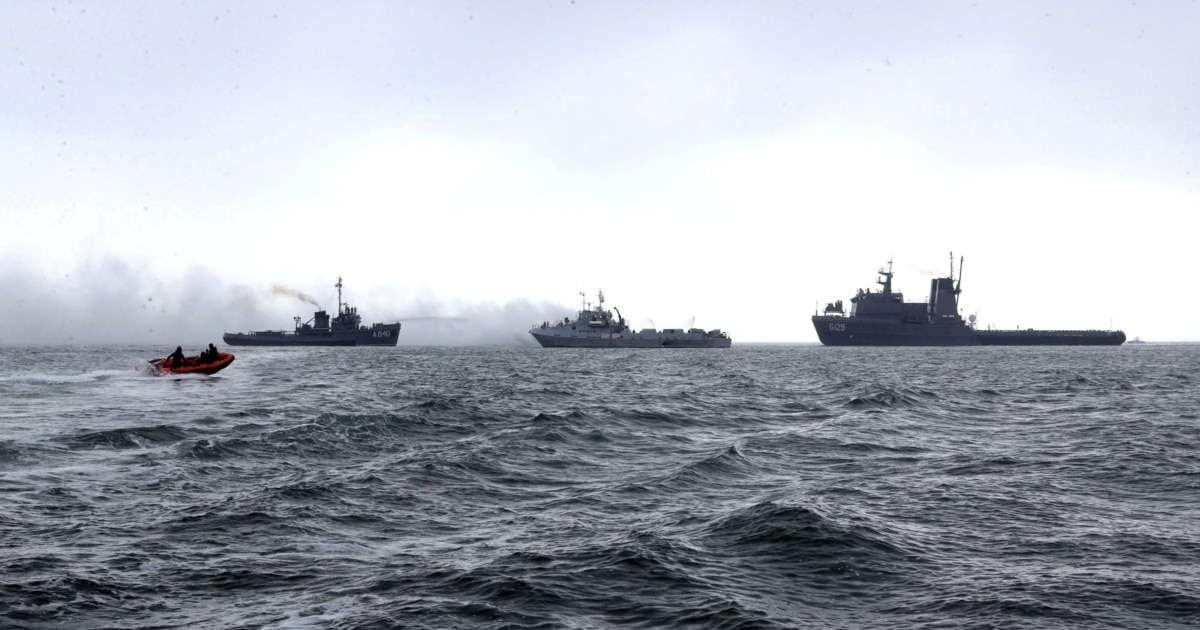
CENTCOM creates 20‑person 'Iron Gate' task force to block Iranian arms transfers by land and across the Caspian Sea
The United States Central Command has established a new military task force called "Iron Gate" to deter and prevent shipments of weapons and other material from Iran by overland routes and via the Caspian Sea. The unit, comprising about 20 personnel, underscores growing U.S. concern about arms movements in a strategically sensitive region and raises questions about possible operations on the Caspian and their legal and diplomatic implications.
By Christopher Manley
1,143 views
The United States Central Command (CENTCOM) has formed a new military task force aimed at preventing the movement of weapons and other materiel from Iran by land and across the Caspian Sea, according to reporting from Azadliq Radio. The unit, given the name "Iron Gate" (translated from the Azerbaijani report's Dəmir qapı), is reported to consist of roughly 20 military personnel. Officials have described the effort as intended to block transit routes that could be used to transfer arms and related materials.
Details released so far are limited. The announcement reported by Azadliq did not provide further operational specifics, timelines or the precise authorities under which the task force will operate. An expert quoted in the Azerbaijani report suggested that a series of operations in the Caspian Sea could be possible, signaling that interdiction efforts may not be confined to mainland transit corridors but could extend to maritime activity in the region.
The Caspian Sea is a strategically important inland body of water bordered by multiple states. Any operations there carry the potential for complex legal and diplomatic consequences because of the number of littoral countries and the sensitive nature of maritime jurisdiction in the area. The creation of a dedicated CENTCOM team focused on land and Caspian routes therefore highlights the U.S. military’s concern about the vulnerability of these corridors to the movement of weapons or other materials that Washington perceives as destabilizing.
From a security and human-rights perspective, efforts to detect and stop illicit arms transfers can be framed as measures to reduce the flow of weapons that may fuel violence and human rights abuses. Stopping or disrupting weapon supplies can limit the capacity of armed groups or state actors to commit abuses or prolong conflict. At the same time, interdiction missions in or near the waters and territories of multiple states can raise questions about sovereignty, the use of force, and the need for clear legal mandates and oversight.
There are also potential diplomatic ramifications. Iran is likely to view operations explicitly aimed at its supply lines as a hostile act, and affected regional states may be drawn into disputes over access, intelligence sharing and freedom of navigation. The nature of the Caspian as a multilateral regional environment means that any sustained interdiction campaign would probably require at least tacit cooperation from neighboring countries or careful management to avoid unintended confrontations.
The reported size of the task force—about 20 personnel—suggests a small, specialized team rather than a large-scale deployment. Such teams are often tasked with coordination, intelligence assessment, advisory roles and targeted interdiction operations. However, the scope and rules of engagement for "Iron Gate" have not been disclosed publicly in the Azadliq report.
Observers and rights advocates will likely watch for more information about how the task force intends to operate, what legal authorities it will cite, and how CENTCOM plans to mitigate risks to civilians and to avoid escalation. Transparency about the mission’s objectives, constraints and oversight mechanisms can be important to ensure that interdiction efforts comply with international law and do not inadvertently exacerbate regional tensions or harm noncombatants.
For now, the CENTCOM announcement as reported represents a next step in U.S. efforts to counter perceived threats from Iran’s logistics and procurement networks. The possibility of operations on the Caspian Sea, flagged by an expert in the Azerbaijani reporting, marks a notable expansion in the geographic focus of interdiction efforts and raises a suite of operational, legal and diplomatic issues that stakeholders in the region and beyond will be monitoring closely.