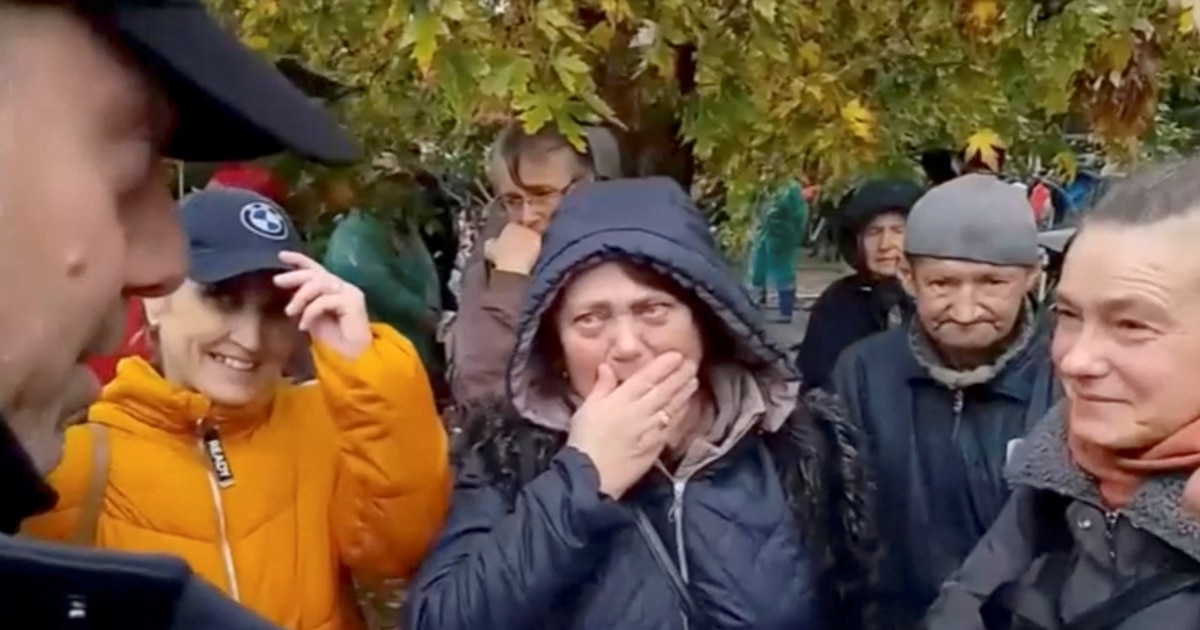
Cease-Fire Enables Humanitarian Aid and Evacuations in Russian-Occupied Oleshky; Ukrainian and Russian Delegations Arrive
A temporary cease-fire has allowed Ukrainian and Russian delegations to enter the Russian-occupied city of Oleshky to begin deliveries of humanitarian aid and to organize evacuations of civilians. Ukraine has prepared 25 buses and ambulances to remove residents who choose to leave, while officials say those who remain will receive humanitarian assistance.
By Alexander Walter
1,060 views
Ukrainian and Russian delegations convened in the Russian-occupied Ukrainian city of Oleshky after a temporary cease-fire made possible the delivery of humanitarian assistance and the evacuation of civilians, according to reporting by Radio Free Europe/Radio Liberty. The operation marks a rare coordinated movement into an area under occupation to address urgent civilian needs and to allow residents to leave with official transport.
Ukrainian authorities said they had prepared 25 buses and ambulances that would stand ready to evacuate residents who elect to depart Oleshky during the cease-fire window. Officials also stated that humanitarian aid would be distributed to those who chose to remain in the city. The presence of both Ukrainian and Russian delegations indicates formal arrangements to enable safe passage and relief delivery during the agreed pause in hostilities.
The start of aid deliveries and evacuations follows negotiations that secured a temporary cessation of fighting in and around the city. Humanitarian operations in territories under occupation are frequently complex and fraught with risk, requiring coordination between opposing parties, guarantees for the safety of civilians and aid workers, and mechanisms to ensure that assistance reaches those in need without obstruction or diversion.
For residents of Oleshky, the operation offers a narrow opportunity to seek safety outside the occupied area or to receive urgently needed supplies. Evacuations conducted under temporary cease-fires can be lifesaving for people trapped in contested zones where access to food, medical care and other essential services has been disrupted. At the same time, such movements raise urgent questions about the conditions under which civilians decide to stay or leave, the protections they will receive, and the monitoring and accountability measures in place to prevent abuses during and after transit.
The involvement of delegations from both sides is significant for humanitarian access, but it also underscores the fragile nature of cease-fire arrangements in conflict settings. Guarantees for safe corridors and evacuation routes often depend on continued cooperation and oversight; without robust monitoring, there is a heightened risk that cease-fires will break down or that civilians will face threats while trying to leave. Humanitarian groups and international observers typically emphasize the need for independent verification and for unobstructed access to ensure that aid reaches all those in need.
The events in Oleshky are part of a broader pattern in which civilians in occupied and contested areas face acute displacement, shortages of aid and heightened vulnerability. Ensuring the protection of noncombatants, enabling safe humanitarian assistance and maintaining clear records of evacuations are essential to uphold human-rights obligations and to mitigate the immediate suffering caused by conflict and occupation.
Radio Free Europe/Radio Liberty reported the arrival of the delegations and the preparations for evacuations and aid distribution. The situation remains fluid as the cease-fire window proceeds, and further updates will be required to determine how many residents are evacuated, how effectively humanitarian supplies are distributed, and what longer-term measures will be taken to protect civilians in Oleshky and other occupied areas.