Can Belarus Become the United States’ Main Potash Supplier? Sanctions Lifted but Market, Logistical and Political Barriers Remain
After the United States removed sanctions on Belarusian potash in March, U.S. officials and Belarusian authorities have discussed a potential large-scale supply arrangement. Despite Belarus’s large production capacity and an expected initial shipment, analysts say contractual commitments, transit restrictions, product types and economic realities make it unlikely Minsk can supplant Canada as America’s primary potash source.
By Alexander Walter
1,177 views
The prospect of Belarus supplying large quantities of potash to the United States has resurfaced after Washington removed specific sanctions on Belarusian potash on March 19. U.S. President Donald Trump said discussions were underway on a “massive deal” under which Belarus would sell potash to the United States at prices lower than those offered by Canada. But market analysts, logistics experts and Belarusian commentators caution that practical and political obstacles mean Minsk is unlikely to replace Canada as the dominant supplier.
Potash is a key ingredient in synthetic fertilizers, and the United States has relied heavily on imports. Between 2021 and 2024, 79 percent of U.S. potash imports came from Canada, according to U.S. Geological Survey (USGS) data published in February. Before U.S. sanctions were imposed, Belarus supplied roughly 5 percent of U.S. potash needs. From 2021 to 2024, Belarusian potash exports were subject to U.S. restrictions imposed after Minsk’s violent crackdown on pro-democracy protesters in 2020.
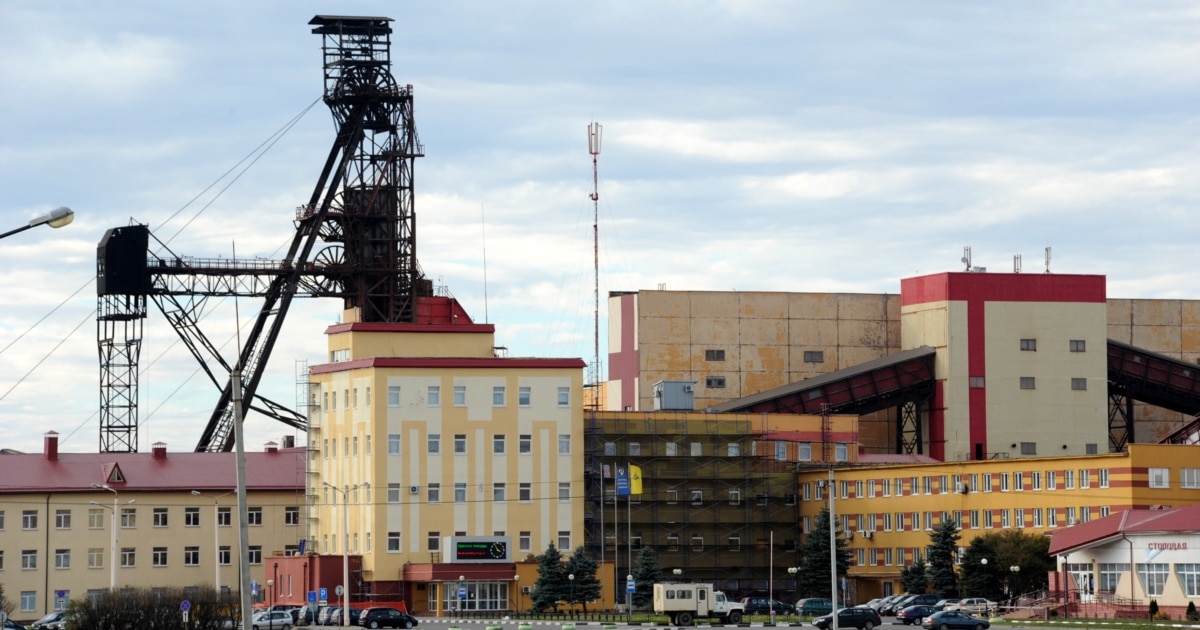
Belarus is a major global producer. USGS figures show Belarus produced approximately 6 million metric tons of potash in 2025, making it the fourth-largest producer worldwide behind Canada, Russia and China. The product has long been central to Belarus’s export economy; different classes of potash fertilizer generated an estimated more than $1 billion in export revenue in 2024 and account for roughly 15 percent of global synthetic fertilizer output.
In theory, Belarus has the scale to supply much larger volumes, but in practice several constraints loom. A significant share of Belarusian exports is tied up in contracts with other buyers: about 27 percent of Belarus’s potash goes to China, with substantial volumes also sold to Brazil and India. “The problem is that Belarus doesn’t have spare capacity to supply the U.S.,” said Nikolay Kulbaka, an economist and co-author at the New Eurasian Strategies Center. “They certainly won’t clash with China, the main buyer.” Belarusian President Aleksandr Lukashenko echoed that reality, saying on September 21 that even if Belarus wanted to divert supplies to Western markets, “we simply do not have these volumes, everything is contracted.”
Logistics and transit add further complications. U.S. imports of Canadian potash travel relatively short distances by rail across the U.S.-Canada border. Belarusian product would face much longer and more complex shipping routes, likely via rail to Russian ports and then by sea to U.S. Gulf ports such as New Orleans. The European Union has not matched the U.S. decision to lift sanctions: Lithuania, an EU member, has said it will not allow transit of Belarusian potash through its main port, Klaipeda. RFE/RL reported in May that Washington had urged Lithuania, Poland and Ukraine to permit transit; U.S. envoy John Coale, who reportedly negotiated the release of several political prisoners in return for relaxation of some sanctions, declined to comment on the transit issue.
There are also product-specific and economic obstacles. Analysts note that Belaruskali, Belarus’s largest fertilizer producer, primarily manufactures “pink” potash that requires different processing, while the U.S. market traditionally consumes “white” potash. “There is white potash and pink potash. White requires more processing, while Belaruskali mainly produces pink potash. The U.S. market mainly consumes white potash,” said independent economic analyst Andrei Makhovsky.
Freight economics further reduce the feasibility of large-scale U.S. purchases. Transport costs over long distances can make shipping low-value bulk commodities uneconomic. “I don’t think it would make economic sense to ship large amounts of potash to the United States from Belarus given the distance and the relatively low value of the product,” said Josh Linville, a fertilizer analyst at StoneX, a U.S. financial services firm. Julia Campbell, head of potash pricing services at Argus, noted that most U.S. imports arriving by sea enter through New Orleans, but stressed that for Belarus to replace Canadian supplies would require Minsk to export almost exclusively to the United States — a highly unlikely scenario.
Despite the obstacles, some trade is already moving. Argus reported on September 21 that the first Belarusian fertilizer shipment to the United States in four years — a 30,000 metric ton cargo — was expected to arrive in New Orleans the following month, marking the first potash trade between the two countries since U.S. sanctions were lifted. Observers say limited supplies may reach U.S. buyers, but they caution against expectations that Belarus can become the main U.S. supplier in the near term without major changes in contracts, transit policies, processing capacity and geopolitical alignments.
The debate over Belarusian potash highlights the intersection of trade policy, human rights and geopolitics. Sanctions were originally imposed by the U.S. and EU in response to Belarus’s suppression of protests and human rights abuses after 2020. Any further easing of trade restrictions has been linked in public reporting to behind-the-scenes diplomacy, including negotiations over political prisoners. For U.S. policymakers and global buyers, the question is therefore not only whether Belarus can scale up exports, but whether doing so is politically and economically viable given ongoing concerns about Minsk’s human rights record and the complex web of existing contracts and transport constraints.