Building a new nuclear power plant in Hungary. Russian in the heart of Europe
Construction of the new PAKS II nuclear power plant is under way in Hungary. When the plant is completed, Russian-produced electricity will flow into the EU. And once it's on the grid, nobody can tell whose electrons are whose.
By Jesper Enerstvedt
980 views
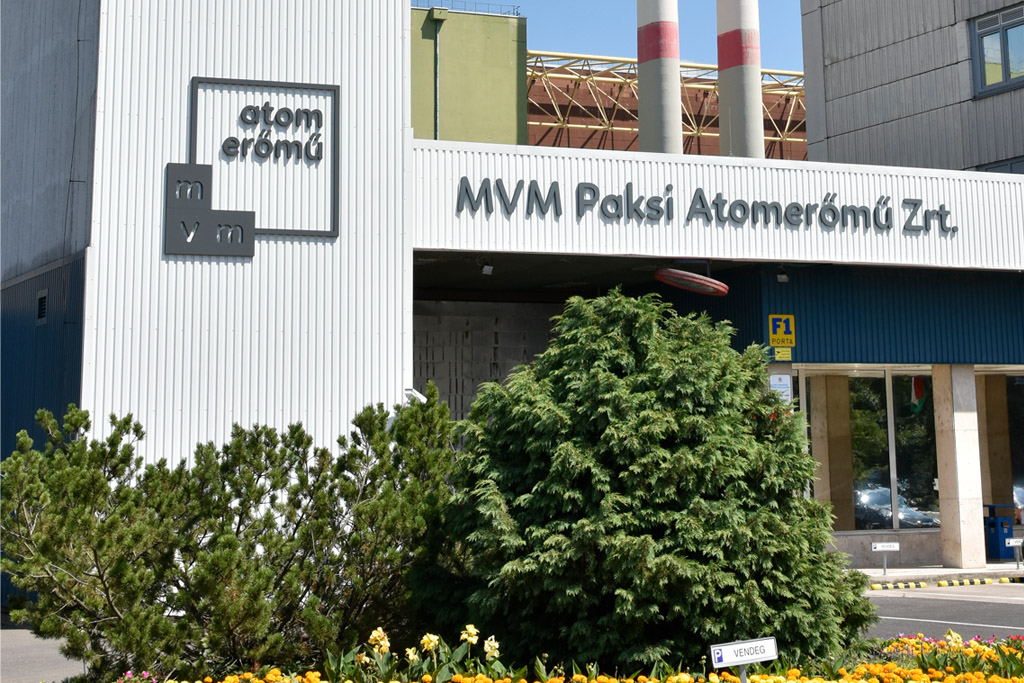
Photo: Barna Rovács/Tothma/CC BY-SA 4.0 The Paks Nuclear Power Plant is located 5 km from the small town of Paks, in central Hungary.
Originally, Rosatom was to use Germany's Siemens to make certain components, but has now terminated the cooperation. This means it will be Russian through and through in Hungary. The EU's attempts to throw a spanner in the works of the Russian war economy are not always equally successful. If you stop Russia at one end, more just comes from another side.
The core technology of the Paks II nuclear power plants is Russian. The reactor design, safety systems and fuel all come from Russia's Rosatom. This sets the stage for a nuclear power plant with a Russian main contractor to supply the EU with electricity. Once electricity is flowing through the high-voltage grid, it is too late to say that this part is Swedish and that part is Danish. This means that washing machines and electric cars in Austria or Slovakia will in the future also be charged with Russian-produced electricity, even though the plant is owned by Hungary and the electricity is fed into the Hungarian high-voltage grid.
Because Hungary is a member of the EU, it is also a full member of ACER, the EU agency for energy cooperation between the countries. The Hungarian energy regulator MEKH takes part in ACER's work on equal terms with the regulators of the other EU countries. The Hungarian transmission grid is fully integrated into the European synchronous power system through the cooperation organisation ENTSO-E. The Hungarian transmission system operator is called MAVIR. Hungary has physical 400 kV high-voltage connections directly to several of its EU neighbours, including Slovakia, Austria, Romania and Croatia. This means that the energy from the Russian-built nuclear power plant will flow freely across the borders into the European market.
In the nuclear industry, people talk about "first concrete". It was poured in Hungary on 5 February 2026. It annoyed many in Brussels that the director general of the atomic energy agency, Rafael Mariano Grossi, showed up at the ceremonial start of construction of a Russian nuclear power plant inside the EU. The IAEA chief stood alongside Rosatom's top executive, Alexey Likhachev. The presence of the International Atomic Energy Agency (IAEA) lends the project weight and international legitimacy.
Formally, Rosatom has terminated its contract with Germany's Siemens Energy for the supply of instrumentation and control technology for the two new units at the Paks nuclear power plant. Together with the French company Framatome, Siemens Energy was to deliver what the experts call the "brain" of the new reactors. Rosatom confirmed in February 2026 that the contract was terminated at the end of 2025. The cooperation with Siemens Energy has thus come to an end of the road. Rosatom says that Siemens failed to meet its contractual obligations. Siemens says that there were no sanctions-related restrictions when the contract was terminated, and that the client withdrew. The German government stated in January that neither Siemens Energy nor its partners had received an export permit. The Federal Office for Economic Affairs and Export Control in Germany had not granted the necessary export licences. That slammed the door on European cooperation. Instead, the nuclear power plant became a more Russian project in the middle of the EU.
The Hungarian government tried to save Siemens' participation in the project in June 2025. Then Foreign Minister Péter Szijjártó tried to move Siemens Energy's nuclear control technology division to Hungary in order to circumvent the legislation in Germany. German politicians did not think this was a good idea. That became the final nail in the coffin for a major European project. In the future, an almost entirely Russian nuclear power plant will supply electricity to the EU's high-voltage grid.
Russia's Rosatom does not see the loss of Siemens as a problem for the construction of the nuclear power plant. According to Rosatom, Siemens components made up less than four percent of the total equipment. Russia has the necessary technology and capacity to build the plant to the planned quality. Rosatom also has other options for filling any gap in control technology. Germany's way of delaying the work on the new nuclear power plant therefore backfires on Germany itself, which loses jobs and money. As long as Hungary supports the project, Berlin or Brussels have limited ability to stop it.
The new Hungarian government under Prime Minister Péter Magyar (Tisza party) has launched an investigation into the Paks II project. It will cover the contracts with Rosatom, the costs and the delays. Minister of Energy and Economy István Kapitány has also stated that the review is to be completed by the end of 2026. Construction work continues in parallel. The government is at the same time considering extending the lifetime of the existing reactors at Paks I. No final decision has been made, and all options remain open.
Despite the war in Ukraine, Rosatom remains among the world's most influential players in the nuclear power sector. The company is still building reactors in a number of countries and controls a significant share of the global market for nuclear fuel. Within the EU, too, several existing reactors remain dependent on Russian technology. Rosatom also supplies uranium fuel to the US.