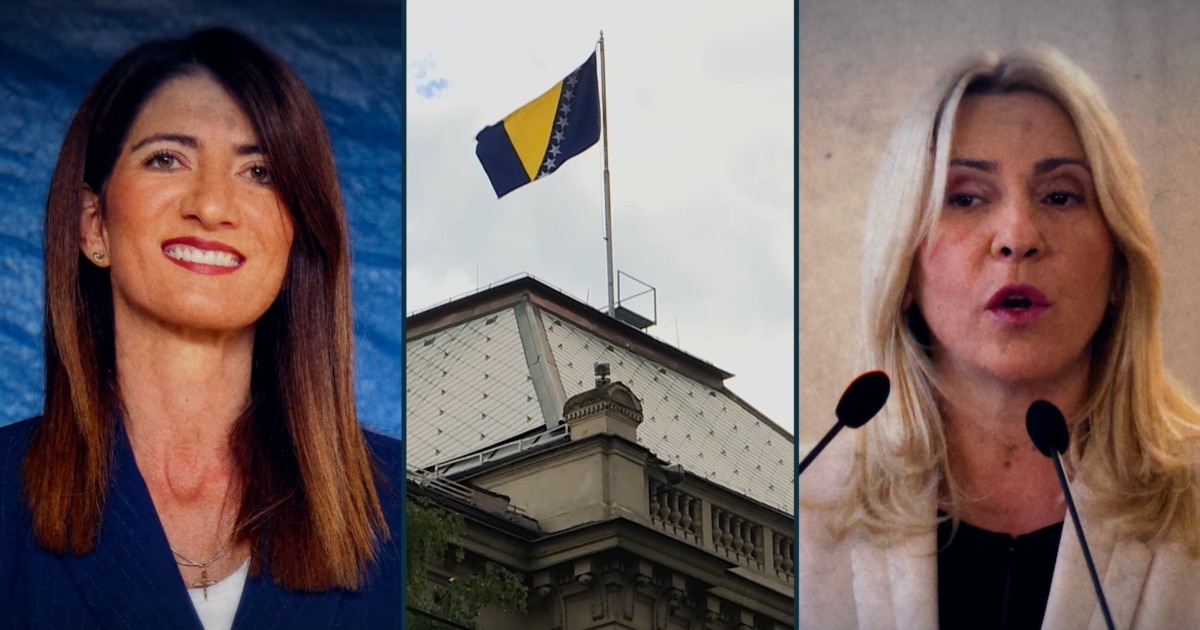
Bosnia and Herzegovina's Presidency to Include Two Women for First Time After Elections
Preliminary election results indicate Darijana Filipović, Željka Cvijanović and Denis Bećirović will serve as Bosnia and Herzegovina's three-member Presidency for the next four years. The outcome represents a historic moment in the country's political life, with two women serving concurrently on the collective head of state for the first time, although results remain preliminary and do not constitute a full replacement of outgoing members.
By Clémence Desjardins
830 views
Preliminary results from national elections in Bosnia and Herzegovina show a change in the composition of the country’s three-member Presidency, with Darijana Filipović, Željka Cvijanović and Denis Bećirović set to occupy the collective head-of-state positions for the next four years. Media reporting on the outcome underlines that, while the new lineup signals change at the top of state, it is not a complete replacement of the previous presidency and official results remain provisional.
The preliminary returns have particular symbolic significance: for the first time since the institution’s establishment, two women will serve simultaneously as members of the tripartite Presidency. That development represents a milestone for gender representation in Bosnia and Herzegovina’s post-war political structures, where the highest offices have historically been dominated by men.
Bosnia and Herzegovina’s Presidency is a collective body composed of three members who jointly serve as head of state; the members are elected to represent the country’s main constituent communities and serve four-year terms. The Presidency’s makeup and voting outcomes are closely watched domestically and internationally because they influence executive decision-making in the country’s complex power-sharing system, which was established by the 1995 Dayton Peace Agreement.
Analysts and political observers will be monitoring the implications of the new composition for governance and inter-ethnic relations. Changes in the Presidency can affect policy direction, international engagement and the internal balance among the country’s political actors. Given Bosnia and Herzegovina’s layered institutional architecture, shifts at the top can have ripple effects across cantonal and entity-level administrations as well as in relations with the European Union and regional neighbours.
Media reporting on the preliminary results emphasized that the outcome is not yet final. Election authorities typically complete a process of validating and certifying results before they become official, and recounts or challenges can alter provisional tallies. Until the Central Election Commission publishes certified outcomes and any potential complaints or appeals are resolved, the announced composition should be regarded as subject to confirmation.
The presence of two women on the Presidency is likely to be interpreted within domestic debates about political participation, gender equality and representation. Civil society groups and rights advocates have long pushed for greater inclusion of women in government and public life in Bosnia and Herzegovina; observers will be watching whether the new makeup translates into tangible policy attention to issues such as women’s rights, social services and legal protections.
Radio Free Europe/Radio Liberty covered the preliminary developments, noting the new names poised to take office and the historic aspect of the dual female membership. The outlet’s initial report and accompanying video materials identified Darijana Filipović, Željka Cvijanović and Denis Bećirović as the projected members of the Presidency for the coming term.
As the electoral process moves toward formal certification, domestic and international stakeholders, including rights groups and diplomatic actors, will be attentive to both the political direction signaled by the new Presidency and the integrity of the post-election procedures. The coming weeks will determine whether the provisional results hold and how the new Presidency will position itself on the country’s pressing political, economic and social challenges.