Book Describes Heated Exchange After Dobbs Draft Leak, Saying Kagan 'Screaming So Loudly' That the 'Wall Was Shaking'
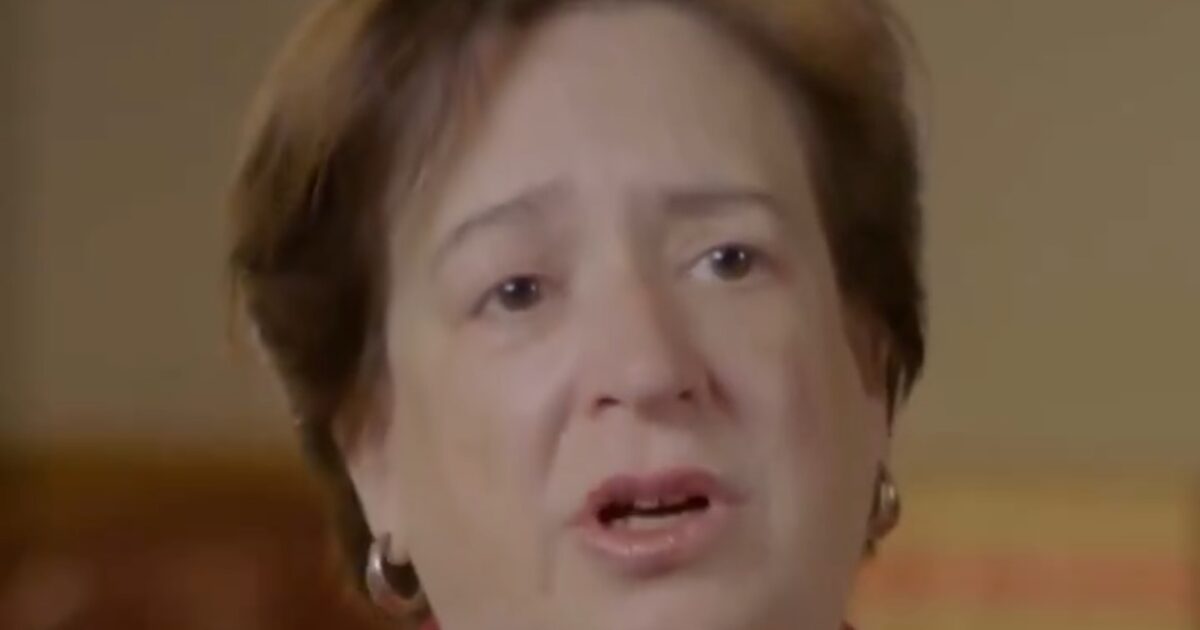
A forthcoming book by Mollie Hemingway recounts a tense confrontation among Supreme Court justices after a draft opinion in Dobbs v. Jackson Women’s Health Organization was leaked in May 2022. Observers quoted in the book say Justice Elena Kagan angrily urged Justice Stephen Breyer not to accommodate the majority’s request to speed publication, allegedly "screaming so loudly" that the "wall was shaking," as the court grappled with threats and security concerns.
By Cristina Laila
1,147 views
A new book about Justice Samuel Alito recounts a heated, behind-closed-doors confrontation among Supreme Court justices in the weeks after the May 2022 leak of a draft majority opinion in Dobbs v. Jackson Women’s Health Organization. According to Mollie Hemingway’s forthcoming book Alito, liberal Justice Elena Kagan angrily confronted Justice Stephen Breyer after Alito asked his liberal colleagues to accelerate the release of their dissents because of heightened security risks.
The leak, first reported by Politico, disclosed an initial draft majority opinion written by Justice Alito that would overturn Roe v. Wade. Politico’s reporting stated: “The Supreme Court has voted to strike down the landmark Roe v. Wade decision, according to an initial draft majority opinion written by Justice Samuel Alito circulated inside the court and obtained by POLITICO.” Politico characterized Alito’s draft as a “full-throated, unflinching repudiation” of Roe.
In the book, Hemingway recounts that tensions intensified after the draft became public. Conservative justices, including Alito, received death threats and faced increased security concerns, prompting Alito to tell his liberal colleagues to finish their dissents more quickly. Hemingway writes that Breyer, who disagreed strongly with the majority, was the liberal justice most willing to comply with that request.
Hemingway quotes contemporaneous observers to describe Kagan’s reaction to Breyer’s inclination to accommodate the majority’s request. “Though he had not said he would accommodate the justices whose lives were at risk by getting out a dissent, [Breyer] was the member of the liberal bloc most willing to do so,” Hemingway wrote, according to Fox News. “Fiercely liberal in his jurisprudence and in strong disagreement with the majority decision, he nevertheless was a gentleman and a friend to all on the Court. Kagan remonstrated with Breyer not to accommodate the majority, screaming so loudly, observers noted, that the ‘wall was shaking.’”
The Supreme Court ultimately issued its decision in late June 2022. In the months and years that followed, the Court and individual justices grappled with the fallout from the leak. In a later public statement, Justice Alito said the leak had made the justices “targets of assassination,” expressing concern about the risks to the justices’ safety.
The Court conducted an internal inquiry into the source of the leak and issued a report in 2023. That report concluded that officials were unable to identify the leaker and described steps taken to tighten security around draft opinions. The Court interviewed 97 staffers in connection with the investigation; those staffers signed sworn affidavits denying under penalty of perjury that they were the source of the leak. Despite the report’s findings, Alito said he believed he knew who leaked the draft and told reporters he thought the leaker’s motive was to stop the Court from overturning Roe.
Hemingway’s book, which has been reviewed by Fox News Digital, details these and other moments surrounding the leak and the Court’s internal dynamics during a period of intense public scrutiny. The book’s account highlights divisions not only between the Court’s ideological blocs but also tensions within the liberal wing as justices weighed how to respond to extraordinary security concerns while fulfilling their institutional responsibilities.
The episode underscored broader questions about how the Supreme Court handles sensitive draft materials, protects its members, and maintains the confidentiality of deliberations that are central to its decision-making processes. In response to the leak, the Court implemented new protocols for handling draft opinions — changes officials have said are intended to reduce the risk of similar breaches in the future.