Bombing in Pakistan Kills Seven as Tajikistan Grapples with Police Killings, Torture Claims and Child Marriage Cases
At least seven people were killed and three seriously injured when a hand-made bomb struck a private passenger vehicle in Bannu district, Pakistan, on the morning of June 20, authorities and a German news agency reported. In Tajikistan, a murder trial involving a police officer opened in a military court in Khorugh while courts in Dushanbe have partially upheld a torture complaint against police and local authorities report prosecutions linked to child marriages.
By Clémence Desjardins
937 views
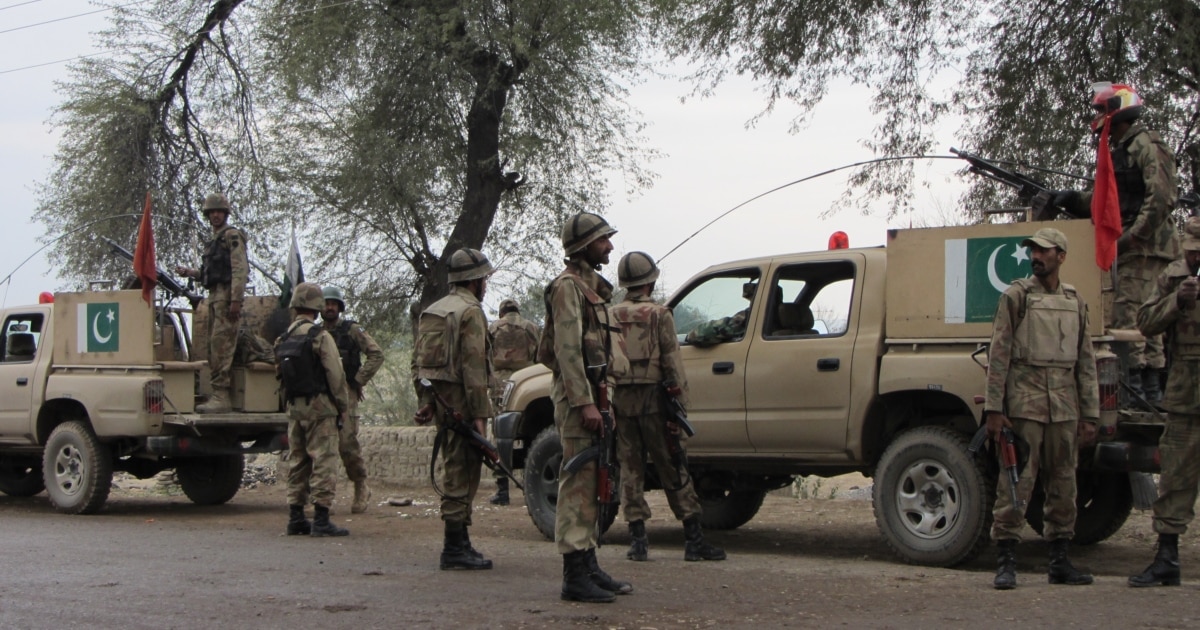
At least seven people were killed and three others were seriously wounded on the morning of June 20 when a hand-made explosive device detonated against a private passenger vehicle in the Bannu area of Pakistan’s Khyber Pakhtunkhwa province, according to reporting by a German news agency and local authorities. Security forces moved quickly to seal off the scene and investigators have launched inquiries into the attack, which officials said targeted a vehicle carrying civilians. Pakistan’s Prime Minister Shahbaz Sharif publicly condemned the attack and reiterated his government’s commitment to combating terrorism. No group had claimed responsibility as of the latest reports.
The blast — which officials described as involving a device placed against the passenger vehicle — underscores continuing instability and the ongoing threat of militant attacks in parts of Khyber Pakhtunkhwa. Local police said three wounded victims were in critical condition, and authorities have warned residents to remain vigilant while investigations proceed.
In Tajikistan, judicial proceedings and human rights cases have also drawn renewed attention this week. The first hearing in the murder case of 34-year-old Salomatsho Galchaev, a resident of Vanj district, began on June 19 at the Military Court in Khorugh. The accused is Ivezmad Qodirov, an officer with the Ministry of Internal Affairs of Tajikistan. Qodirov faces charges under Article 104, part one, of the Criminal Code — a murder charge that carries a potential prison term of eight to fifteen years under Tajik law.
The initial hearing was primarily a procedural session and was adjourned after a key witness failed to appear. Ne’mat Galchaev, the victim’s brother, told Radio Ozodi (the Tajik service of Radio Free Europe/Radio Liberty) that one witness who was reportedly at the scene with the accused did not attend the court, and that another potential witness had traveled to Moscow on the day of the killing. Court officials issued a summons for the absent witness and rescheduled the next hearing for the following Tuesday. Qodirov remains in custody in Khorugh; authorities have provided limited public comment on the evidence or the status of other participants in the case. According to local reporting, the killing occurred overnight on March 17 in the village of Roharv, Vanj district, and one source speaking to Radio Ozodi said the incident may have been linked to a dispute over the officer’s alleged relationship with a schoolgirl who was related to the slain man.
Separately in the Tajik capital, Ismoili Somoni District Court in Dushanbe has taken steps in a civil claim brought by Ne’matjon Ashurmatov alleging torture while in police custody. Ashurmatov had sought 280,000 somoni in moral damages after he says he was arrested in Khujand in February 2024 on suspicion of drug trafficking and then subjected to mistreatment by police. The court on June 18 “partially satisfied” his claim, according to the anti-torture coalition representing him; the exact amount ordered has not been disclosed publicly. The matter is connected to a criminal investigation opened by the Sughd regional prosecutor in April against four police officers on accusations of abuse of office. Two officers were detained and two were placed on a wanted list at that time.
Prosecutors later pursued charges under a specific article covering torture at the request of Ashurmatov’s defense. In 2025, one of the officers, Dilshod Narzullozoda, was sentenced to 21 years in prison, barred for 10 years from holding certain posts and ordered to serve the term in a high-security penal colony; another officer, Abduqodir Karimov, received a 19-year sentence and a 10-year ban from specified positions. The Ministry of Internal Affairs has not publicly commented on these rulings. Human rights advocates and the United Nations Committee Against Torture have repeatedly expressed concern about ongoing reports of mistreatment and torture in Tajik detention facilities and during police interrogations. The Tajik Ministry of Justice reported that, between 2018 and 2025, only 13 people were convicted of torture despite many more official complaints.
Authorities in Dushanbe have also signaled enforcement actions on child marriage. The city police directorate said on June 19 that, in the past six months, it recorded five cases in which parents knowingly arranged marriages for girls under 18 and brought criminal charges against those parents. Child marriage is a criminal offense in Tajikistan, punishable by heavy fines and possible prison terms of two to five years; marriages under 18 may only be permitted in exceptional circumstances by court order. The Supreme Court’s data cited in official statements suggested that more than 3,300 underage girls were married in 2025 across the country. The national ombudsman’s office reported that in the previous year it recorded 20 unauthorized marriages of minors and 27 instances of marriage to persons not yet 18.
Finally, the Ministry of Defense of Ukraine said on June 19 that another Tajik citizen who had been sent to fight by Russia applied to a Ukrainian state program and surrendered to Ukrainian forces. Kyiv said the young man came out of the frontline “hungry and thirsty, but healthy,” after responding to the initiative identified in the report as “Зистан мехоҳам”. The ministry framed the surrender as voluntary and part of a program intended to allow foreign nationals who had been sent to fight to leave the battlefield.
Taken together, these reports from Pakistan and Tajikistan highlight intersecting concerns about violence, state accountability and the protection of vulnerable people — from civilians targeted by explosive attacks to alleged victims of police violence and underage girls facing forced marriage. Human rights advocates say the developments underscore the need for transparent investigations and effective judicial remedies in places where trust in security and justice institutions is fragile.