Bishkek court extends ban on rallies in central squares until year-end
A district court in Bishkek has approved a request from local authorities to ban demonstrations and pickets in the capital’s central public spaces through December 31. Officials cited upcoming international events — including an Eurasian Economic Union summit and the state visit of Uzbekistan’s president — while human rights groups say the prolonged restriction infringes the constitutional right to peaceful assembly.
By Clémence Desjardins
1,000 views
The First May (Pervomaysky) District Court of Bishkek on September 29 approved a request from the district administration to extend a ban on rallies and pickets in central parts of the Kyrgyz capital until December 31. According to the court’s press office and reporting by RFE/RL’s Kyrgyz service Azattyk and local outlet 24.kg, the administration and the Bishkek Interior Department (UVD) filed the petition to the court, which satisfied the request.
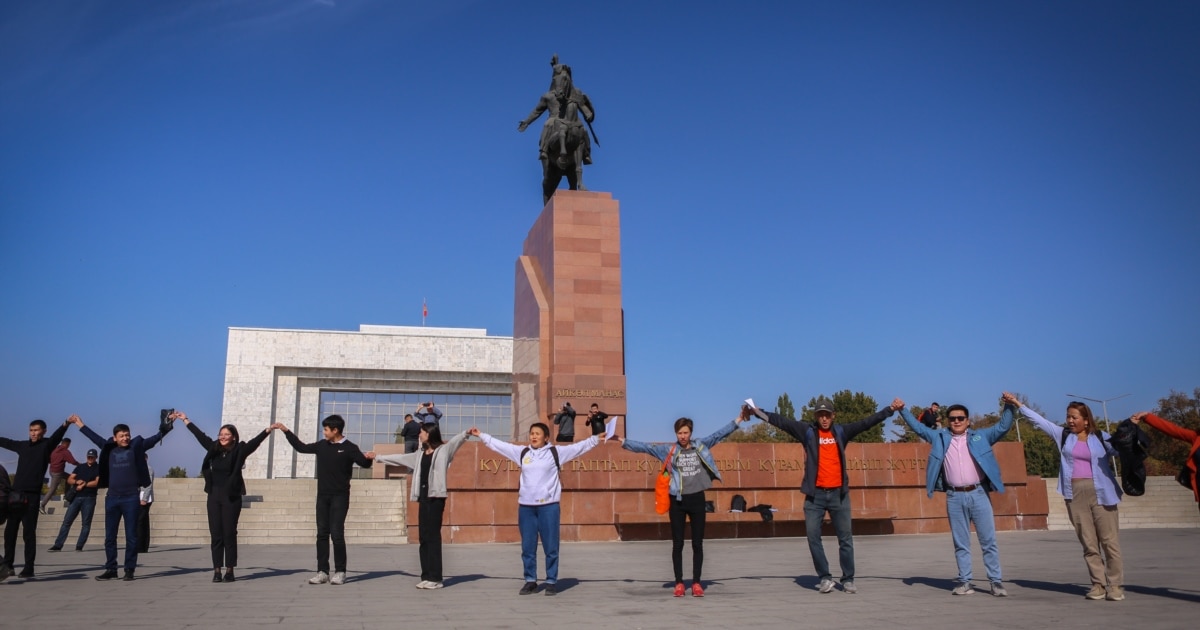
The court order continues prohibitions on demonstrations at several prominent locations in the city, including Ala-Too Square, Erkindik Boulevard, the area around the Jogorku Kenesh (Parliament), in front of the government building, and near a number of other administrative facilities. Since March 2022, the Pervomaysky District Court has repeatedly issued rulings restricting public gatherings on these central squares and thoroughfares; the latest extension marks the fourth consecutive year these central venues have been off-limits for public protest.
Officials cited security and public-order concerns linked to anticipated international visits as the principal justification for the renewed ban. Local reports said the district administration pointed to two high-profile events scheduled in Bishkek in December: the summit of heads of state of the Eurasian Economic Union and a state visit by Uzbekistan’s President Shavkat Mirziyoyev, set to take place on December 9–10. Authorities argued that limiting demonstrations in central locations was necessary in advance of those events.
In practice, the restriction has left those wishing to hold public assemblies in Bishkek with very limited options. Azattyk reported that organizers can currently gather only in Maxim Gorky Park; other central squares and sites frequently used for protests remain subject to the ban. Critics and civil society actors say that confining public demonstrations to a single location in the city center amounts to a severe curtailment of the constitutional right to peaceful assembly.
A number of international organizations have repeatedly warned that Kyrgyzstan’s effective prohibition on gatherings in central locations violates the constitutional guarantees and international human rights standards on freedom of peaceful assembly. The specific groups were not named in the immediate reporting, but the pattern of concern has been a recurrent theme in coverage of Kyrgyzstan’s post-2020 political environment and restrictions on civic space.
President Sadyr Japarov has addressed the issue previously. On March 11, while responding to questions from deputies of the Jogorku Kenesh, he stated that protests are formally prohibited only near courts, prosecutor’s offices and similar sensitive facilities, and that demonstrations and pickets should still be possible in other places. Nonetheless, in practice, the official tolerance for protests has remained tightly constrained, with Gorky Park effectively serving as the only authorized site for assemblies in the capital.
The prolonged ban carries wider implications for political expression, civil liberties and the conduct of public life in Kyrgyzstan. Restricting access to central public spaces limits oppositional groups, activists and ordinary citizens from staging politically visible demonstrations where they can attract attention from both the public and visiting foreign delegations. Observers say the measures also raise concerns about legal transparency and proportionality, as various local administrations and law-enforcement bodies have repeatedly cited differing reasons for extending prohibitions on public gatherings.
As Bishkek prepares to host international leaders later this year, authorities face a choice between preserving a narrow, security-focused approach to public order and allowing broader, constitutionally protected forms of civic participation. The court’s latest ruling keeps the current balance firmly in place in favor of restrictions, prolonging a controversial policy that has drawn sustained criticism from domestic and international rights monitors.