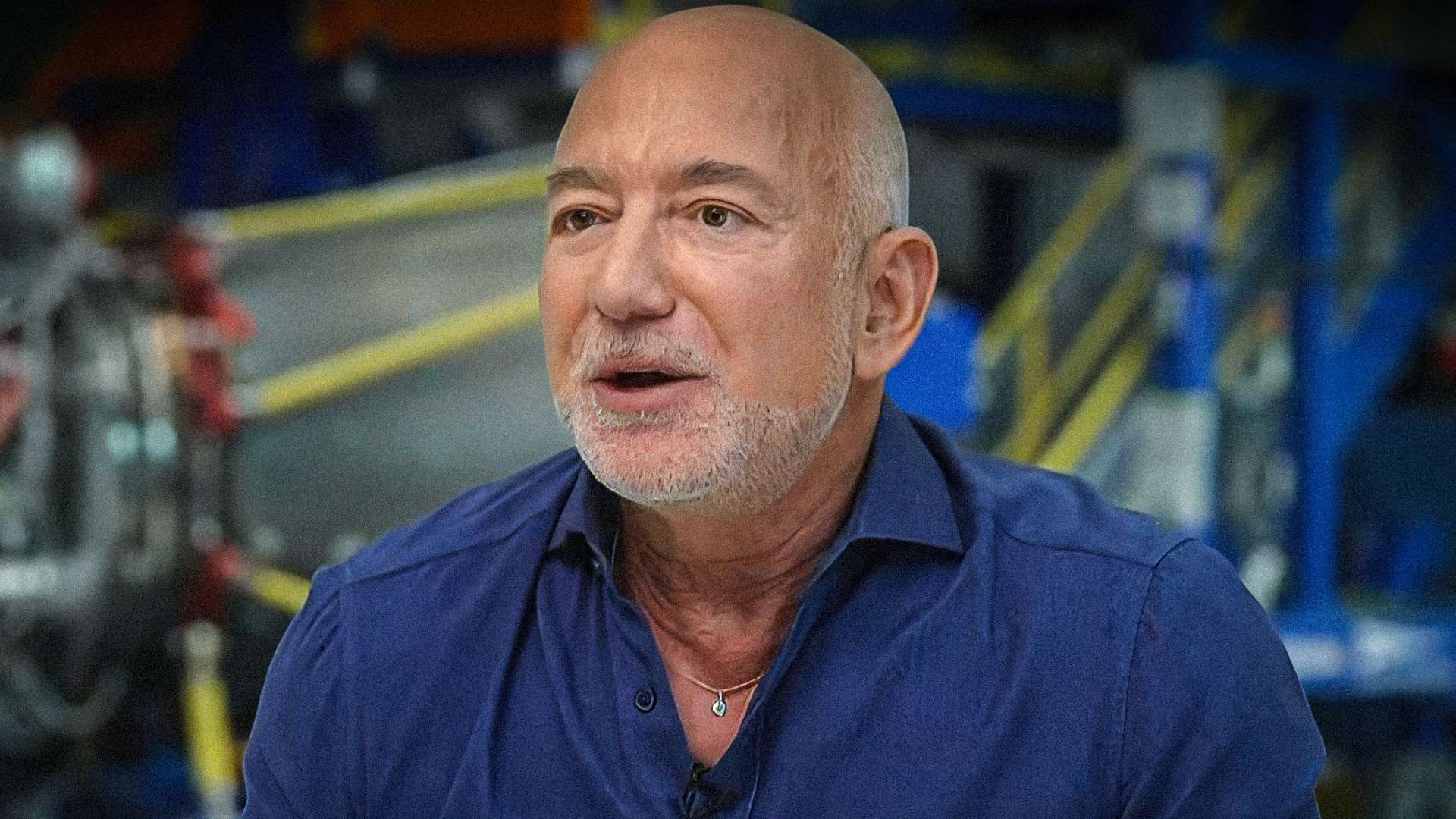
Bezos on Taxes: 'Nurse in Queens' Shouldn't Pay, Roundup Questions the Math and the Policy
Jeff Bezos told CNBC that a nurse or teacher in Queens earning $75,000 should not be expected to pay federal income taxes, arguing the country has a spending rather than a revenue problem. The claim and the broader argument that the bottom half of earners contributes only 3 percent of tax revenue drew scrutiny from Reason's roundup, which cites Tax Policy Center estimates and highlights the policy trade-offs of narrowing the tax base.
By Liz Wolfe
880 views
Jeff Bezos's recent appearance on CNBC's Squawk Box reignited debate about who pays taxes in the United States and how government spending should be funded. In the interview with Andrew Ross Sorkin, the Amazon founder argued that the top 1 percent of taxpayers already pay roughly 40 percent of all federal income-tax revenue while the bottom half contributes only about 3 percent — a share he said should be reduced to zero. He framed the country as a "tale of two economies," with some Americans thriving while others struggle, and offered a recurring example: a nurse in Queens earning $75,000 who, he said, pays more than $1,000 a month in taxes. "We shouldn't be asking this nurse in Queens to send money to Washington," Bezos said. "They should be sending her an apology." Pressed on whether he should instead pay more himself, he maintained that the country has a spending problem rather than a revenue one, contending that doubling his own taxes would do nothing to help a struggling teacher. The remarks drew a quick response from New York City Mayor Zohran Mamdani, who noted he knew teachers in Queens who would disagree, and they arrived amid a wider political debate that includes wealth-tax proposals from figures such as Sen. Elizabeth Warren and a separate proposal from Sen. Cory Booker to exempt the first $75,000 of household income.
Reason's roundup scrutinizes both the arithmetic and the underlying philosophy. Bezos's headline figures are broadly accurate — IRS data analyzed by the Tax Foundation shows the bottom half of taxpayers earned roughly 12 percent of adjusted gross income but paid about 3 percent of federal income taxes, averaging around $900 each — but the roundup's central point is that the goal Bezos describes has largely already been reached. By Tax Policy Center estimates, about 40 percent of U.S. households, some 76 million tax units, already owe no federal individual income tax, and once refundable credits are counted the bottom 40 percent pay effectively nothing on average. The column argues that the United States in fact needs a relatively broad tax base to fund the large welfare and entitlement state it has chosen to maintain, and that further narrowing it would simply shift more of the burden onto dual-income middle-class households — author Liz Wolfe's own example — while doing little to address the deficit. The roundup also notes that $75,000 is not an especially accurate figure for what New York nurses and teachers typically earn, and points to the deeper critique that wage income is easy to tax because it is visible, whereas much wealth accrues through assets that may go untaxed until sale or escape capital-gains tax entirely through stepped-up basis at death.
Bezos also weighed in on housing and wealth accumulation in the interview, rejecting claims that short-term rentals such as Airbnb are the primary cause of high rents in New York City. "Why is rent so expensive? I recently saw somebody blamed it on Airbnb. Okay, Airbnb is not the cause of expensive rent. It's already been outlawed in New York City. And rents are still very high. So we know Airbnb isn't causing high rents. What's really causing high rent is government intervention... we constrain supply with things like zoning and permitting." In defending business success as a legitimate path to great personal wealth, he invoked the trajectories of restaurant chains: "Let's say you start a burger joint... By the time you've opened 1,000 outlets, you are a billionaire... What you're doing... is you create a service that people love. And if millions of people choose your service, you're going to end up with $1 billion."
The roundup also gathers several other stories and reactions from recent reporting. The Wall Street Journal reports that the Neue Galerie and its collections will come under The Met's administrative umbrella, with Ronald S. Lauder and his daughter Aerin Lauder Zinterhofer donating additional works and endowment support; the institution will be renamed The Met Ronald S. Lauder Neue Galerie, though it will be referred to as The Met Neue Galerie. Reuters published a detailed examination—based on interviews with 20 sources, Iranian and Iraqi officials, Iranian documents, and vessel movements—of how Iran has been consolidating control over a strategic maritime chokepoint in recent weeks, with the Islamic Revolutionary Guard Corps playing a central role in the mechanism described.
The newsletter also touches on a mix of social-media claims and cultural items. A New York Times headline, "Hooters Says Bring the Kids," is flagged, and a tweet from Derek Thompson listing allegations about elite impunity—claims including avoidance of a $100 million IRS fine and immunity from future investigations—is quoted. Separately, the roundup disputes narratives that portray poor people as being "forced to rely on" meal-delivery services like DoorDash as a form of oppression, arguing that many households manage food budgets through home cooking and bulk purchasing and that services can be a time-saving option for those who can afford them. That position drew pushback from commentators such as Taylor Lorenz, who emphasize time poverty and the real constraints many face in preparing home-cooked meals.
Taken together, the items assembled in the roundup illustrate how a single high-profile interview can spark discussion across taxation, housing policy, cultural institutions, and social media narratives. Bezos's remarks underscore tensions in contemporary debates about redistribution, the scope of government, and the relationship between taxpayers and public services. The factual gaps and policy trade-offs highlighted by the roundup suggest any proposal to shift who pays federal taxes would need careful analysis of both the numbers and the broader civic implications.